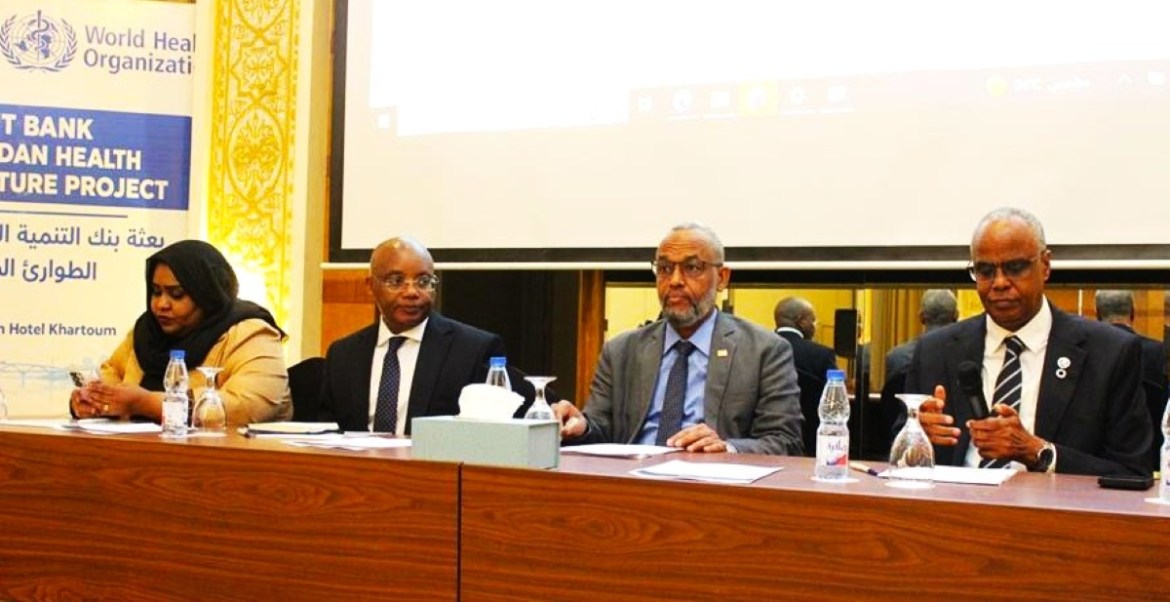
The African Development Bank Group has concluded a supervision mission in Khartoum to assess progress in implementing the US$ 55 million Sudan Health Emergency and Infrastructure Project and agree on measures to ensure the Project meets its objectives on schedule.
The five-day mission, held in the first week of October 2026, began with Sudan’s Minister of Health Dr Heitham Ibrahim welcoming the supervision team and thanking AfDB for its close coordination and implementation monitoring.
“At a time when Sudan’s health sector is facing unprecedented challenges, our efforts to respond to the urgent needs of the people and rebuild the health system are strengthened by partnerships with the AfDB and WHO, including through projects such as Sudan Health Emergency and Infrastructure Project (SHEIP),” said Dr Ibrahim.
Funded by the African Development Fund, the Bank Group’s concessional financing window, and implemented by the World Health Organization (WHO), Sudan Health Emergency and Infrastructure Project aims to improve access to essential primary health care and emergency services, strengthen Sudan’s capacity to prepare for and respond to public health emergencies and build a more resilient health system, with a particular focus on reducing illness and death among women and children.
“SHEIP reflects the African Development Bank’s commitment to supporting Sudan’s health system through this exceptionally challenging time. Strengthening primary health care and emergency preparedness is essential not only to respond to today’s needs, but to build a more resilient health system for the future,” said AfDB Country Manager for Sudan David Muthusi Mutuku who led the mission.
The African Development Bank Group (AfDB) and WHO teams reviewed project performance and operational challenges, the Project’s results framework, monitoring and evaluation arrangements and management and coordination mechanisms.
During visits to health facilities supported by the Project, the teams met with facility directors who expressed appreciation for the support provided and noted that it is helping to fill critical gaps in service delivery.
AfDB and WHO agreed on an action plan to accelerate implementation, including front-loading ongoing procurement of equipment and essential supplies for primary health care, the management of severe acute malnutrition and for emergency operations centres.
The teams also agreed to proceed with solar energy installations at targeted facilities and with necessary rehabilitation works.
“WHO is committed to the timely and efficient implementation of SHEIP to the betterment of the health of Sudan’s people,” said WHO Representative in Sudan Dr Abdinasir Abubakar.
He thanked AfDB for its close follow-up and its flexibility in adapting the implementation approach to Sudan’s operating environment and in addressing implementation challenges.
The mission took place as Sudan’s health system faces severe disruption from the ongoing conflict.
An estimated 33.7 million people in Sudan will need humanitarian assistance in 2026, including 21 million who require health assistance.
Nearly 40 percent of health facilities nationwide are non-functional, rising to an estimated 70–80 percent in conflict-affected areas.
Against this backdrop, the mission underscored SHEIP’s crucial role in sustaining and expanding access to essential health services, strengthening emergency preparedness and response and reinforcing the resilience of Sudan’s health system.