Tajikistan’s Antimonopoly Service does not expect the country to face a fuel shortage, despite volatility in the Russian market, rising import costs and reports of limited diesel supplies at filling stations.
Haydarali Rajabzoda, head of the Antimonopoly Service under the Government of Tajikistan, made the statement at a news conference in Dushanbe on July 16.
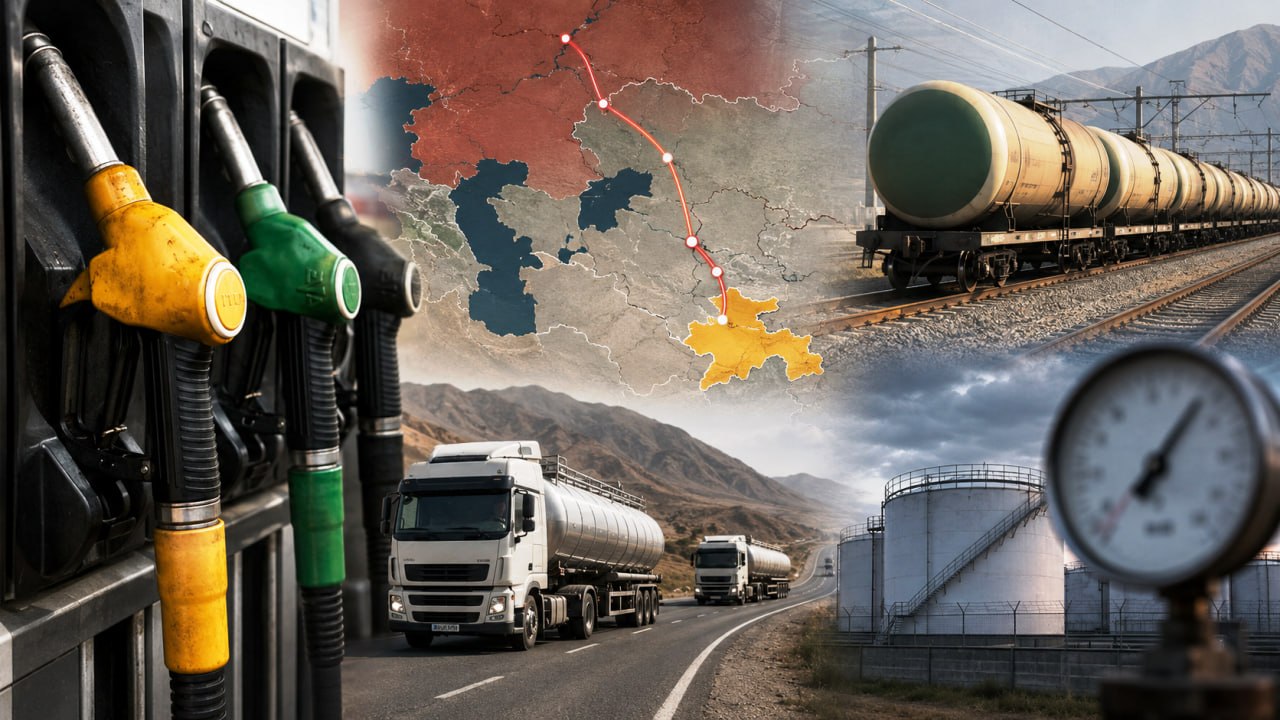
According to him, more than 90% of Tajikistan’s petroleum products are traditionally imported from Russia.
“Therefore, changes in the Russian market have a direct impact on the situation in Tajikistan,” Rajabzoda said.
He added that government agencies were working to identify alternative supply routes and fuel sources.
The Antimonopoly Service continues to monitor the domestic fuel market and regularly submits reports to the government, Rajabzoda said. A permanent task force has also been established under the service to respond promptly to unjustified price increases.
Diesel imports rise, but prices also increase
In the first half of 2026, Tajikistan imported 300,000 tons of diesel fuel worth $236.8 million. Import volumes increased by 35,400 tons compared with the same period last year.
The average import price reached $789 per ton, up by $32, or 4.2%.
According to official figures, diesel retailed at between 15 and 16.7 somoni per liter.
However, diesel shortages have reportedly been observed in the country over the past three weeks. The fuel is unavailable at many filling stations in Dushanbe, while stations that still have supplies are reportedly selling it for 17 somoni per liter or more.
Before the current supply problems emerged, diesel was sold for around 13 somoni per liter.
Liquefied gas supplies increase
Tajikistan imported 241,000 tons of liquefied petroleum gas worth $164.3 million in the first six months of 2026.
The volume of supplies increased by 64,100 tons year on year.
The average import price remained broadly unchanged at $681 per ton, while retail prices ranged from 6.4 to 6.8 somoni per liter.