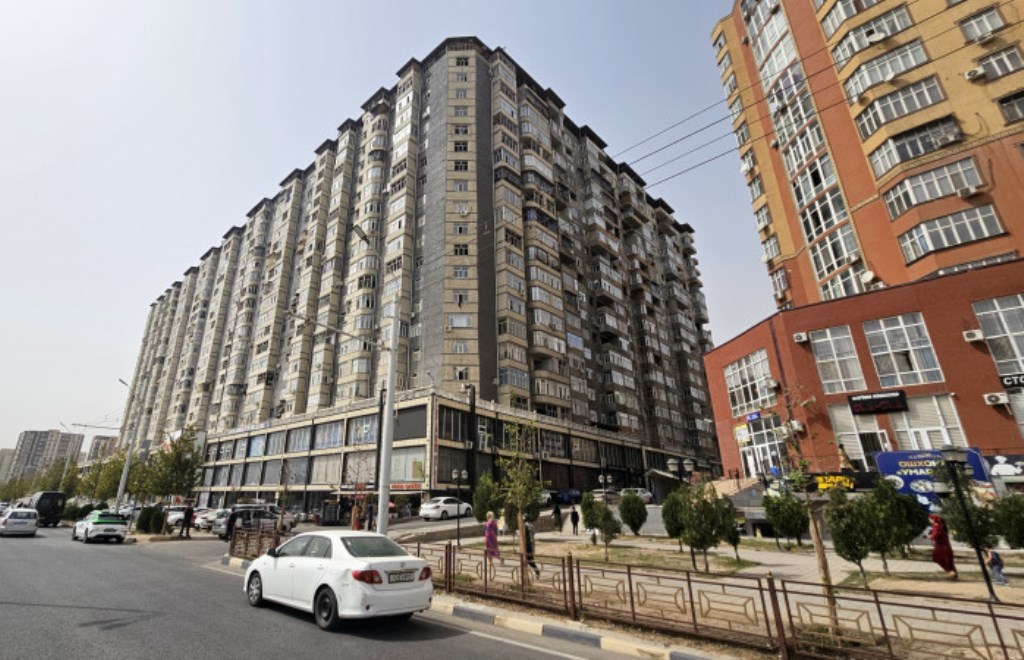
The population of Tajikistan is rapidly increasing. This trend is not matched by productivity growth in sectors such as industry, construction, and agriculture. Meanwhile, arable land per capita has decreased to 0.5 hectares.
Let’s consider how Tajikistan plans to turn the problem of overpopulation into an opportunity for prosperity.
Population Growth – An Opportunity for Prosperity?
According to UN estimates, by 2050 the population of Central Asia will exceed 100 million, with Tajikistan’s population reaching 14.5 million.
“
Tajikistan ranks first among CIS countries in terms of population growth. Today, 10.3 million people live in Tajikistan, which is twice as many as in 1991.
The government of Tajikistan has an optimistic outlook on population growth, referring to it as a “demographic window of opportunity.”
The National Development Strategy for the period up to 2030 states that the projected increase in the working-age population in the republic will provide opportunities to accelerate economic growth. The main part of the population (about 60%) consists of the working-age population (aged 15 to 64), which will be a driver for economic development.
The “demographic window” will have a positive impact on both the socio-economic development of the country as a whole and the well-being of the people.
As the country’s population grows rapidly, production growth must also be high to prevent a decline in living standards.
It is impossible to solve such a problem based on traditional inefficient farming methods. Accelerating urbanization, extensive housing construction, and rapid investment in communal, social, and road infrastructure are necessary.
It is important that the growth rate of food production or Gross Domestic Product (GDP) consistently exceeds the population growth rate.
How Many People Can Tajikistan’s Land Feed?
Land, water, and natural resources in Tajikistan are limited, and their volume decreases year by year.
Can the economy provide for the population under such conditions?
Excessive population growth, according to some foreign experts, leads to mass unemployment, limited food, land, water, and other resources.
However, local experts disagree. They argue that the population growth rate alone cannot lead to such conclusions.
“
The Chairman of the State Committee for Land Management and Geodesy, Orif Khojazoda, previously stated that Tajikistan’s land is capable of providing food for 50 million people. According to him, today the land resources are sufficient to fully ensure the country’s food security, although irrigated land per capita in the country is about 0.6 hectares.
Of course, this is only possible with the rational use of land and water resources.
In 1997, each citizen of the republic had 0.12 hectares of arable land. According to forecasts, by 2027, due to population growth, arable land per capita will decrease to 0.05 hectares.
Demographic Burden Ratio
The burden of children and the elderly constitutes the overall demographic burden. The demographic burden ratio directly reflects the financial costs of social policy in the state. For example, as this ratio increases, expenditures on the construction of educational institutions, social protection, healthcare, pension payments, and so on should be increased.
For Tajikistan, the overall demographic burden ratio is 59.5%.
This means the republic feels a relatively high social burden on society.
Each employed person in the republic should earn almost twice as much for their necessities.
Transition to a New Demographic Phase
According to research by the Demography Department of the Institute of Economics and Demography of the Academy of Sciences of Tajikistan, in 2017, respondents mainly had 2-4 children (64.8%), while in 2012, the majority of respondents had 4-7 children (87.4%).
Thus, in recent years, a trend towards smaller families has been observed in Tajikistan, with the share of families with three children being the highest in the study group.
According to the Institute’s experts, psychologically, the population is not fully prepared for a rapid decline in birth rates. Traditional birth factors are still strong not only in the minds of the population but also in their way of life. Therefore, high birth rates will remain until 2035-2050.
The rapid population growth in Tajikistan in the years following independence was also facilitated by the fact that the majority of the population lives in rural areas and leads a rural lifestyle. Rural families need labor for fieldwork, so it is necessary to have 4-5 children in a family.
However, in the coming years, with the development of new technologies and Tajikistan’s transition to an industrial development path, the situation will change dramatically.
“
Economics candidate Akbar Subhonov views the demographic situation optimistically. “To solve the problems, three things need to be controlled: improving the quality of education, fair distribution of land among all its users, and, of course, developing production using new technologies,” he says.
In this case, according to scientists, the current population growth in Tajikistan will not be uncontrolled. And along with economic development and increased well-being of the people, current demographic problems will disappear. Instead, a new type of modern demography will emerge, characteristic of developed countries.
Demographic growth is welcomed today in all Central Asian countries, and no one controls the birth rate.
According to experts from the Eurasian Development Bank, demographic growth will contribute to the economic development of Central Asian states.
The growing population of the region forms a large sales market and increasing sources of labor resources.
Demographer from Uzbekistan, Doctor of Sociology Azamat Seitov believes that skillful regulation and more attention to human capital will turn human resources into one of the opportunities for further economic development of countries.
“Birth control is meaningless. And it is not necessary for the state,” he believes.
According to the Chairman of the Senate of the Parliament of Kazakhstan, Maulen Ashimbayev, for his country, without a population increase to 30-40 million people, developing the vast territory in the next decade will be very difficult. Therefore, increasing the country’s population to 40 million is a strategic issue.