Anand Gopal is a journalist and author of Days of Love and Rage: A Story of Ordinary People Forging a Revolution, a book which covers the small town of Manbij as it undergoes the tumult of revolution. Syria Direct caught up with him and discussed his writing journey, the fall of Assad, the fragility of Syria’s new leadership and why the country’s revolutionary experience offers lessons in democracy.
Gopal was in New York when the Twin Towers collapsed on September 11, 2001. The experience changed the course of his life. He began to question the role of America in the world, especially its actions in Afghanistan and Iraq. It seemed to him that when it came to the violence of state actors and non-state actors, two very different standards were applied.
Later, while working towards a PhD, he traveled to Afghanistan intending to teach English, but the teaching program turned out to be a scam. With the little money he had, he decided to stay and eke out a living reporting from Kabul, Kandahar and rural communities that were largely inaccessible to Western journalists.
This experience of watching the American invasion of Afghanistan from the ground up shaped his approach to journalism. He wanted to see how ordinary people experienced the invasion and his book No Good Among The Living was born.
Read More: A terrible beauty is born: Syria after Assad
After covering the fall of Hosni Mubarak in Egypt and Muammar Gaddafi in Libya, Gopal entered Syria in 2012 and applied the same approach, focusing on the story of Manbij, a city where revolutionaries had expelled the Assad regime and attempted to build a new political order.
Manbij became a microcosm for understanding the Syrian revolution and showed how ordinary people embraced democracy and what survived when the revolutionary experiments were crushed.
With Assad gone and Syria facing an uncertain future, Gopal believes the lessons of those years remain relevant. The new authorities, he argues, have yet to establish a national constituency, while the memory of popular resistance to authoritarianism remains alive.
In this interview, Gopal reflects on his experiences in Syria, the responsibilities of Syrian journalists and why he believes the Syrian revolution is ultimately a story of hope.
Anand Gopal 22/03/2022 (Photo: Dan Plagan)
SD: You went from Afghanistan to covering the Arab Spring, eventually arriving in Syria. What drew you there?
Gopal: I was in Egypt during the 18 days of protests in Tahrir Square and saw Mubarak fall. Then I went to Libya and saw Gaddafi fall. So I came to Syria thinking this would be pretty quick. I was wrong.
I entered unofficially from Turkey in early 2012. I crawled under a fence in the middle of the night. The protest movement against Assad had begun to militarize. Rebel units were defending towns and villages from helicopter and aerial attacks.
I traveled from village to village and witnessed horrific scenes of devastation. I remember going to Taftanaz in Idlib just after the Syrian regime had withdrawn. There had been a horrific massacre. Up to 80 people had been killed. Bodies had been set on fire, and houses were burning. That was the first time I saw the slogan painted on a wall: “Assad or we burn the country.”
“Up to 80 people had been killed. Bodies had been set on fire, and houses were burning. That was the first time I saw the slogan painted on a wall: ‘Assad or we burn the country.’”
I continued reporting, mostly in Idlib, and heard many stories of devastation. Then I heard about a city called Manbij, where people had managed to expel the regime and were trying to construct something new. That gripped my imagination because my whole career had been spent reporting on devastation and destruction. Here was a potential story of construction.
I realized that the Syrian war was both a civil war and a revolution at the same time. We needed stories about people taking agency and trying to create a new political order.
SD: Your work often approaches major historical events from the ground up. Why do you prefer that to focusing on political leaders and armed factions?
Gopal: During the Syrian war, there were something like 1,000 factions, a dizzying array of alliances and six or seven foreign countries involved. It’s very easy to get lost. If you take the bird’s-eye view, it’s difficult to understand why people are doing what they’re doing.
I’m interested in why somebody joins an Islamist group, why somebody joins a Free Syrian Army group, why somebody becomes a protester or why somebody stays on the regime’s side and tries to suppress the uprising.
To get those answers, you have to drill down into the everyday aspects of people’s lives. I found the same thing in Afghanistan. If you ask why somebody joined the Taliban, you might get a boilerplate answer about jihad or America. But if you really investigate their lives, their stories are much more complicated and interesting.
SD: Did you discover recurring patterns among those who joined IS?
Gopal: Many of them didn’t have strong religious training or backgrounds to begin with. They were often responding to a lack of order, the chaos they were experiencing, or economic inequities. The book profiles one character, Abdulhadi, who exemplifies this.
When we first meet him, he’s a secular, democratic protester. He wants freedom and democracy. But he becomes so consumed by grievances toward his fellow revolutionaries that he begins to turn to IS as an alternative.
My research colleagues and I interviewed perhaps 100 to 150 people who had been in IS, and the stories were very similar. We usually have this image of somebody watching a YouTube video, becoming radicalized and joining IS. That happens sometimes.
But more often than not, people join for very prosaic reasons connected to their communities and the circumstances of their lives.
SD: Looking at Syria today, what lessons can be drawn from the revolution and the fall of Assad?
Gopal: It’s important to remember that the Assad regime wasn’t defeated because of the strength of the opposition, but because of its own internal weaknesses. It relied heavily on Russia and Iran. Russia was embroiled in Ukraine, while Iran and Hezbollah had been hammered in the war with Israel. Its external support had more or less receded.
Internally, the regime’s soldiers were no longer willing to fight for Assad. They weren’t getting paid, and services were falling apart. The regime simply crumbled. The force that took over, HTS, was one of many rebel formations. It was the most cohesive, but it didn’t take over because it was at the head of a national constituency or national uprising. That means it still doesn’t have a national constituency. It’s trying to put together a very diverse and fragmented country. There are enormous challenges.
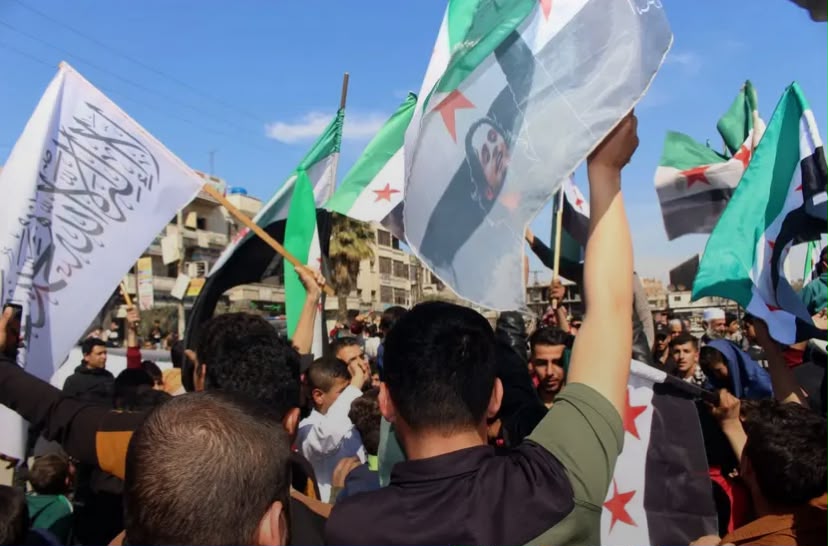
There’s also the question of whether Syria will become a democracy. The jury is still out. There are authoritarian tendencies in the current leadership. At the same time, tens of thousands of people rose up from 2011 onward.
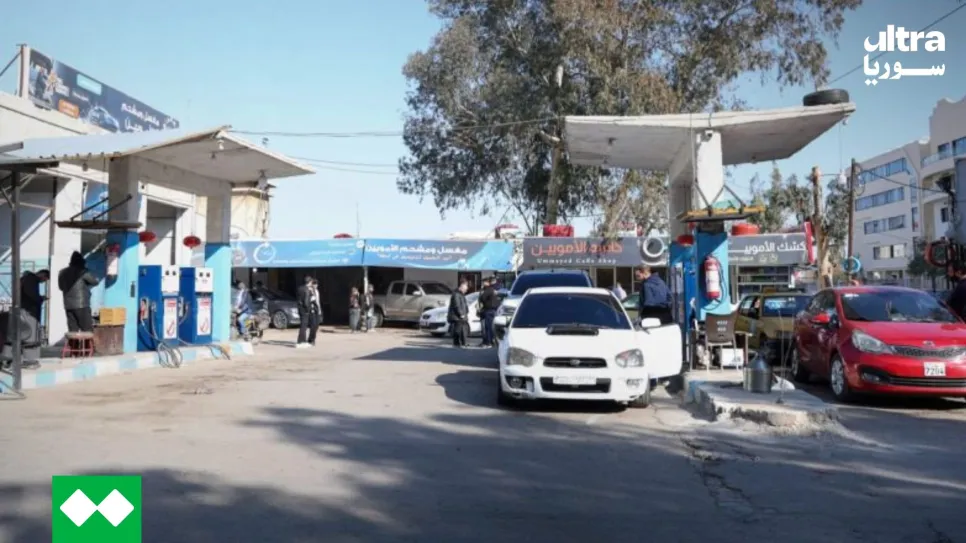
In Manbij, they succeeded in establishing a democratic experiment for 18 months. Those experiences cannot easily be erased or forgotten. I have friends who tell me that in northern cities, especially Aleppo, there are still protests around economic issues, such as the cost of fuel.
It’s hard to imagine those protests happening 20 years ago. The memory of learning to stand up for yourself and speak for your rights is still alive, especially in the north, where people experienced liberation earlier.
“The memory of learning to stand up for yourself and speak for your rights is still alive, especially in the north, where people experienced liberation earlier.”
Wherever Syria ends up, there will be other struggles. We don’t know what form they’ll take.
SD: Are you suggesting that Syria’s new rulers may not necessarily remain in power?
Gopal: There’s no guarantee. Internally, the current rulers are trying to build a coalition that includes extremists who are constantly annoyed that the leadership is taking what they consider a moderate line.
On the other hand, there are diverse constituencies, including the country’s different religious communities.
There have been two horrific massacres on the coast and in the south in which the current government has been implicated. Then there’s transitional justice. Syrians have endured extraordinary violence over the last 50 years, both at the hands of the Assad regime and during the war.
Some perpetrators have been held to account, but many haven’t. Some are actually with the current regime. It’s an open question whether this regime can survive.
But even if it survives, that doesn’t mean Syria will become a democracy. That question is still in the hands of the Syrian people. The memory of the past 15 years of revolution can help hold the authorities to account.
SD: Syria’s revolution produced a generation of journalists. What role can they play in the country’s political transition?
Gopal: They have an absolutely essential role. Syrian journalists should look to the experiences of their colleagues during the revolution.
In Manbij, during the 18 months when the city was essentially self-governed, 11 different publications appeared. Remember, Syria was a country where for 40 years there had been only state-run newspapers. People used to say those newspapers were good for nothing but wrapping in falafel stalls.
Then, after the regime was expelled from Manbij in 2012, 11 newspapers appeared. They ranged from conservative to liberal, left-wing to right-wing, religious to secular.
People produced these newspapers, handed them out on the streets or placed them in stationery shops. What was remarkable was that many saw their duty not only as exposing the Assad regime’s crimes and the hypocrisies of the international community, but also as holding their own revolutionary leaders and comrades to account.
These were revolutionaries investigating abuses committed by armed groups on their own side. That spirit of independence is absolutely necessary today.
Because the Syrian conflict was so polarized, it’s easy for journalists to fall into the trap of picking sides. But there has to be real independence. Holding the new authorities to account will be an essential test of the strength of Syrian journalism.
SD: What advice would you give young Syrian journalists covering the country after Assad?
Gopal: The most important thing is not to accept official explanations for anything. Sometimes what officials say will be true, but you should never accept it at face value. Always go to the area or region in question. There’s no substitute for sitting down and interviewing people. We need a better understanding of what’s happening inside the government. Some of it is opaque.
We need to understand economic policies. We need to investigate the massacres in the Druze areas and on the coast.
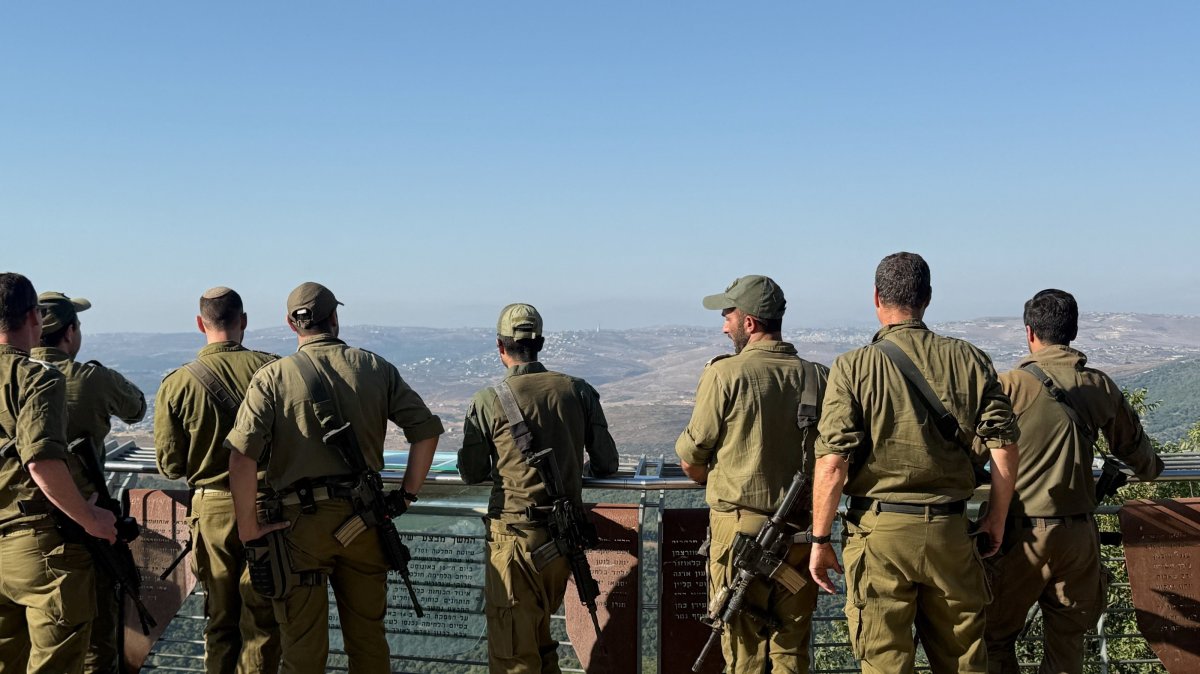
Israel is occupying southern Syria. Syrian journalists, in particular, can help expose what the Israelis are doing there. There’s a lot journalists can do.
“Holding the powerful to account, even when they’re on the same side as you, is one of the most important ways of building a democracy.”
Holding the powerful to account, even when they’re on the same side as you, is one of the most important ways of building a democracy. Syrian journalists should see themselves as part of trying to build that democracy.
SD: You mentioned the independent newspapers that emerged in Manbij. Are there particular journalists from that period whom you admire?
Gopal: Two newspapers in particular appeared during Manbij’s democratic experiment. Both were investigative publications that exposed crimes committed by the regime and rebel factions.
I really admire those journalists because they taught themselves how to do this work. They had no training, and they were doing it while bombs were falling on them.
Imagine living down the street from a commander and writing an exposé about him. When I write an exposé about a commander, most of the time I’m safe in the United States. They’re not going to come and attack me. But these journalists were risking their lives. They were remarkably brave, and I think they’re a model of what journalism should be and what journalism in Syria could look like.
SD: What about foreign correspondents? Whose reporting do you admire?
Gopal: One of the foreign journalists I really enjoyed reading on Syria was Rania Abouzeid. She covered the war for Time magazine and other publications. She was very good at understanding factional politics. She was one of the first journalists to understand the significance of the rise of Jabhat al-Nusra back in 2012.
Another is my friend Matthieu Aikins, who reports on Afghanistan. He’s done great investigative work, especially after the fall of the previous government, looking into war crimes committed by the US. We’re still only beginning to understand the extent to which US forces and their allies committed war crimes because it was difficult to report on those things while the war was going on.
SD: Your writing has a strong literary quality. Which three novels have influenced you?
Gopal: One is The Days of Abandonment by Elena Ferrante. It’s about a woman whose husband has left her and her children. It’s very poignant and heartrending, one of my favorite books.
I also love W. G. Sebald. He wrote four books in the 1990s, all of them in some way about the Holocaust. What’s interesting is that he doesn’t describe the Holocaust directly. He looks at its aftereffects. Austerlitz is perhaps his most famous book. That approach is useful when thinking about Syria, because the country has endured so much horror over the past 40 or 50 years.
Of course, journalists should write about those horrors directly. But sometimes it’s instructive to examine their aftereffects, the shadows they leave in the smaller moments of life.
Another of my favorite novels is The Wall by the Austrian writer Marlen Haushofer. It’s about a woman trapped in the woods. That’s all I’ll say about it. But it’s about gender, loneliness and family. It’s a very profound work.
SD: And which nonfiction books have influenced your approach to reporting and writing?
Gopal: One book that influenced me enormously is The Nazi Seizure of Power by William Sheridan Allen.
It’s a remarkable work of microhistory, the study of large historical events through small places or moments. It details the rise of the Nazis in one small German town from the 1920s through the Nazi period. I understood more about fascism, Nazism and the Second World War from that book than I would have from reading several books taking a bird’s-eye view.
Another is Maximum City by Suketu Mehta. What I love about it is how deeply it gets into the underbelly of Bombay. You’re not just meeting businessmen and teachers. You’re encountering drug lords, prostitutes and people from every segment of society. That’s the kind of work I admire.
SD: Finally, what do you hope readers take away from your book about Syria?
“There’s something Syrians can teach Westerners about democracy, about how they tried to build a democracy in terrible conditions.”
Gopal: Often, an American reader will read a book about a foreign place and say, “That’s terrible, what happened to those people,” or “It’s terrible that my government was implicated.”
But it’s a feeling of pity or sadness. Instead, I would love readers to look at what Syrians did under very adverse circumstances and feel inspired. There’s something Syrians can teach Westerners about democracy, about how they tried to build a democracy in terrible conditions.
It’s easy to feel dismay about everything happening in the world. But this book is ultimately a story of hope, in a way, and how to hold on to hope in very difficult circumstances. That’s what I hope readers take away from it.