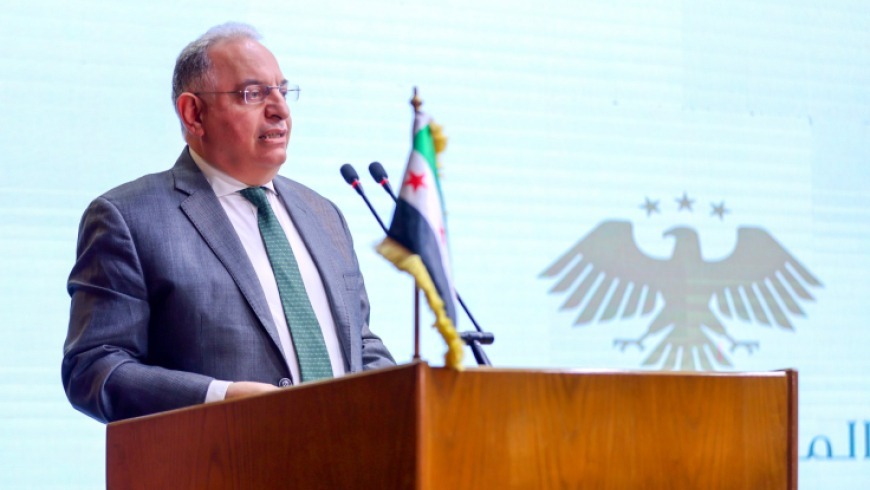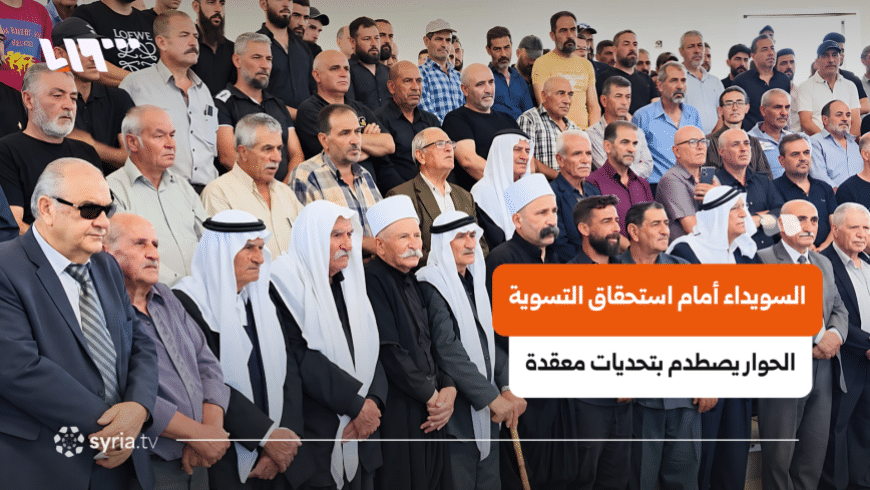
Suweida Governor Mustafa al‑Bakkour has renewed his call for a serious and inclusive dialogue between the Syrian government and the residents of the province, seeking a comprehensive resolution to a crisis that has persisted since the deadly clashes of July 2025. Those confrontations left hundreds dead and wounded, displaced thousands, and imposed severe security, humanitarian and economic pressures on daily life.
Al‑Bakkour’s appeal comes amid ongoing efforts to address unresolved issues, foremost among them the return of displaced residents, disclosure of the fate of missing and detained individuals, accountability for perpetrators of violations, and the restoration of essential public services. These efforts unfold against a backdrop of diverging local views over who should represent Suweida in negotiations and what guarantees are required for any future settlement.
In a series of messages published through the governorate’s official channels, al‑Bakkour urged residents to place dialogue and mutual understanding above all other considerations, stressing that the province’s stability and public safety must remain paramount.
“Sitting at the dialogue table does not mean relinquishing rights. Reconciliation does not mean forgetting grievances. Reaching an understanding does not mean abandoning dignity,” he said. He emphasized that resolving outstanding grievances requires genuine guarantees and concrete steps to rebuild trust, inviting local notables, community leaders and social figures to help bridge divisions and pave the way for clear, just negotiations with the state. Continued estrangement, he warned, offers no path forward. Dialogue may be difficult, he added, yet it preserves the possibility of peace and prevents further escalation, noting that Suweida’s future must not remain hostage to external agendas.
A Syrian–Syrian Solution Amid Regional Complexity
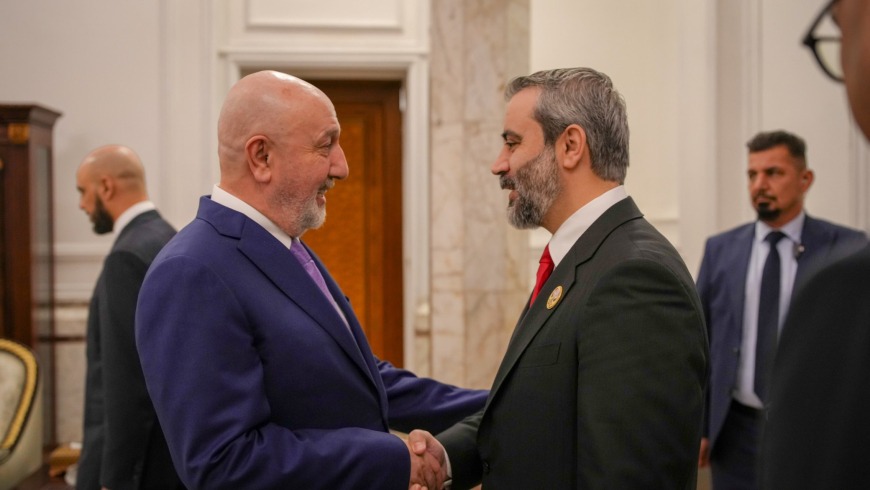
Dr. Kinan Masoud, spokesperson for the Third Current Initiative, told Syria TV that negotiations between the Syrian government and Suweida’s decision‑makers have continued, covering public service delivery and unresolved cases, including detainees. Masoud noted that the crisis in Suweida and southern Syria has become intertwined with broader regional security dynamics, making internal progress partly dependent on international understandings.
Assessing al‑Bakkour’s appeal, Masoud said government outreach and service management have persisted, citing the reinstatement of dismissed public employees, resolution of wage claims and ongoing repairs to electricity, water and civil infrastructure. He stressed, however, that any sustainable resolution must remain a “Syrian–Syrian” process to prevent the province from becoming an arena for regional score‑settling.
Masoud identified the humanitarian file as a top priority, estimating that approximately 150,000 displacedÏ Druze residents and more than 35,000 displaced Bedouin tribe members require urgent guarantees for safe return. He called for public trials for those responsible for crimes from all sides, restitution of property and fair compensation for victims.
Regarding political representation, Masoud argued that Sheikh Hikmat al‑Hijri, one of Suweida’s prominent religious authorities, is no longer accepted by a broad segment of the local population as a viable partner in a settlement. He instead advocated for the inclusion of local notables, social figures, political actors and the Men of Dignity movement in negotiating a new social contract for the governorate across all sectarian and ethnic groups. Masoud also warned of the long‑term societal consequences of educational disruptions affecting local youth.
Dialogue as a Framework for Justice, Not Concession
A local journalist from Suweida, speaking anonymously to Syria TV, stressed that calls for dialogue must not be interpreted as an abandonment of rights or an absolution of past abuses. He insisted that accountability for perpetrators—whether armed civilians or military personnel involved in summary executions, arson or looting—remains a non‑negotiable demand.
He noted that pragmatic negotiations represent the only viable path to prevent further loss of life, drawing a parallel to the framework used during the integration of the dissolved Syrian Democratic Forces. He agreed that future dialogue must involve broadly accepted local figures and exclude al‑Hijri, whom he described as “part of the problem,” while warning that Suweida’s continued isolation is inflicting deep harm on daily economic life, employment and public services.
The Trilateral Roadmap and the Legacy of July 2025
The renewed calls for dialogue coincide with discussions surrounding the implementation of the Trilateral Roadmap announced by Syria, Jordan and the United States on September 16, 2025. The framework outlines political, security and humanitarian measures, including consolidating the ceasefire, delivering humanitarian aid, restoring services, facilitating the return of displaced persons, investigating missing cases, ensuring accountability and initiating national reconciliation, alongside security arrangements for the south that respect Syrian sovereignty and territorial integrity.
A Syrian government source previously cited by SANA claimed that Israeli forces armed militia groups to incite chaos in Suweida during the July 2025 events, adding that Israeli bombardment—which obstructed government intervention during clashes between Druze and Bedouin groups—was halted following U.S. mediation. The source affirmed ongoing coordination with Washington and Amman to implement the roadmap, emphasizing that the Druze of Suweida remain an integral part of Syria’s national fabric and rejecting attempts to draw them into regional political maneuvers.
The current political landscape remains shaped by the armed conflict of July 2025, which involved local factions, government forces and concurrent Israeli airstrikes on government targets in Suweida and Damascus. Israel stated that its interventions aimed to protect the Druze population, while Damascus maintained that the strikes impeded state efforts to restore order. Today, as al‑Bakkour’s initiative intersects with local demands for resolution, the transition from broad principles to actionable agreements faces persistent obstacles related to trust, representation, justice and security guarantees.
This article was translated and edited by The Syrian Observer. The Syrian Observer has not verified the content of this story. Responsibility for the information and views set out in this article lies entirely with the author.