Syrian President Ahmad al-Sharaa is expected to attend next month’s G7 summit in France as the representative of a guest nation, Reuters reported on May 21, citing three sources familiar with the matter.
The summit is scheduled to take place from June 15 to 17 in Évian-les-Bains, in southeastern France. According to one source cited by Reuters, the invitation to Sharaa was hand-delivered to Syrian Finance Minister Yisr Barnieh during G7 financial talks held earlier this week in Paris.
If confirmed, Syria’s participation would mark the country’s first attendance at a summit of the Group of Seven since the forum was founded in 1975. The move would represent another significant step in Damascus’s gradual return to international forums following the fall of Bashar al-Assad in late 2024 and the formation of a new government under President Sharaa.
A Syrian official told Reuters that Damascus’s participation in the talks would likely focus on Syria’s potential role as a “strategic hub for supply chains,” particularly after the closure of the Strait of Hormuz. Shipping through the strait has been largely halted since the outbreak of the Iran war at the end of February, sending shockwaves through global markets and increasing international interest in alternative trade and supply routes.
The invitation comes as Syria seeks to rebuild an economy devastated by 14 years of war, sanctions, institutional collapse and infrastructural destruction. Although most sanctions imposed during the rule of Hafez and Bashar al-Assad have been eased, Syrian officials and international observers say the restoration of normal banking ties and the attraction of foreign investment have been slower and more difficult than initially expected.
The expected G7 participation also follows a series of European moves aimed at re-engaging Damascus. Earlier this month, the European Union lifted sanctions on seven Syrian government entities, including the Interior and Defence Ministries, while extending sanctions for another year against individuals and entities linked to the former Assad government.
Syrian Foreign Minister Asaad al-Shibani welcomed the EU’s decision to maintain sanctions on former regime officials accused of involvement in crimes against Syrians, while also praising the lifting of restrictions on state institutions as a step toward deeper cooperation with Europe.
The EU said the delisting was intended to support expanded engagement with Syria after Assad’s fall and the establishment of the new government. Brussels has also restored the full application of its cooperation agreement with Syria, saying the conditions that led to its suspension during Assad’s 2011 crackdown on protesters were no longer present.
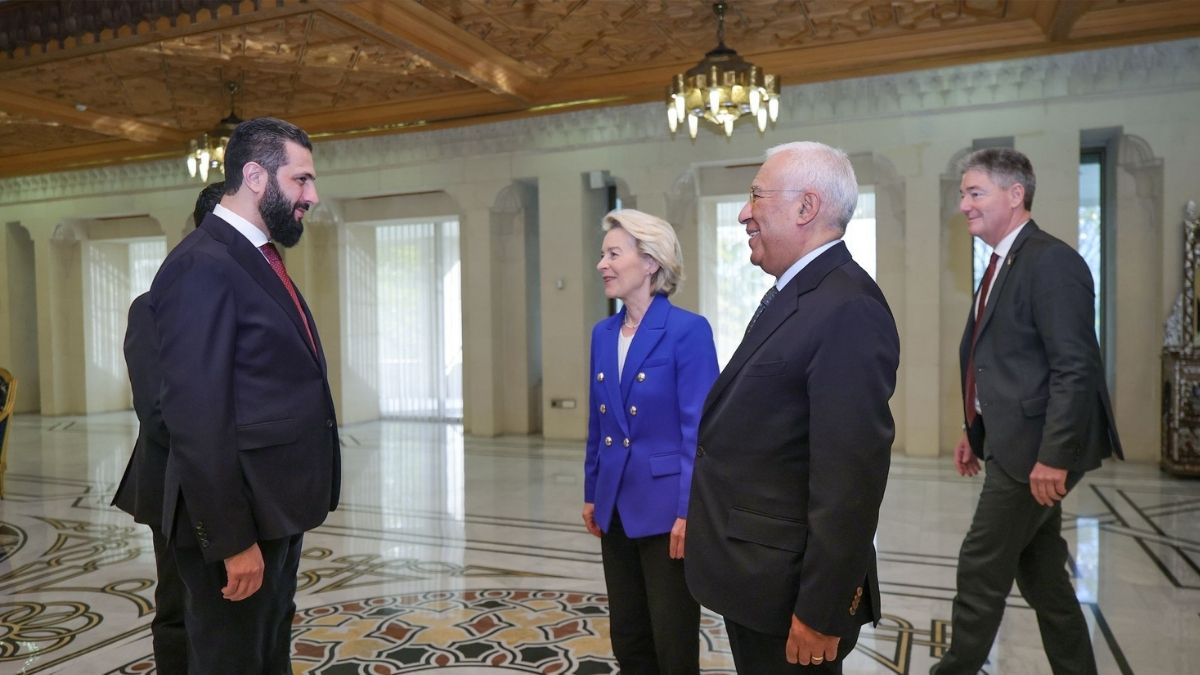
Shibani’s recent visit to Brussels marked the first high-level EU-Syria political talks since Belgium severed ties with Damascus at the beginning of the civil war. The visit followed a meeting in Damascus between President Sharaa, European Commission President Ursula von der Leyen and European Council President Antonio Costa, during which the EU announced a €620 million aid package.
Western engagement with Syria remains cautious, however. European governments continue to warn that networks tied to the former Assad regime retain influence and could undermine the country’s political transition and reconciliation efforts. At the same time, Syria’s geographic position, potential role in regional trade corridors, and emerging alignment with Western and Arab partners have increased its strategic value amid regional instability.
For Damascus, attendance at the G7 would carry symbolic and practical weight. It would signal Syria’s growing reintegration into Western-led diplomatic platforms, while offering the new government an opportunity to present itself as a partner in reconstruction, regional stability and alternative supply-chain planning at a time of global economic disruption.