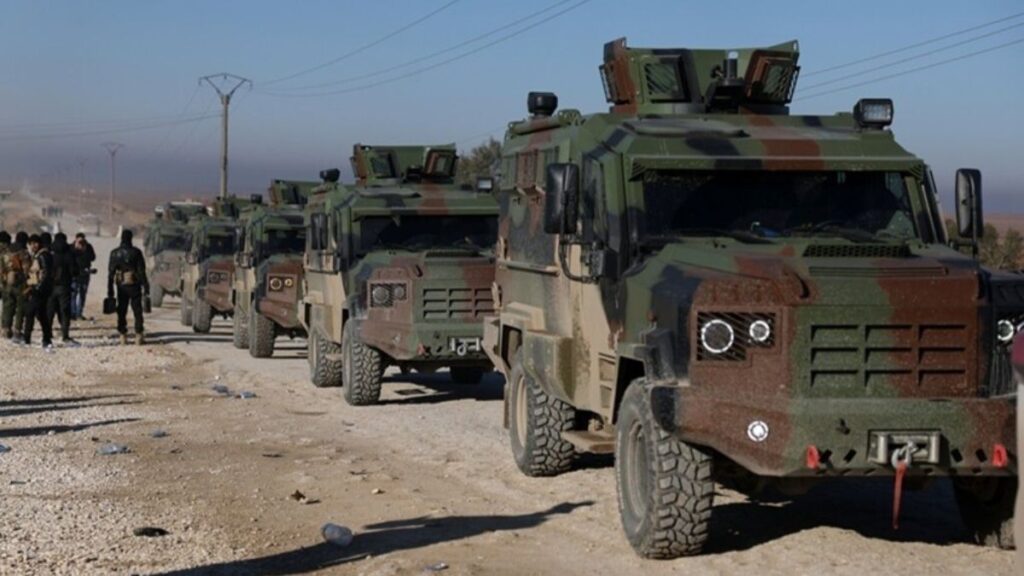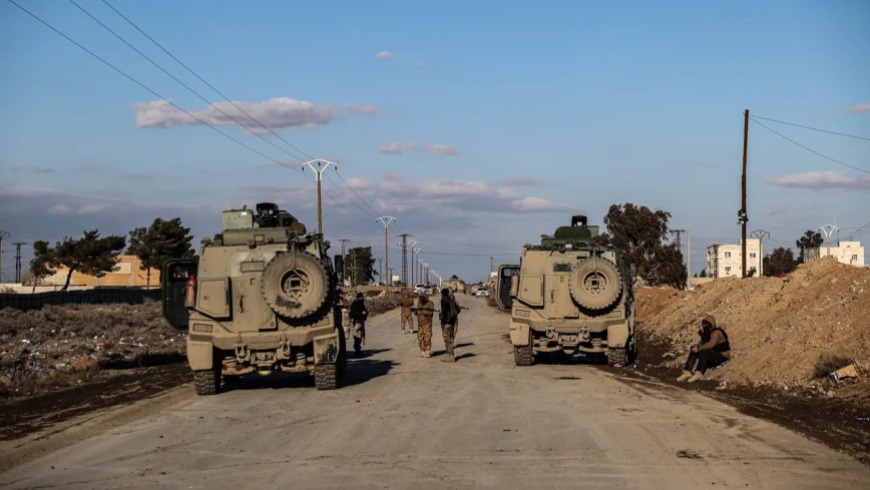
In the early hours of Tuesday, March 24, 2026, the Operations Command of the Syrian Arab Army announced that a military installation near al-Ya’rubiyah, in the rural reaches of Hassakeh, had been struck by incoming missiles. The attack represents a significant escalation, the first of its kind since the outbreak of the confrontation involving American, Israeli, and Iranian forces. Although the strike was confirmed through official channels, the authorities have not yet disclosed the extent of the damage or whether casualties were sustained.
Military investigators traced the missiles to positions inside Iraqi territory. Initial assessments indicate that five projectiles were launched from the vicinity of Tal al-Hawa, a village located twenty kilometers beyond the border. Syrian officials immediately opened formal coordination with Baghdad, where security authorities reported that Iraqi forces had begun a search operation to identify and apprehend those responsible. The Syrian military declared a state of full combat readiness and reaffirmed its commitment to the protection of Syrian soil.
International reporting, including dispatches from Reuters citing Iraqi security sources, suggested that the assault may have involved at least seven missiles directed toward the Rumeilan base. A launch platform mounted on a burned vehicle was later discovered in the Rabia region west of Mosul, and investigators believe it served as the apparatus for the attack. Local media circulated footage that appeared to show units of the Popular Mobilization Forces in Rabia firing toward the Kharab al-Jir base. American forces had already vacated that outpost earlier in March as part of a strategic redeployment preceding the wider regional conflict.
The Syrian Presidency Calls for Regional Neutrality
Amid the rising tension, President Ahmad al-Sharaa presented a clear and deliberate vision for safeguarding national stability. Speaking after Eid al-Fitr prayers at the People’s Palace in Damascus, he emphasized the government’s careful efforts to shield the country from the surrounding turmoil. He described the present geopolitical moment as a rare and consequential juncture in modern history, one that demands exceptional precision in governance and diplomacy. Despite fifteen years of internal conflict, the President affirmed that Syria now enjoys a climate of understanding with its regional and international neighbors, while maintaining steadfast solidarity with the broader Arab world.
Calls for Iraqi Accountability
The diplomatic tone sharpened following remarks by Sipan Hamo, the Syrian Assistant Minister of Defense for the Eastern Region. He assigned full responsibility for the Kharab al-Jir strike to the Iraqi authorities, arguing that the attack reflects a failure to exercise effective control over Iraqi territory. He described the incident as evidence that Baghdad has allowed its lands to become a platform for threats to Syrian security.
The Minister confirmed that the strike caused limited material damage and no fatalities, yet he stressed that the violation itself requires an immediate response at both the bilateral and international levels. He urged the international community to press Iraq to meet its border-security obligations, thereby reducing the risk of further escalation and reinforcing regional stability. Within Syria, the Ministry of Defense is strengthening its eastern defenses, with particular emphasis on expanded aerial surveillance and enhanced counter-drone capabilities to deter future cross-border attacks.
This article was translated and edited by The Syrian Observer. The Syrian Observer has not verified the content of this story. Responsibility for the information and views set out in this article lies entirely with the author.