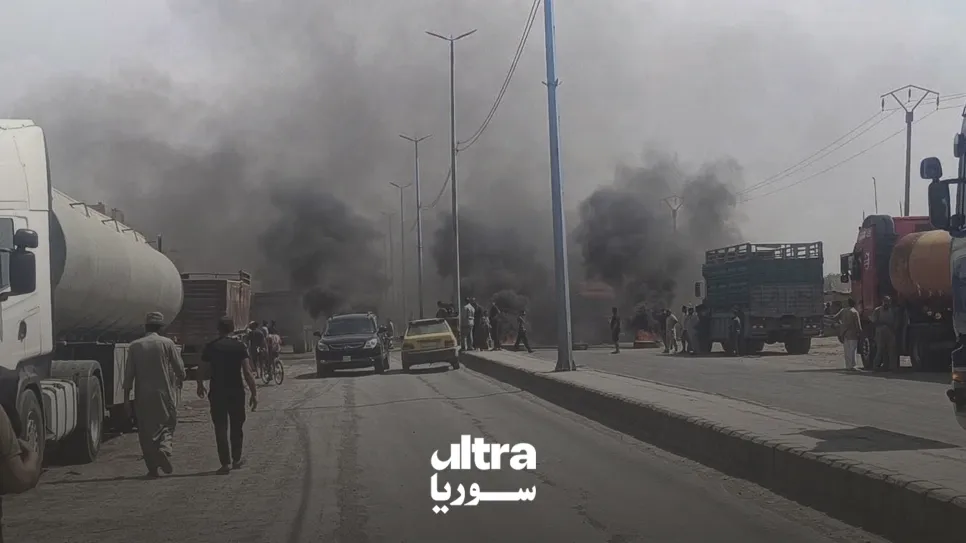
Protests swept through several Syrian governorates on Sunday after the government raised fuel prices by up to forty per cent, intensifying public anxiety over the cost of living and exposing the deeper structural weaknesses of the country’s energy sector.
Demonstrations were reported in rural Raqqa, Deir ez-Zor and Hasakah, where residents blocked roads, burned tyres and, in some areas, prevented crude-oil tankers from passing. Sections of the M4 highway were disrupted, while minibus drivers in several locations either went on strike or considered raising fares to offset the higher cost of fuel.
Public anger focused on the scale and speed of the increases. Residents argued that the new prices bear little relation to household incomes in an economy still struggling to recover from years of war, sanctions, infrastructure damage and declining purchasing power.
Under the revised schedule, octane-95 petrol rose to 195 new Syrian pounds per litre, octane-90 to 185 pounds and diesel to 175 pounds. Household gas cylinders reached 1,600 pounds, industrial cylinders 2,500 pounds, while a tonne of fuel oil climbed to 52,800 pounds.
The adjustment came only days after an earlier increase, deepening frustration and prompting widespread criticism on social media.
An Energy System Under Strain
Yet behind the price shock lies a broader energy dilemma. Syria remains heavily dependent on imported petroleum products, while domestic refining capacity falls far short of the volume and diversity of fuels required by the market.
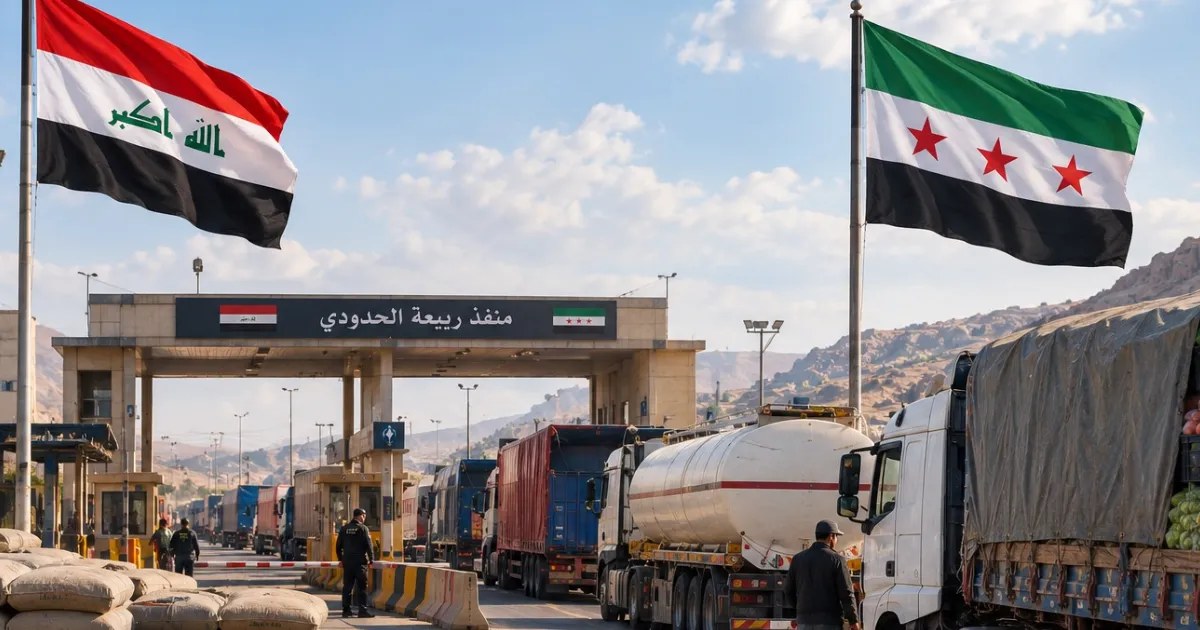
According to the Ministry of Energy, approximately 74 per cent of diesel demand, 81 per cent of petrol demand and 96 per cent of household-gas consumption are currently met through imports.
Average diesel demand stands at roughly 11.9 million litres per day. Domestic production supplies about 3.09 million litres, leaving nearly 8.81 million litres to be imported.
Petrol demand averages around 8.1 million litres per day, of which approximately 1.54 million litres are supplied domestically and 6.56 million litres imported. Household gas is even more dependent on external supply, with domestic production covering only about 98,000 litres of daily demand of roughly 2.5 million litres.
This dependence leaves Syria acutely vulnerable to movements in international energy markets, shipping costs and regional instability.
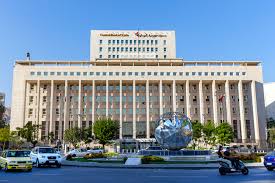
The Ministry of Energy says the latest increases were driven by higher international petroleum prices, tighter supplies of refined products, rising freight and insurance costs, disruption to shipping routes and pressure on domestic refining capacity.
The government also cites the temporary reduction in output from the Banias refinery, which is undergoing comprehensive maintenance and rehabilitation intended to raise its capacity from about 80,000 barrels per day to roughly 130,000 barrels per day.
During the maintenance period, however, Syria must import additional quantities of finished petroleum products, adding further pressure to procurement costs.
The ministry estimates the current cost of securing imported petroleum products and natural gas at around 25.2 million dollars per day, or approximately 755.6 million dollars per month. Officials stress that this figure represents the cost of obtaining imported supplies rather than a direct subsidy or budgetary loss.
Syria does produce crude oil, yet production alone does not resolve the shortage. Current output is estimated at about 100,000 barrels per day, compared with an average of roughly 81,800 barrels per day during the first half of 2026.
The Energy Ministry estimates that the Syrian market requires the equivalent of around 300,000 barrels per day across the full energy mix. This figure does not mean the country requires 300,000 barrels of crude oil alone. The market needs a combination of petrol, diesel, household gas and other refined products that local refineries are not currently able to supply in sufficient quantities.
The composition of Syria’s crude adds another complication. More than 75 per cent of local production is heavy crude, which imposes technical limits on how much can be processed through existing refining facilities and on the mix of products that can ultimately be produced.
This helps explain an apparent contradiction that has long frustrated the public: a country that produces oil still depends heavily on imported fuel.
For households, however, the distinction between crude production and refining capacity offers little comfort.
Fuel prices feed directly into almost every part of daily economic life. Transport operators depend on diesel and petrol. Farmers need fuel for irrigation pumps, tractors and machinery. Small manufacturers rely on generators and transport networks. Merchants pay for the movement of goods between cities and markets.
A rise in fuel prices therefore seldom remains confined to the pump. It moves rapidly through the economy, raising the cost of transport, food production, freight and essential services.
Farmers may face higher cultivation and irrigation costs. Shopkeepers and manufacturers are forced either to absorb part of the increase or pass it on to consumers. Public-transport operators face pressure to raise fares. Households, already operating under severe income constraints, see their purchasing power eroded further.
This is why the latest adjustment has become more than an energy-policy dispute. It has reopened a wider argument over who ultimately bears the cost of Syria’s economic recovery.
The Search for Balance
The government argues that absorbing the full increase indefinitely would place unsustainable pressure on public finances and jeopardise the state’s ability to finance future fuel shipments, essential services and reconstruction.
Officials also warn that allowing too wide a gap to emerge between procurement costs and domestic selling prices could eventually threaten continuity of supply, turning a pricing crisis into a physical shortage.
The ministry says the current pricing mechanism is designed to move in both directions as international costs change. It notes that fuel prices were reduced earlier in 2026 when procurement indicators fell.
It also insists that the price of subsidised bread will remain unchanged following the latest fuel adjustment.
Even so, protecting the price of bread alone does not shield households from the wider inflationary effects of higher energy costs. Transport, agriculture, manufacturing and distribution all transmit fuel increases into the prices of other goods.
The policy challenge therefore extends beyond securing fuel supplies.
Economic relief will depend on stronger market supervision to prevent profiteering, targeted support for agriculture and small productive enterprises, and greater transparency over how long exceptional pricing measures are expected to remain in place.
The government says it is seeking to reduce dependence on imported energy by raising field production, restoring damaged wells, rehabilitating refineries, expanding storage and transport capacity and diversifying sources of supply.
During the first half of 2026, according to official figures, 152 wells were returned to operation and ten additional wells entered production.
Such measures may gradually strengthen domestic supply, yet the immediate strain remains severe.
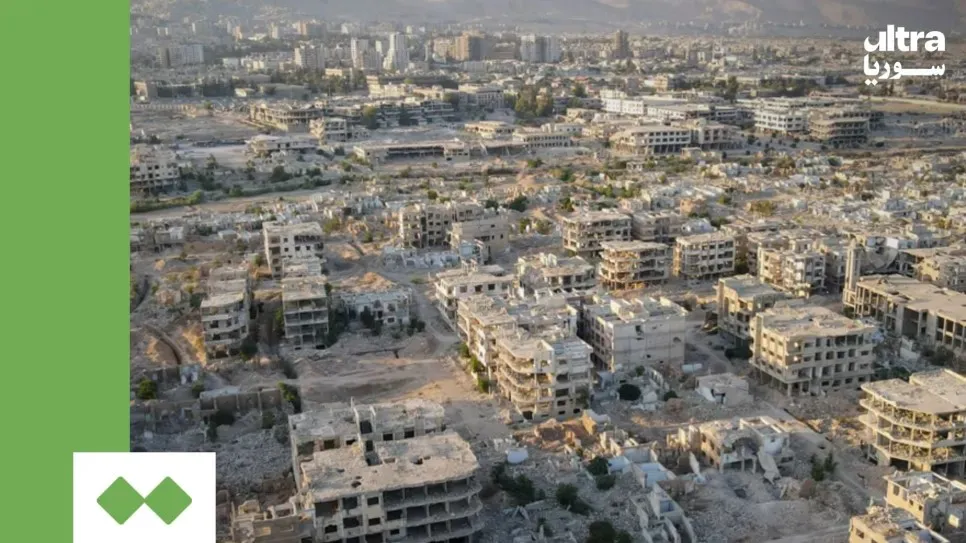
Syria urgently needs investment, restored infrastructure and more reliable energy resources. At the same time, any recovery strategy will ultimately be judged by whether citizens can still afford to travel, work, farm, produce and buy basic goods.
The central challenge is therefore one of balance: securing enough energy to keep the economy functioning without allowing the price of that security to become unbearable for the population.
This article was translated and edited by The Syrian Observer. The Syrian Observer has not verified the content of this story. Responsibility for the information and views set out in this article lies entirely with the author.