Syria’s oil and gas sector has entered a new phase of international engagement. After years in which foreign companies limited themselves to memorandums of understanding and technical surveys, negotiations have begun to move toward concrete exploration and field-development agreements. This shift carries implications that reach far beyond production volumes. The contractual frameworks being shaped today will determine Syria’s future share of revenue, the profitability of foreign operators, and the degree of sovereign control the state retains over its natural resources.
The latest signal came in July, when TotalEnergies Chief Executive Officer Patrick Pouyanné announced that the company was evaluating an offshore exploration contract following a prior technical review agreement conducted with QatarEnergy and ConocoPhillips for Block 3 off the Latakia coast. Pouyanné stressed that current security conditions still preclude a return to onshore operations, underscoring the extent to which multinational firms continue to calibrate investment decisions against internal stability.
A Sector in Need of Capital
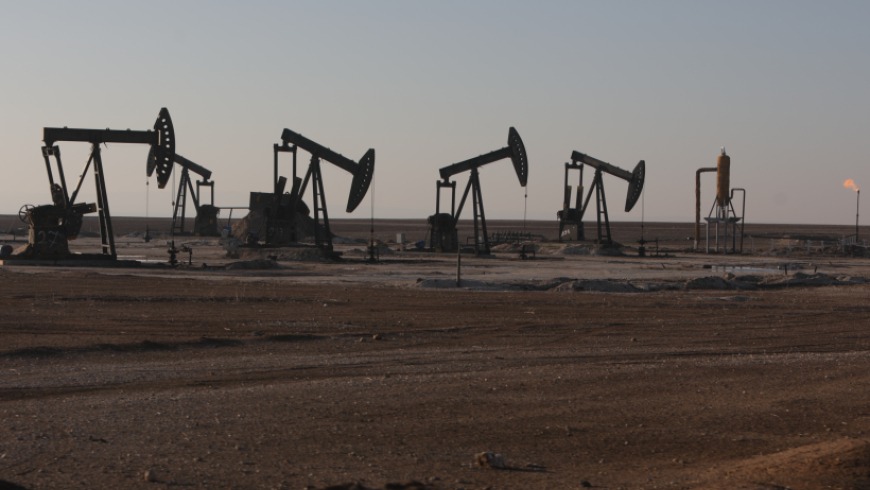
The central challenge is the vast gulf between Syria’s pre-war production levels and its present capacity. Before the conflict, Syria produced roughly 380,000 barrels of oil per day and approximately 900 million cubic feet of natural gas. War-related disruptions slashed oil output by nearly eighty percent and halved natural gas production, according to estimates by Wood Mackenzie. While low-cost well rehabilitation and facility repairs could yield modest short-term gains, Wood Mackenzie notes that a full recovery will require substantial foreign capital, modern technology, and reliable export routes.
TotalEnergies’ initiative follows a June agreement involving ConocoPhillips and Novatera to develop existing gas fields and explore new prospects. Early projections suggest an additional four to five million cubic meters of gas per day within a year. The involvement of prominent American, European, and regional firms marks the beginning of a broader reconfiguration of Syria’s energy investment landscape after years of contraction.
Yet the arrival of investors does not resolve the fundamental question of resource governance. Petroleum economics draws sharp distinctions between concession, production-sharing, and service contracts—models that differ significantly in terms of sovereignty, cost recovery, and profit distribution. As the World Bank notes, contractual design directly determines how risk, return, and authority are allocated between host governments and foreign operators. For states requiring extensive external financing, the choice of contractual model is therefore decisive.
Heightened Risk Elevates Investment Costs
Energy security analyst Umud Shokri told Syria TV that evaluating Syria’s recovery potential solely on the basis of its reserves is insufficient. Commercial viability, he argued, depends on infrastructure, security, financing, and regulatory capacity. Shokri estimates Syria’s remaining reserves at approximately 2.5 billion barrels of oil and 8.5 trillion cubic feet of natural gas—figures that require extensive capital deployment before they can translate into stable output.
In such environments, Shokri noted, companies inevitably seek contractual terms that offset potential delays and losses, whether through extended durations or enhanced flexibility in cost recovery and returns. Syria’s negotiating leverage therefore depends on its ability to foster competitive bidding rather than tying field development to a single operator or uniform contractual structure.
Shokri added that Syria’s energy landscape is increasingly shaped by the potential revival of regional transit projects, most notably the Kirkuk–Baniyas pipeline. On July 14, Washington announced its support for efforts to reactivate the pipeline linking Iraqi oil fields to the Syrian coast, at a moment when regional states are seeking supplementary export routes to the Mediterranean. Such developments confer strategic transit, refining, and export value upon Syria’s geographic position alongside its upstream assets.
Contractual Terms Outweigh Corporate Names
Oil market expert Othman al-Hadiri told Syria TV that countries rebuilding their energy sectors after prolonged instability must approach long-term agreements with caution, as an urgent need for liquidity and capital gives foreign firms significant bargaining power. This caution is particularly relevant in Syria, where public details regarding revenue-sharing ratios, contract lengths, and cost-recovery mechanisms remain limited.
Al-Hadiri stressed that transparency and oversight must lie at the centre of resource governance. The critical factor is not the nationality or size of the investor, but the specific financial and technical terms secured, ensuring that concessions correspond strictly to actual risk and capital deployed. Major contracts, he argued, must undergo rigorous economic and legal evaluation.
Technology transfer, local workforce development, and technical auditing of cost-recovery claims are no less important than the baseline production split retained by the state. A contract that rapidly increases output may yield negligible domestic returns if operational expenses and accelerated cost recovery absorb most revenue during the initial years of operation.
From Production Volume to Ownership Structure
Recent momentum shows that the central challenge is no longer simply identifying capable operators to repair wells or raise field yield. Interest from TotalEnergies, ConocoPhillips, and other Western and regional firms demonstrates that the technical capacity exists. The real question concerns the regulatory and contractual architecture that will govern their return. Syria’s declared intention in August to reduce reliance on Russian crude adds a geopolitical dimension to the realignment of its energy partnerships.
These factors elevate the new contracts beyond routine commercial transactions. A state that grants overly generous terms during a period of elevated risk will struggle to renegotiate once conditions stabilise and asset values rise. Conversely, diversifying investor bases, utilising shorter contract durations, and incorporating periodic review mechanisms allow the state to retain greater strategic control over its natural resources.
Ultimately, the structural quality of the agreements forged in the coming period will be far more decisive than the number of foreign firms entering the market. Restarting production requires capital and technology. Determining how much value remains within the domestic economy once the oil begins to flow again depends entirely on the terms Syria secures today.
This article was translated and edited by The Syrian Observer. The Syrian Observer has not verified the content of this story. Responsibility for the information and views set out in this article lies entirely with the author.