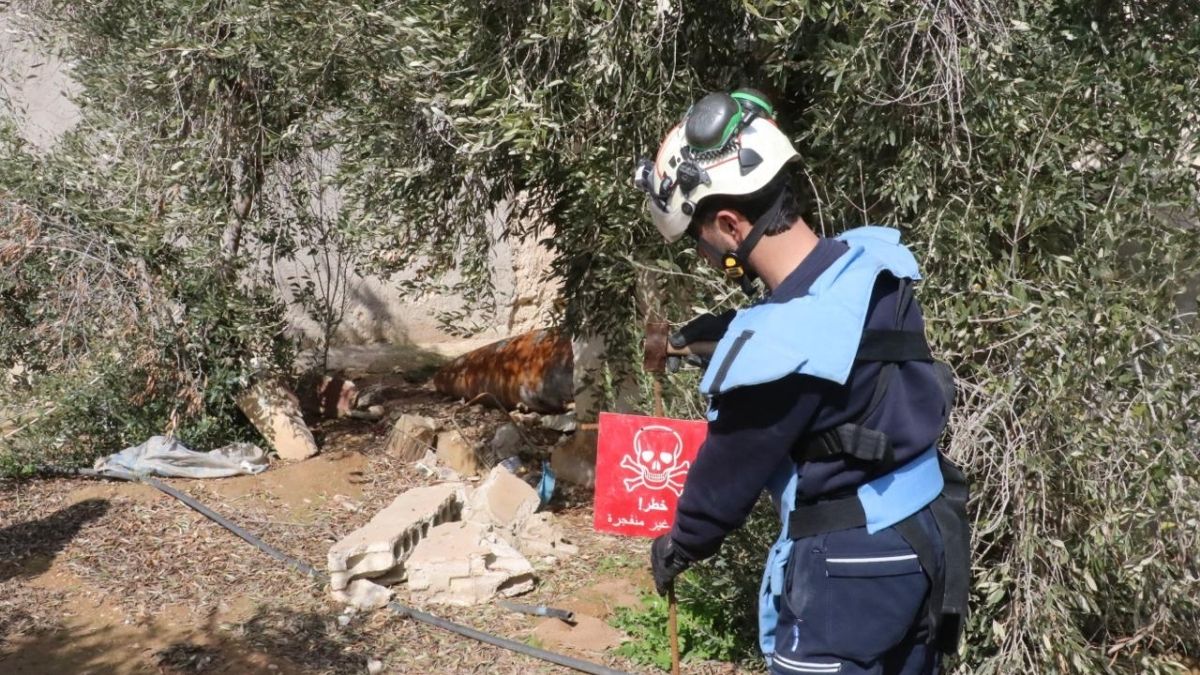
Three sanitation workers were killed in eastern Daraa countryside (southern Syria) after a landmine left behind from the war exploded today, Monday, April 27.
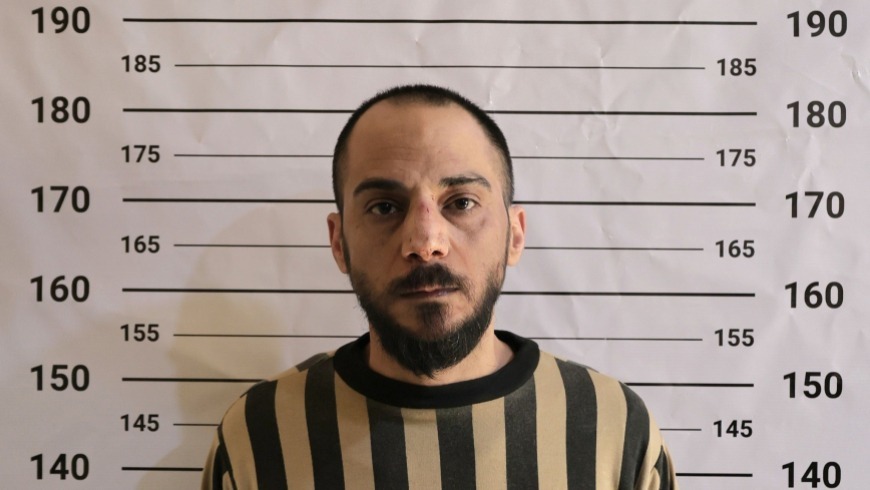
Enab Baladi’s correspondent in Daraa reported that Juma Saleh, Ahmad Khalaf, and Asaad Hammadi, all sanitation workers, were killed when a war remnant exploded in the town of Busra al-Harir (Daraa governorate, southern Syria). All three were from Deir Ezzor governorate.
The head of the local council in Busra al-Harir, Anas al-Hariri, told Enab Baladi that the explosion killed three people from Deir Ezzor who were not registered on the local council’s payroll, but had been hired to work at the expense of the local community, which paid their salaries.
He added that the workers tampered with an explosive remnant of war, causing their deaths. The explosion caused no damage other than the deaths of the three workers.
The Syrian government repeatedly announces deaths or injuries caused by explosions of war remnants, especially in areas the former regime had considered military zones and barred residents from accessing.
Four Soldiers Killed in Previous Explosion
Four soldiers from the Engineering Regiment of the Syrian army were killed, and several civilians were injured in an explosion at the al-Ghazali complex on the Damascus to Daraa international highway while they were carrying out a mission to dismantle ammunition and war remnants.
Enab Baladi’s correspondent in Daraa reported on April 16 that the explosion occurred near al-Ghazali fuel station on the highway, prompting ambulances and fire trucks to move to the site.
The correspondent said the explosion caused injuries, and the wounded were taken to Izraa Hospital (Daraa governorate, southern Syria), near the site of the blast. Among the injured was one critical case that was transferred to the capital, Damascus, according to the correspondent.
For its part, the Syrian Arab News Agency (SANA) quoted a military source at the time as saying that “the explosion occurred at a site containing war remnants that had been dismantled from various locations in Daraa governorate,” killing four army soldiers, injuring others, and causing material damage at the site.
Daraa Health Directorate reported that the final toll from the explosion was nine civilian injuries, including two critical cases transferred to hospitals in Damascus, in addition to a girl who suffered wounds the directorate described as “minor,” while the remaining injured were treated at Izraa National Hospital.
UN Warnings
These incidents coincide with growing UN warnings over the dangers of landmines. According to the UN Office for the Coordination of Humanitarian Affairs (OCHA), more than 900 civilian casualties have been reported since December 8, 2024, including 367 deaths and 542 injuries, with children accounting for more than one-third of these casualties.
Human Rights Watch also called on the Syrian government and donors to urgently support clearance and awareness efforts, warning that “widespread contamination by landmines and explosive remnants of war across Syria may kill civilians returning to their homes.”
Humanitarian organizations estimate that mine clearance operations in Syria “need years and cannot be completed in a short period,” amid the continued absence of effective clearance programs and declining international support, leaving millions of Syrians at the mercy of the “silent death” planted in their lands.
According to data from the United Nations Children’s Fund (UNICEF), Syria is among the countries most contaminated by mines and war remnants in the world.
The Syrian Network for Human Rights said the number of victims from 2011 through the end of 2024 reached around 3,521 killed, including 931 children.
Children account for around 30% of those killed and 40% of those injured, reflecting the scale of the danger facing this group, especially amid weak awareness and the continued presence of these remnants around their daily lives.