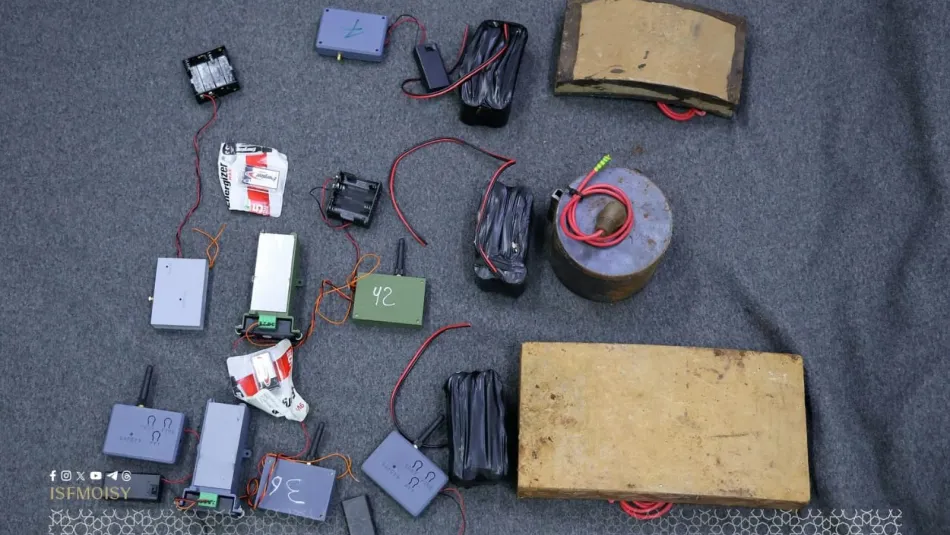
A recent article on Tencent, written by Houanqiu Yishi, examines Syria’s efforts to acquire Pakistani weapons through Saudi mediation. The author argues that because Pakistan’s defense industry relies heavily on Chinese technology, Beijing holds a decisive role in approving any transfer. The piece ties the effort to the difficulty of replacing Syria’s Russian-made equipment and to the depth of Pakistan-China military cooperation, which may impose strict limits on sales to Damascus.
Damascus Looks Beyond Moscow
According to the article, the Syrian army still relies on Russian-made hardware, including main battle tanks, fighter aircraft, and air defense systems. Keeping these running requires a steady supply of spare parts and technical support from Moscow, even after the fall of Bashar al-Assad’s regime in December 2024.
The author traces this dependence to decades of cooperation with the Soviet Union and later Russia, covering equipment, training, and logistics. Replacing such an integrated system would demand substantial financial and technical resources. Syrian-Russian talks throughout 2025, the article says, reflected Damascus’s wish to secure continued support for its surviving assets, particularly those left intact after Israeli strikes.
On 6 October 2026, Interim President Ahmad al-Sharaa met Saudi Crown Prince Mohammed bin Salman in Riyadh, accompanied by Foreign Minister Asaad al-Shaibani. They discussed bilateral relations, expanded economic and political cooperation, and regional developments. The Chinese article claims, without naming a source, that Sharaa asked the Crown Prince to intervene with Pakistan to speed up arms supplies and enable direct purchase agreements between Damascus and Islamabad.
Pakistan as a Route to Chinese Technology
The author explores whether Syria might turn to Pakistan’s defense industry, which has developed through decades of collaboration with China. Key examples include the jointly developed JF-17 multirole fighter and the Al-Khalid main battle tank, which is built on Chinese technology derived from the MBT-2000 project. The article estimates that roughly 80 per cent of Pakistan’s primary combat equipment is directly or indirectly linked to Chinese technology.
Buying through Pakistan, the author suggests, could give Damascus systems at lower cost than Western alternatives while avoiding the political sensitivities of buying directly from Beijing.
The article also points to Saudi Arabia’s potential role. Riyadh and Islamabad signed a strategic defense pact on 17 September 2025, under which an attack on either country is treated as an attack on both. The author argues this gives Saudi Arabia added leverage to raise Syria’s defense needs with Pakistan, in line with Riyadh’s efforts to deepen ties with Damascus and curb Iranian influence. The push also coincides with growing Saudi economic activity in Syria, including investment agreements announced in February 2026 covering airport upgrades, telecommunications, and infrastructure.
Technical and Legal Limits
The author stresses that Pakistan’s ability to supply Syria depends on the systems requested, since some Pakistani production lines rely on Chinese components and intellectual property. Cooperation may be feasible for command-and-control systems, unmanned aerial vehicles, munitions, and small arms. The article mentions reports of arrangements backed by Saudi Arabia and Türkiye, but cites no sources and does not confirm any signed contracts.
Main battle tanks, fighter aircraft, and advanced air defense systems are a different matter. These platforms contain sensitive Chinese technology subject to contractual re-export restrictions. Building or assembling equipment in Pakistan, the author clarifies, does not give Islamabad full freedom to pass on every subcomponent to third countries when the underlying technology is covered by Chinese end-user agreements.
Uyghur Fighters and Beijing’s Security Concerns
The article links Beijing’s likely stance to the sensitive issue of foreign fighters, specifically members of the group China designates as the East Turkestan Islamic Movement (ETIM), associated with Uyghur militants who fought in Syria under the Turkistan Islamic Party (TIP) banner. Reports that former members of armed groups have been absorbed into Syria’s restructured military and security institutions, along with claims of a continued ETIM-linked presence, have raised serious concerns in Beijing about Damascus’s counterterrorism commitments.
On 12 October 2026, China’s Deputy Permanent Representative to the United Nations, Sun Lei, urged Syria’s interim government to turn its political pledges into concrete action against terrorist organizations listed by the UN Security Council, naming ETIM explicitly. Earlier, on 17 November 2025, Chinese Foreign Minister Wang Yi discussed counterterrorism cooperation with al-Shaibani in Beijing. A joint statement stressed both countries’ commitment to security coordination and combating terrorism, and the Chinese Foreign Ministry said Damascus had pledged not to let any entity use Syrian territory to harm Chinese national interests.
In the author’s view, these concerns will likely lead Beijing to scrutinize closely any proposal involving advanced weaponry that contains Chinese technology, even if Pakistan handles the manufacturing and logistics.
This article was translated and edited by The Syrian Observer. The Syrian Observer has not verified the content of this story. Responsibility for the information and views set out in this article lies entirely with the author.