Australia has removed Hayat Tahrir al-Sham (HTS) from its terrorism and financial sanctions registers while maintaining sanctions against Ibrahim Sukkarieh, better known as Abu Mariam al-Australi, a figure reported to be directing Syria’s sovereign wealth fund. The decision has raised questions about the fund’s ability to operate freely within the international financial system.
On 13 and 14 November, the Australian government issued separate decisions removing HTS from its list of terrorist organisations and lifting the financial sanctions previously imposed on the group. HTS formally dissolved in January 2025 following the collapse of Bashar al-Assad’s regime.
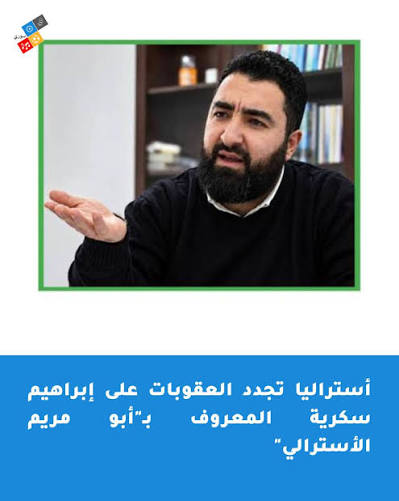
Sukkarieh, however, remains subject to Australian sanctions first imposed in 2018. An Australian-Lebanese national who has reportedly assumed a prominent role in Syria’s post-Assad economic administration, he continues to be designated under Australia’s counterterrorism sanctions framework.
Australian government records identify him as Abraham Succarieh, also known as Abraham Sukkarieh and Abu Essa. Born in Brisbane in 1985, he holds both Australian and Lebanese citizenship.
Known in Syria as Abu Mariam al-Australi, Sukkarieh has been cited in several investigations as a key figure involved in managing economic assets transferred to the country’s new authorities.
In October, the Financial Times reported, citing three individuals who had met him, that Sukkarieh was overseeing the Syrian Sovereign Fund. Established by President Ahmad al-Sharaa in 2025, the fund has assumed control of extensive assets previously held by businessmen linked to the Assad era, along with other state-owned holdings.
Despite those reports, his official status remains unclear, as no public presidential decree has been issued confirming his appointment as the fund’s director.
According to a report published by Enab Baladi on 22 November, the continued sanctions against Sukkarieh could complicate the sovereign fund’s dealings with international banks, investors, and financial institutions.
Economist Abdul Rahman Mohammad, a lecturer at the University of Hama, explained that the sanctions involve asset freezes and prohibit making funds or economic resources available to Sukkarieh, whether directly or indirectly.
While the designation does not automatically apply to the Syrian Sovereign Fund itself, Mohammad noted that financial institutions are likely to examine whether Sukkarieh exercises effective control over the organisation or derives benefits from its activities.
He explained that banks and investors routinely assess ownership structures, management arrangements, and actual control mechanisms before entering into financial relationships. As a result, Sukkarieh’s continued involvement could lead some institutions to avoid dealings with the fund for fear of violating sanctions rules or exposing themselves to reputational risks.
Addressing those concerns, Mohammad argued, would require clear governance structures, transparency regarding ownership and control, strong compliance mechanisms, and demonstrable institutional independence from sanctioned individuals.
The Australian decision also underscores the distinction between lifting sanctions on an organisation and removing restrictions on individuals previously associated with it.
Samir al-Abdullah, a senior researcher at the Arab Centre for Contemporary Syrian Studies, told Enab Baladi that Australia’s decision to delist HTS reflected a broader and gradual international shift towards recognising Syria’s new authorities as the country’s governing administration.
He cautioned, however, that political recognition and the easing of sanctions do not automatically translate into renewed investment flows or unrestricted access to global banking networks.
For the Syrian Sovereign Fund, the unresolved status of Sukkarieh presents a particular challenge. As Damascus seeks to attract foreign investment and recover assets accumulated during the former regime, the continued presence of a sanctioned individual in a senior leadership role could undermine confidence in an institution expected to play a central part in Syria’s economic reconstruction.
This article was translated and edited by The Syrian Observer. The Syrian Observer has not verified the content of this story. Responsibility for the information and views set out in this article lies entirely with the author.