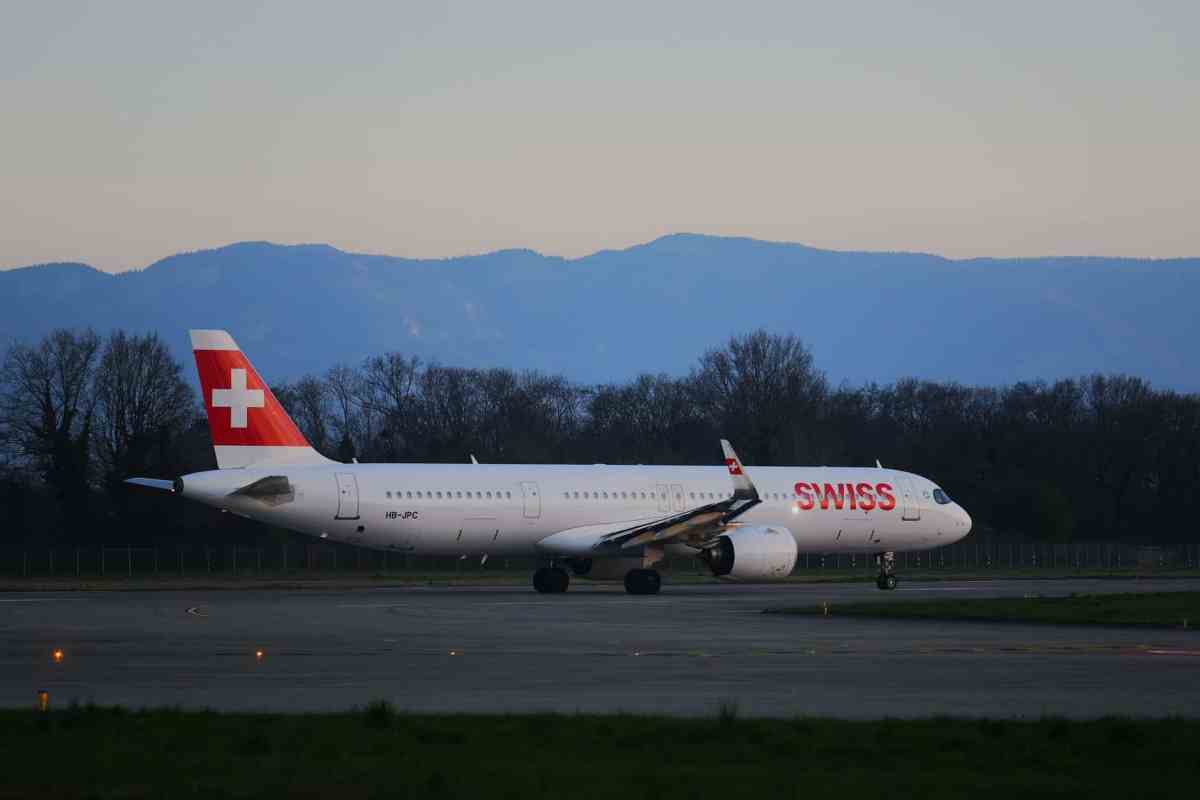
On July 27th 2026 a routine Swiss flight from Zurich to New York was forced to make an emergency landing in Bangor, Maine, after smoke appeared in the business-class cabin.
Photo by Planespotter Geneva on Pexels.com
The source was eventually traced to a headphone-charging case that had become wedged in a seat and crushed. Its damaged lithium battery overheated and began to smoke.
The pilots diverted to Bangor International Airport, about 600km north-east of New York, where the aircraft landed safely.
A Swiss technical team sent to Bangor later confirmed the cause. According to the airline, the charging case had slipped into the seat mechanism and become wedged. Damage to the device, which included a small power bank, caused it to overheat.
Source: Swiss
Swiss used the incident to remind passengers of its rules on portable batteries. Many electronic devices contain lithium batteries, which can catch fire if damaged. In this case the device was a small, low-capacity charging case. A larger power bank could have caused more serious consequences.
Since the start of 2026 Swiss has prohibited the use of power banks on board. Passengers may not use them to charge other devices, nor may they recharge the power banks themselves during a flight.
Each passenger may carry no more than two power banks in hand luggage. They must be kept on the passenger, in the seat pocket or in a bag under the seat in front. They may not be placed in an overhead locker or packed in checked baggage. The same rules apply to electronic cigarettes.
Passengers are also instructed to alert the crew immediately if an electronic device becomes unusually hot, starts to smoke or slips into a seat. This is intended to prevent it from being crushed when the seat is adjusted.
Martin Pohl, who heads Switzerland’s aviation-investigation division, told SRF that he was not surprised that such a small device had caused the incident. Even compact rechargeable batteries with a high energy density can, for a short time, produce substantial heat, creating a serious risk on an aircraft.
But Mr Pohl argued that a blanket ban on chargers and power banks in the cabin would be short-sighted. Smartphones and laptops contain much larger batteries and can pose a similar danger if crushed. The more practical response, he said, is to ensure that passengers understand the risks and handle electronic devices carefully.
The law on personal liability in such cases is not well tested. Liability would depend on whether a passenger had acted negligently and whether that negligence had caused the damage. A passenger who knew that a device had fallen into a seat, but adjusted the seat rather than informing the crew, might face a claim. A passenger who was unaware of what had happened would be more likely to be treated as the victim of an accident.
The passengers continued from Bangor to JFK on a replacement Swiss Airbus A330. They arrived about eight hours later than scheduled.
One small battery and one small mistake, caused an emergency landing, missed connections and appointments, and what was probably a substantial bill for the airline.
More on this:
Swiss press release (in English)
For more stories like this on Switzerland follow us on Facebook and X.