Want to bookmark your favourite articles and stories to read or reference later? Start your Independent Membership today.
Join today
Already a member?
Log in
Polestar has teamed up with researchers from Oxford University’s SDG Impact Lab to put the thrill of driving an electric car under the microscope, with heart-rate monitors and eye tracking joining the usual checks on speed and acceleration.
The pilot study suggests there’s more to an exciting drive than how quickly a car gets around a circuit. Drivers described a mixture of physical excitement, trust in the car and intense concentration, with several independently comparing the experience to a “controlled roller coaster”. The researchers say electric cars have made the usual performance figures less useful for explaining how a drive feels. They can deliver rapid acceleration while doing without the engine noise, vibrations and gear changes that have traditionally helped make driving feel exciting.
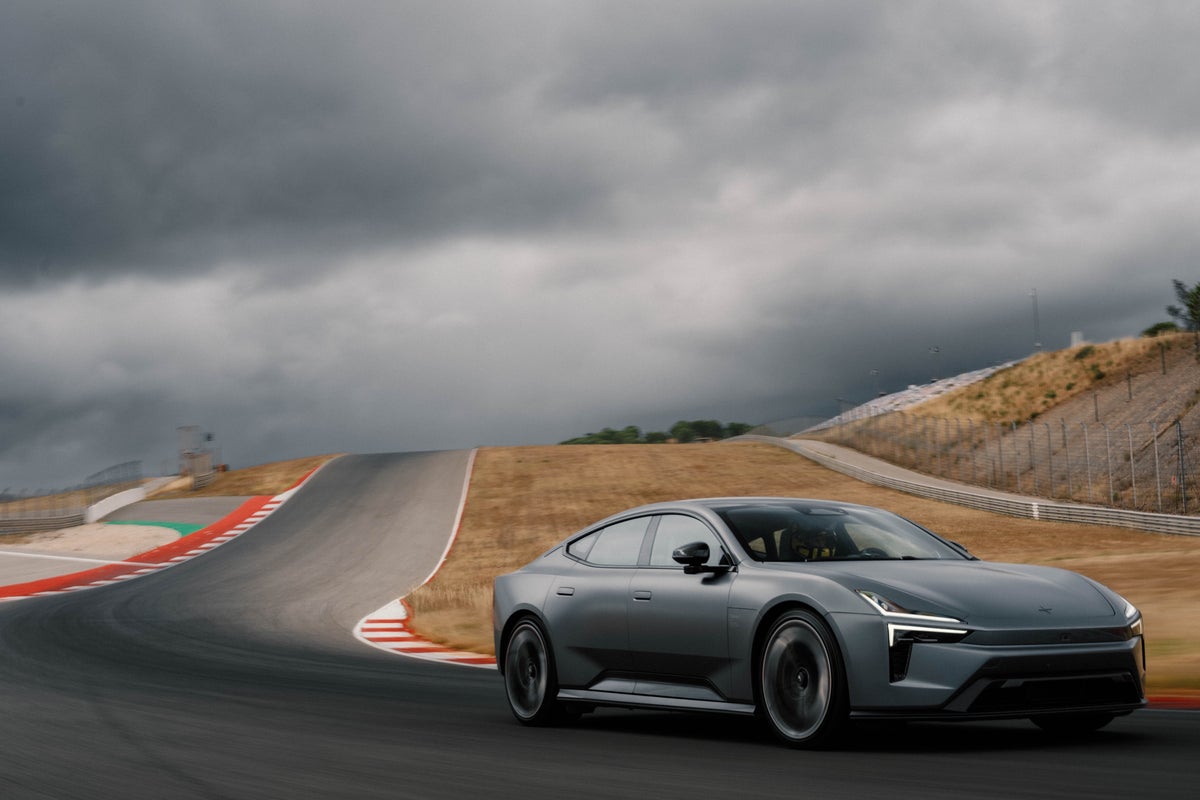
Twelve experienced Polestar drivers took to Gotland Ring in Sweden, trying a rear-wheel-drive Polestar 4 with 268bhp and a 536bhp Dual motor version fitted with the Performance pack. Before heading to the circuit, the team surveyed 60 Polestar owners across 15 countries. Handling and connection to the road came up most often, ahead of performance and acceleration, helping shape the questions put to drivers during the track sessions.
Experts assessed heart-rate readings and tracked eye movements (Polestar)
Each driver tried both cars at a gentle pace and during harder driving, following a lead car that set the speed. Using two versions of the same model kept the cabin and controls consistent, helping the team focus on differences in how the cars drove. Alongside information from the cars, researchers collected heart-rate readings, tracked eye movements and gathered feedback through questionnaires and interviews. The aim was to connect what happened behind the wheel with what the car was doing.
For the six drivers with complete vehicle data, the Dual motor car produced 32 per cent higher peak acceleration on matched fast laps, while requiring 15 per cent less steering effort. Hard acceleration occurred nearly nine times as often, and forces through corners were higher, too. Yet the two cars were travelling at almost identical average speeds, with the extra capability mainly used to accelerate out of corners.
The drivers’ own assessments also favoured the more powerful car. It scored 89.2 out of 100 on the study’s performance scale, against 67.7 for the single-motor version. Scores for the overall experience were 93.0 and 77.9 respectively, with most participants giving the Performance version higher marks in both areas.
In interviews, drivers linked enjoyment to feeling in control and trusting the car’s responses. One participant described how the car “makes you feel like a better driver than you are”, while some found the single-motor version engaging in a different way because it asked for more involvement behind the wheel.
Maxwell Klapow, a researcher with Oxford’s SDG Impact Lab, said: “Performance is not simply about going faster. It is about giving the driver a sense of confidence and control through predictable vehicle responses. Our research takes a step towards measuring that human experience, by connecting what the car does with what happens to the driver.”
The eye tracking showed that drivers blinked less, had larger pupils and held their gaze for longer during demanding driving, suggesting they were concentrating more deeply. Heart rate and skin responses also rose more during harder driving, although there wasn’t a reliable difference between the cars.
The strongest link between the car’s behaviour and the driver’s bodily response involved sudden changes in acceleration and braking, ahead of outright speed. The researchers pointed to moments such as surging out of a corner, braking or cresting a hill. That comes with a catch: the researchers couldn’t yet separate excitement from physical effort. A faster heartbeat might reflect the work of steering and bracing against cornering forces, so it can’t automatically be treated as a measure of enjoyment.
For Polestar, the aim is to understand how engineering choices translate into the driver’s experience. Christian Samson, its head of product attributes, said: “As electric cars redefine what performance can be, we wanted to understand something that can’t be captured by a specification sheet alone: the human experience behind the wheel. Working with University of Oxford allows us to look at performance through a different lens – connecting the engineering of the car with the experience of the person driving it.”
Sign up to Steve Fowler’s weekly DriveSmart newsletter for all the latest car news, reviews and insider tips