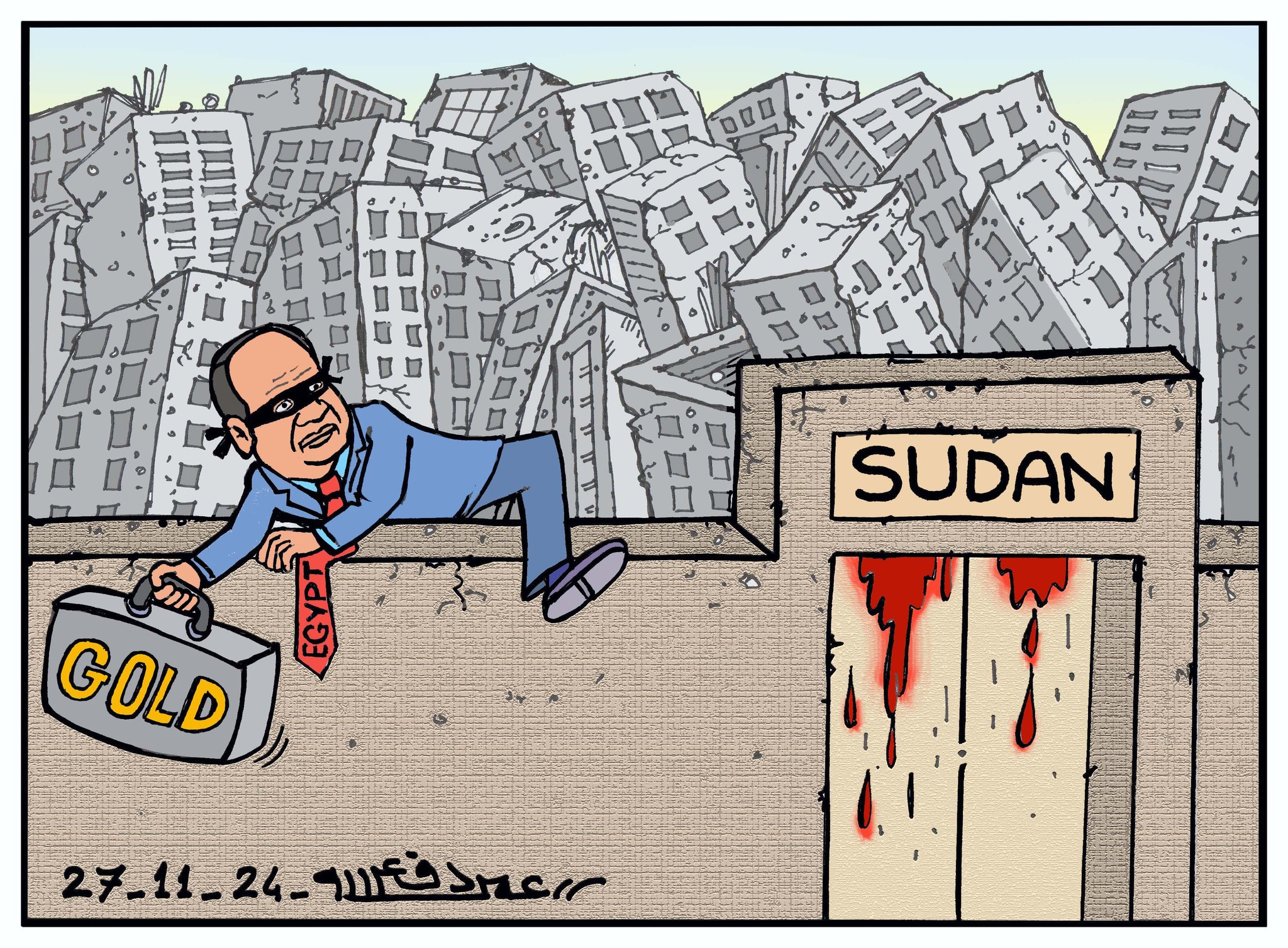
Sudan’s Gold Exporters Division has accused influential actors of taking gold outside official channels, warning that the country is losing billions of dollars in potential revenue while the pound continues to slide.
Sudan produces more than 70 tonnes of gold a year worth an estimated $8 billion, but only about $2 billion reaches the state treasury, according to Abdelmoneim Siddig, head of the Gold Exporters Division.
In an interview with Radio Dabanga today, Siddig said gold could help Sudan tackle its economic crisis and provide much-needed foreign currency but alleged that influential entities export gold outside formal channels.
He accused the Central Bank of Sudan of buying gold at high prices, saying the practice encourages exports outside official channels and puts further pressure on the Sudanese pound.
Siddig said smuggled gold becomes a source of foreign currency for travellers, students, patients and others, adding that rising gold prices drive up the dollar price and weaken the pound.
He warned that weak oversight and flawed economic policies could deepen the crisis, leaving citizens to bear the cost through higher living expenses and deteriorating healthcare and education.
“If these policies are not reversed, these government institutions that work unconsciously and care about nothing but to get any amount of dollars regardless of their economic consequences, will cause the crisis to worsen,” he said.
Mining companies threaten halt
The comments come as Sudan’s mining companies escalate their dispute with the government over the Central Bank’s gold purchasing and pricing mechanism.
The Union of Mining Companies in Sudan has threatened to halt gold production from October 1, warning that the current system is making it difficult for companies to meet their financial and operational obligations.
The union said companies recognise the state’s right to regulate the sector and collect its legal revenues, but reject the current mechanism for purchasing, pricing and settling payments for their production.
The dispute centres on how the Central Bank buys companies’ gold, sets its value and settles their dues. Producers want a mechanism that better reflects gold’s economic value and production costs.
Central Bank changes rules
The Central Bank recently amended rules governing gold produced from mining waste after 23 companies warned they would gradually suspend production at the end of September before halting completely in October.
New rules allow mining waste companies to sell their entire production to the Central Bank, authorised buyers or exporters. They can also hold export proceeds in foreign currency for up to 21 working days and use them for operational imports or other permitted obligations.
The Central Bank ordered banks not to process gold exports by mining waste companies without its written approval and confirmation that all other requirements had been met.