By: Staff Writer
February 05, Colombo (LNW): Sri Lanka’s dairy industry is undergoing a noteworthy transformation, underlining both the challenges and emerging opportunities that shape one of the country’s most critical agricultural sectors. With domestic milk production still meeting only a fraction of national demand, the sector’s growth and its potential contribution to the broader economy hinges on enhancing local capacity, empowering dairy farmers, and harnessing state-owned assets more effectively.
According to recent industry figures, Sri Lanka produces about 40 % of its total milk demand locally, with the remainder met through imports chiefly powdered milk that costs billions of rupees every year. While production has increased over the past decade, local output remains significantly below national consumption. Official data show that domestic annual milk production has fluctuated around 380 million litres, a modest rise from earlier levels but still insufficient relative to national requirements.
Amid this backdrop, the Sri Lankan Government’s commitment to revitalise the dairy sector has taken centre stage. Prime Minister Dr. Harini Amarasuriya highlighted the transformation of state-owned Milk Industries of Lanka Company (MILCO) as a milestone in this strategy. At the recent MILCO National Dairy Farmers’ Profit Sharing and Insurance Program held at Temple Trees, she emphasised that the government’s approach prioritises economic inclusivity and shared benefits—a shift from decades of stagnation and mismanagement.
MILCO’s performance in 2025 stands as a symbol of this turnaround. The company reported its highest-ever sales turnover and historic net profit, a rare achievement for a formerly loss-making state enterprise. In recognition of this success, performance incentives will be distributed to some 22,000 dairy farmers affiliated with MILCO, with symbolic dividend payments already presented to 2,000 farmers at the event.
This revival owes much to stronger producer linkages, improved processing capacity, and better supply chain operations. MILCO now collects roughly 150,000 litres of milk daily—a significant improvement from earlier years when outputs lagged due to administrative weak points. To support sustainability, the Dairy Farmer Retirement Scheme and farm family insurance benefits were also introduced, further embedding social security within the sector’s growth narrative.
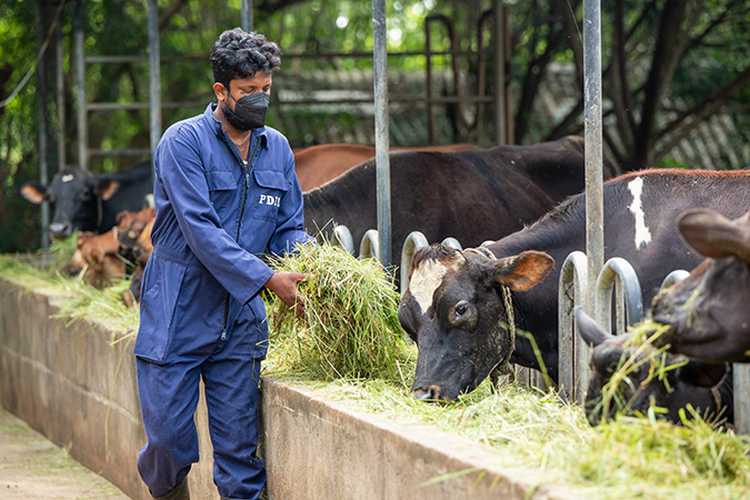
Yet challenges persist across the industry. Smallholder farmers—who constitute the backbone of Sri Lanka’s dairy production continue to grapple with rising input costs, limited access to high-quality feed and veterinary services, and logistical inefficiencies. Reports show many farmers struggle with low yields that undermine profitability, even as overall production inches upward.
Still, industry stakeholders view MILCO’s renewed performance as a catalyst for broader reform. Agricultural Minister K.D. Lalkantha praised both institutional leadership and dairy farmers for driving MILCO’s turnaround, stressing the importance of recognising national value in such achievements. Government support for tackling systemic challenges is expected to continue, signalling a long-term commitment to the sector.
Looking ahead, the Sri Lankan dairy industry’s capacity to reduce import dependence, boost rural incomes, and contribute meaningfully to GDP will depend on scaling up production efficiency and sustaining momentum from recent reform efforts. As MILCO leads by example, dairy’s potential role in strengthening the rural economy and enhancing food security becomes ever clearer