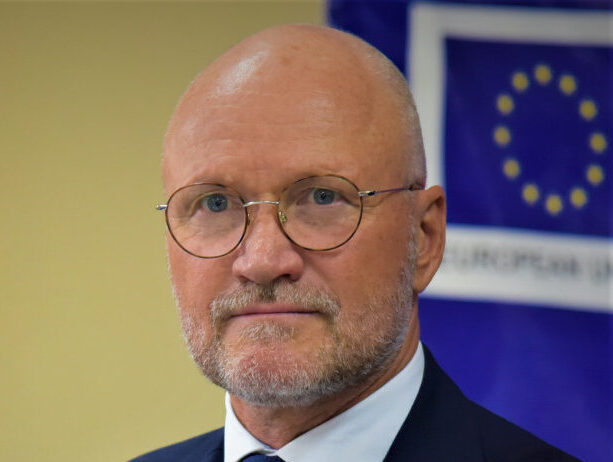
JUBA, August 13, 2026 — Secure land rights and stronger governance of natural resources are critical to peace, stability and conservation in South Sudan, European Union Ambassador to South Sudan Pelle Enarsson has said.
Enarsson made the remarks on Thursday during the fourth Friends of Conservation session in Juba, hosted by the European Union and United Kingdom.
In his written speech copy on Thursday, the diplomat said the governance of land, wildlife and natural resources is particularly important in South Sudan’s post-conflict environment, where conservation is closely linked to community protection and stability.
“In a post-conflict environment, the governance of land, wildlife, and natural resources is closely linked to peace, stability, and community protection,” Enarsson said.
The EU envoy said conservation efforts must be anchored in the rule of law and aligned with national development priorities.
“This is why conservation must be anchored in the rule of law, aligned with national development priorities, as well as pursued through community engagement and people-centred, rights-based and conflict-sensitive approaches,” he said.
Land tenure
Enarsson identified clarity on land tenure as a key requirement for effective conservation and governance.
He said South Sudan’s Wildlife Conservation and Protected Areas Act 2026 provides a revised legal foundation for conservation and sustainable use, including recognition of community-based conservancies.
“This opens a real opportunity to position communities as rights-holders, stewards, and economic actors, not merely beneficiaries,” he said.
However, he said the focus should now shift from the adoption of the law to its implementation.
Our discussion today should focus not only on the promise of the law, but on what is required for effective implementation,” Enarsson said.
He called for better coordination between the Wildlife Act, the Land Act and the emerging National Land Policy.
The ambassador also urged meaningful engagement with communities, traditional authorities, Indigenous Peoples, women and youth in land and conservation governance.
Conservation beyond protected areas
Enarsson said protecting wildlife through national parks and other formally protected areas alone would not be sufficient.
“We also know that durable conservation cannot succeed through protected areas alone,” he said.
He added that much of South Sudan’s ecological value and wildlife movement occurs outside formally protected areas.
“Governance and tenure are central to long-term protection,” Enarsson said.
He said community-led conservation should therefore form an important part of South Sudan’s conservation strategy.
EU support
The EU envoy said the European Union currently supports conservation initiatives in several parts of South Sudan.
These include the Great Nile Migration Landscape, in partnership with African Parks; Latoto National Park and Kidepo Game Reserve, with Enjojo Foundation, VSF Germany and Saferworld; and the Southern National Park and two game reserves in Western Equatoria, in partnership with Flora and Fauna International.
He said the programmes are part of the EU’s NaturAfrica initiative, which links biodiversity conservation with socio-economic development and governance.
“Conservation, socio-economic development and governance go hand in hand to ensure sustainable, long-term impact,” he said.
Enarsson also urged government institutions, traditional authorities, conservation partners, donors and communities to strengthen coordination in implementing the new wildlife law.
“Let us leave this meeting with clearer priorities, clearer responsibilities, and stronger commitment to coordinated action,” he said.
The fourth Friends of Conservation meeting brought together government representatives, development partners, UN agencies, civil society organisations and conservation groups to discuss aligning wildlife, land and community governance for sustainable development.
The meeting followed the recent inscription of the Great Nile Migration Landscape on the UNESCO World Heritage List, which Enarsson described as a milestone for South Sudan’s conservation sector.
Previous Post
Former Health Minister Yolanda Awel seeks divorce as Agel Machar alleges political motives