Author: Michael Daniel | Published: 12 hours ago
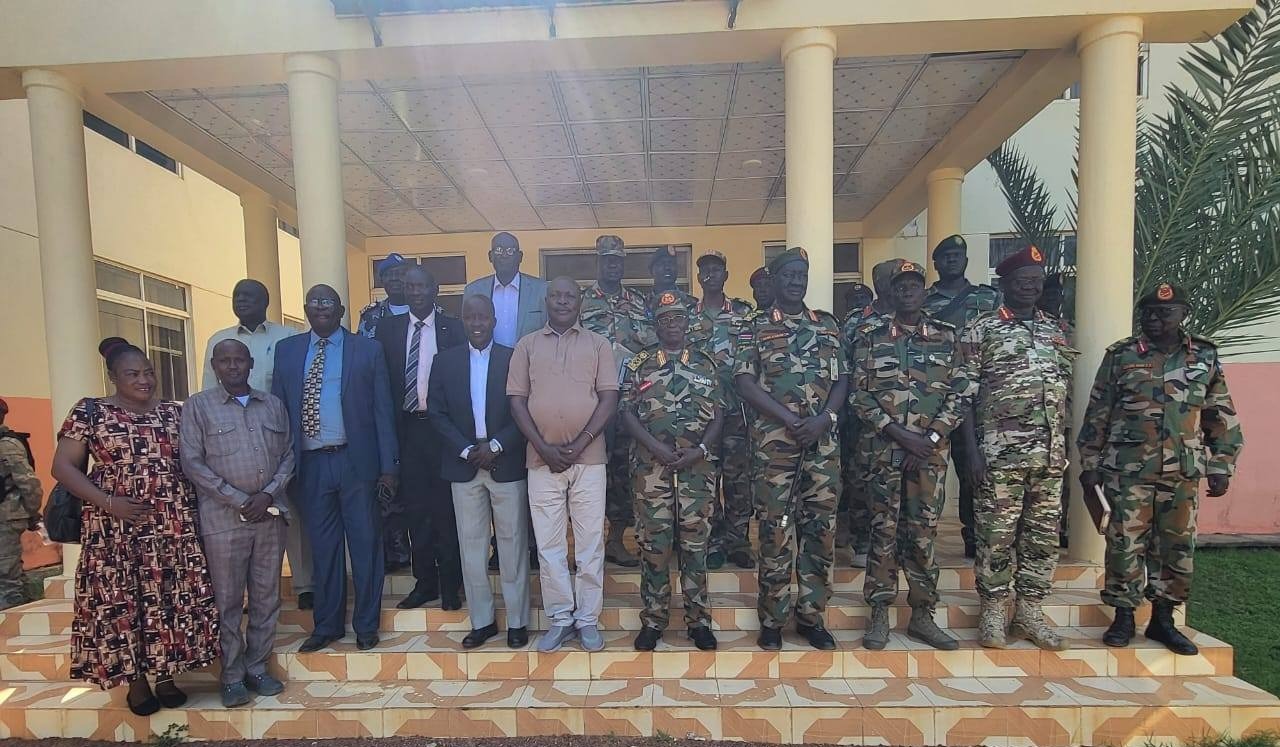
Eastern Equatoria State Governor Louis Lobong Lojore (center-left) and the Chief of Defence Forces, General Santino Deng Wol (center-right), pose for a group photograph with government officials and senior military officers in Torit following a high-level security briefing. (Photo: Governor Press Unit)
Eastern Equatoria State Governor Louis Lobong Lojore has warned that critical logistical shortages could soon cripple regional security operations, despite ongoing efforts to curb localized violence.
Speaking during an official briefing with the Chief of Defence Forces (CDF) in Torit, Governor Lobong stated that a lack of adequate food supplies and operational support for security forces poses a significant risk to stability if not urgently addressed by the national government.
The military leadership visited the state capital to assess the prevailing security situation and review cross-border and internal security challenges.
While Governor Lobong noted that the state remains generally stable due to community policing strategies, he raised serious concerns over recurring cattle raids and child abductions.
The Governor attributed these attacks to armed Murle youth, alleging that some perpetrators utilize pockets of territory associated with SPLM/A-IO forces as temporary safe havens to launch raids.
Additionally, Lobong stated that elements linked to the National Salvation Front (NAS) occasionally cross over from neighboring Central Equatoria State to collaborate with other armed actors in destabilizing parts of the state.
To mitigate cross-border security threats, the state executive highlighted ongoing diplomatic efforts with neighboring countries and border communities, including the establishment of joint border security committees to promote trade and peaceful coexistence.
In response to the briefing, the Chief of Defence Forces, General Santino Deng Wol, stated that his visit aimed to engage leadership from the SSPDF, SPLA-IO, and SSOA regarding the renewed implementation of security arrangements under the Revitalized Peace Agreement.
General Deng emphasized that the military’s immediate priority is to organize forces that have already integrated into government structures, while pushing remaining opposition personnel to report to designated assembly and training centers without delay.
He concluded by stressing that sustainable peace in Eastern Equatoria relies heavily on the active cooperation and participation of local communities in addressing grassroots security challenges.
Previous Post
Yakani calls for enforcement of cybercrime laws over online sexual abuse videos