Your support helps us to tell the story
From reproductive rights to climate change to Big Tech, The Independent is on the ground when the story is developing. Whether it’s investigating the financials of Elon Musk’s pro-Trump PAC or producing our latest documentary, ‘The A Word’, which shines a light on the American women fighting for reproductive rights, we know how important it is to parse out the facts from the messaging.
At such a critical moment in US history, we need reporters on the ground. Your donation allows us to keep sending journalists to speak to both sides of the story.
The Independent is trusted by Americans across the entire political spectrum. And unlike many other quality news outlets, we choose not to lock Americans out of our reporting and analysis with paywalls. We believe quality journalism should be available to everyone, paid for by those who can afford it.
Your support makes all the difference.Read more
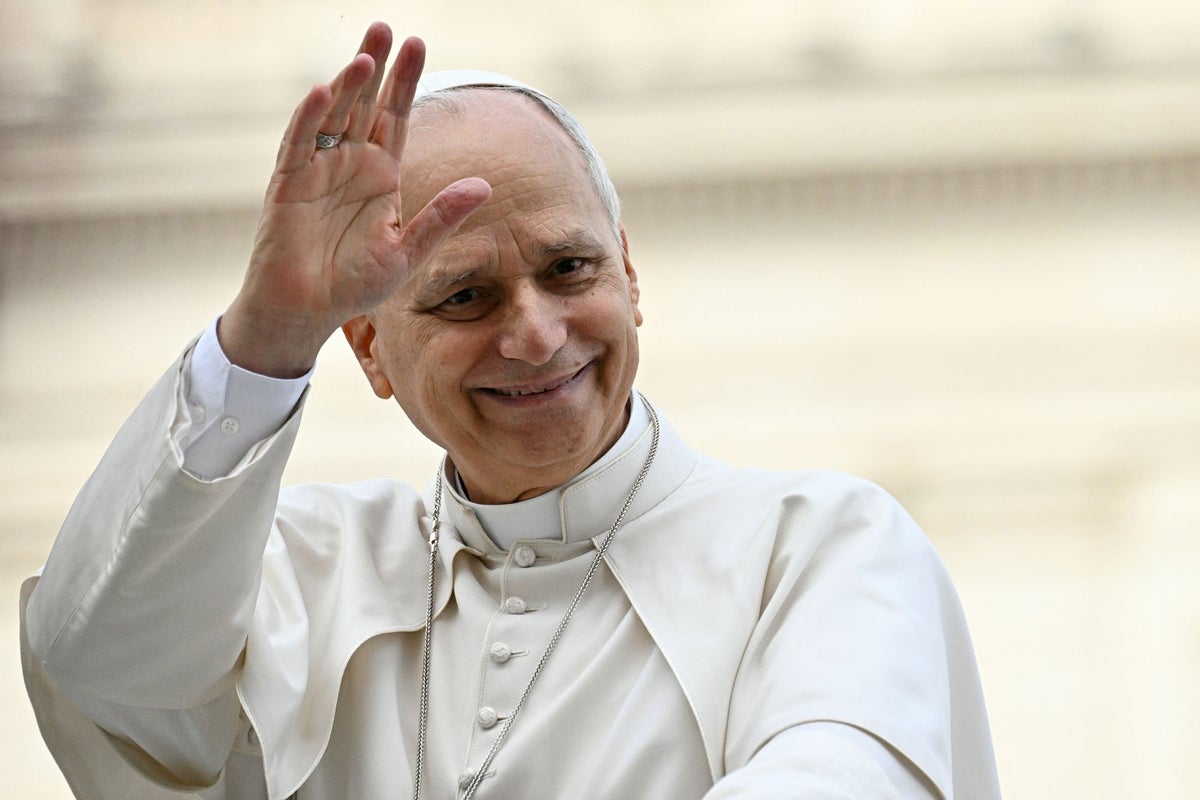
The Vatican has unveiled the itinerary for Pope Leo XIV’s upcoming four-nation tour of Africa, revealing that Christian-Muslim relations, comforting victims of violence, and encouraging the Catholic community in former European colonies will be central themes.
The journey, scheduled for 13-23 April, commences in Algeria, a nation that has never before hosted a pontiff.
Highlights include a visit to the Great Mosque in Algiers and a meeting with his fellow Augustinians, honouring St. Augustine of Hippo, the 5th-century inspiration for their order.
The pontiff will also preside over a peace meeting in northwest Cameroon, visit an important Marian shrine in Angola, and pray at a memorial in Equatorial Guinea for victims of a 2021 blast that killed over 100 people, blamed on negligence.
Throughout his travels, he will meet with local bishops, celebrate Masses for the faithful, and hold private discussions with the four nations’ leaders, two of whom have been in power for decades.
Here’s a look at some of the key stops in each of the countries.
The pope will tour a mosque and meet Catholic faithful in Algeria
Leo has a busy first day in Algiers, meeting with government authorities, touring the mosque and meeting with the local Catholic community.
open image in gallery
Throughout Pope Leo’s travels, he will meet with local bishops, celebrate Masses for the faithful, and hold private discussions with the four nations’ leaders, two of whom have been in power for decades (Associated Press)
He’ll later visit Annaba, far to the east on the Algerian coast, formerly known as Hippo, where St. Augustine lived and died in 430, one of the theological and devotional giants of early Christianity.
Leo will meet with a community of Augustinian sisters and priests, and tour an archaeological site.
The pope will also celebrate Mass in the capital’s basilica named after St. Augustine.
Leo is set to lead a ‘peace meeting’ in Cameroon
Leo’s next stop is in Cameroon, where Pope Benedict XVI visited in 2009. He will visit the capital, Yaoundé, the country’s economic hub, Douala, and Bamenda, a major city in the North-West region.
Cameroon’s western regions have been plagued by fighting since English-speaking separatists launched a rebellion in 2017 with the stated goal of breaking away from the French-speaking majority and establishing an independent English-speaking state.
The conflict has killed more than 6,000 people and displaced over 600,000 others, according to the International Crisis Group, a think tank.
One of the highlights of Leo’s visit will be a “peace meeting” that the pope will lead in Bamenda on April 16. No details of who might participate were immediately announced.
The country is also plagued by fighting involving Boko Haram militants in the north, as the Islamic extremist group’s insurgency in neighboring Nigeria has spilled over into Cameroon.
open image in gallery
Pope Leo will visit the capital, Yaoundé, the country’s economic hub, Douala, and Bamenda, a major city in the North-West region (Associated Press)
The pope’s visit has sparked concerns among some Cameroonians that it could be instrumentalized by the country’s leader following a disputed presidential election.
Cameroonian Jesuit priest and opposition activist Ludovic Lado expressed his concerns to Leo in an open letter, warning that the visit could be “interpreted as an implicit form of endorsement of a discredited and illegitimate government.”
The country’s 92-year-old President Paul Biya, already in power for 42 years, was declared the winner of October’s presidential election, securing another seven-year term. But his main challenger, former government spokesman Issa Tchiroma Bakary, has continued to maintain that he is the legitimate winner.
A large Catholic community awaits Leo in Agola
The pope’s trip to Angola will take him to a former Portuguese colony in southern Africa that is overwhelmingly Christian. Catholicism is the largest faith group in the Portuguese-speaking nation of around 38 million people because of the former colonial ruler’s influence.
Angola gained independence from Portugal in 1975, though it immediately slipped into a long and bloody civil war that didn’t end until 2002.
The pope will visit the capital, Luanda, the town of Muxima, and the city of Saurimo.
open image in gallery
The pope’s trip to Angola will take him to a former Portuguese colony in southern Africa that is overwhelmingly Christian (Associated Press)
At Muxima, the pope will see the Sanctuary of Mama Muxima, a Marian shrine inside the Church of Our Lady of Muxima that has become one of the most important Catholic pilgrimage sites in Angola.
The church was first built around the end of the 16th century by the Portuguese after they established a fortress at Muxima. It became a key point in the Portuguese trans-Atlantic human trade as a place where enslaved people were baptized before they were sent on ships to the Americas.
The pope will visit three dioceses in Equatorial Guinea
Leo’s final stop is in Equatorial Guinea, which has one of the largest proportions of Catholic populations in Africa, with roughly 70 per cent of its 1.9 million citizens Catholic. A vestige of its Spanish colonialism, the Catholic Church has remained a dominant and influential institution in the Central African country.
While officially a secular state, the Catholic Mass is part of state ceremonies, including Independence Day celebrations.
Leo’s visit to the country, the second after Pope St. John Paul II’s 1982 tour, will have him traverse three of the country’s five dioceses in Malabo, the state capital, Bata, and Mongomo.
open image in gallery
Leo’s final stop is in Equatorial Guinea, which has one of the largest proportions of Catholic populations in Africa (Associated Press)
In Bata, Leo will meet with prison inmates and will also pray at the memorial to victims of a 2021 blast at a military barracks that killed more than 100 people. The explosions were blamed on the negligent handling of dynamite in a barracks close to residential areas.
Equatorial Guinea has long been ruled by Africa’s longest-serving president, Teodoro Obiang Nguema Mbasogo, who has been in power since 1982 and has been accused of running an autocratic regime.
Catholics in Equatorial Guinea experienced intense persecution under the rule of former President Francisco Macías Nguema, who closed down churches in 1975 and officially banned the Catholic Church in 1978. Nguema wanted to eliminate colonial influences. The decree was repealed when Teodoro came to power in a coup.
Despite the country’s economy being powered by oil and gas wealth, at least 57 per cent of its entire population lives in poverty, according to the World Bank.