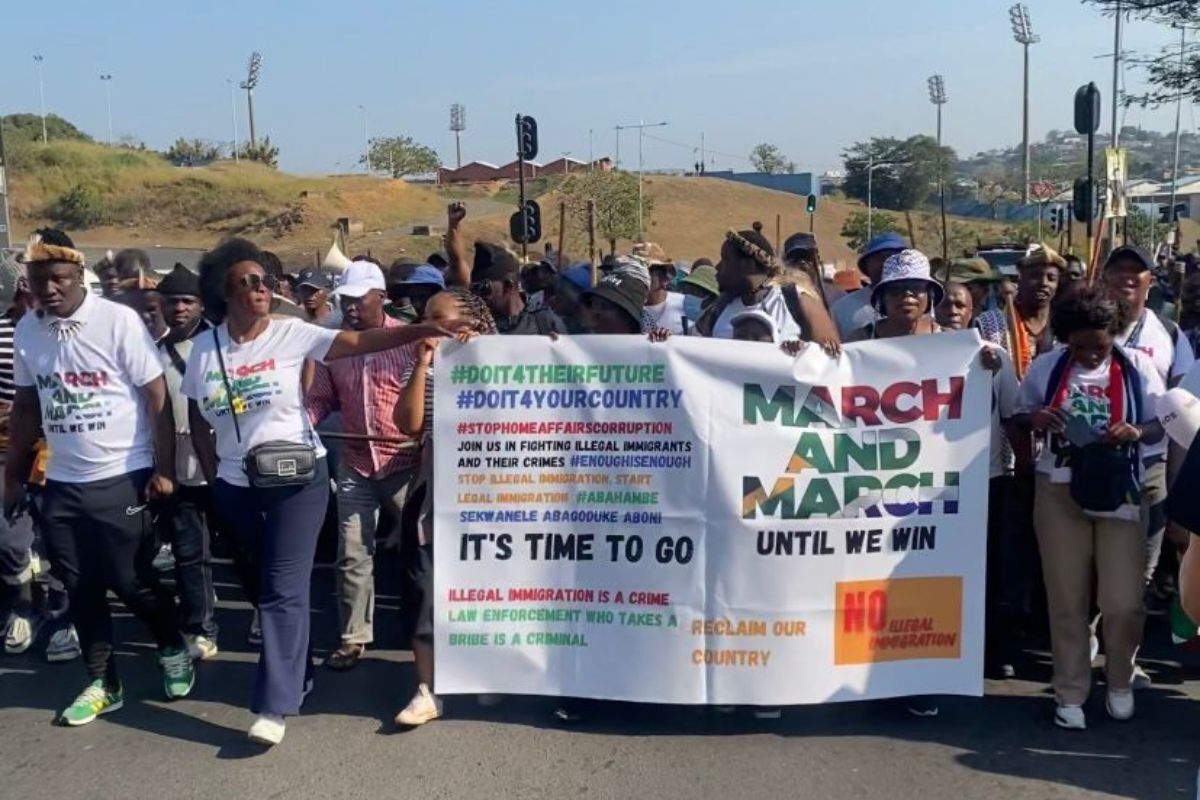
Health Minister Aaron Motsoaledi is entirely unsurprised by the United States’ decision to withdraw crucial HIV funding, viewing the massive $300 million to $400 million annual shortfall as a wakeup call.
This significant cut to the President’s Emergency Plan for AIDS Relief (PEPFAR) arrives as the latest move against Pretoria, following closely on Washington’s proposed 12.5% tariff over “forced labour” rules.
Speaking to SABC News, Motsoaledi revealed the Department of Health had been anticipating the decision since February 2025, when it was first announced by the Donald Trump administration.
“We were definitely expecting it. It is unfortunate, but we’re expecting it. We didn’t expect any other thing to happen than for this announcement to reach finality,” said the minister.
The funding withdrawal further strains an icy relationship between the two countries, arriving just weeks after the US targeted South African exports with punitive economic measures.
How do tariffs and PEPFAR withdrawal connect?
The FW de Klerk Foundation recently appealed to US President Donald Trump to reconsider the HIV funding cuts. Foundation spokesperson Ismail van der Rheede described the move as a human rights issue, warning that the United States is phasing out the life-saving programme for purely political reasons.
These political tensions have recently boiled over into trade. The Office of the United States Trade Representative recently proposed a stringent 12.5% levy on South African exports, citing Pretoria’s failure to enforce bans on forced labour imports.
Adding fuel to the fire, US Ambassador Leo Brent Bozell III previously warned that Washington is running out of patience with South Africa’s geopolitical stance and domestic policies.
‘We must stand on our own,’ says Motsoaledi
Despite these compounding diplomatic and financial hurdles, the South African government remains resolute. Motsoaledi explained that the withdrawal of international aid serves as a stark reminder of the country’s sovereign healthcare obligations.
“It simply means we must stand on our own,” Motsoaledi told SABC News. “And ever since this announcement was made in February last year, we have made this statement that this is a wakeup call”.
The minister stressed that protecting citizens from diseases remains the primary duty of the state.
“If that type of help comes in terms of international solidarity, well and fine. But the primary responsibility of catering for the citizens and protecting them from diseases is that of the state of that particular country,” he added.
To address the immediate financial gap, the National Treasury has allocated R750 million as a stop-gap measure, said Motsoaledi.