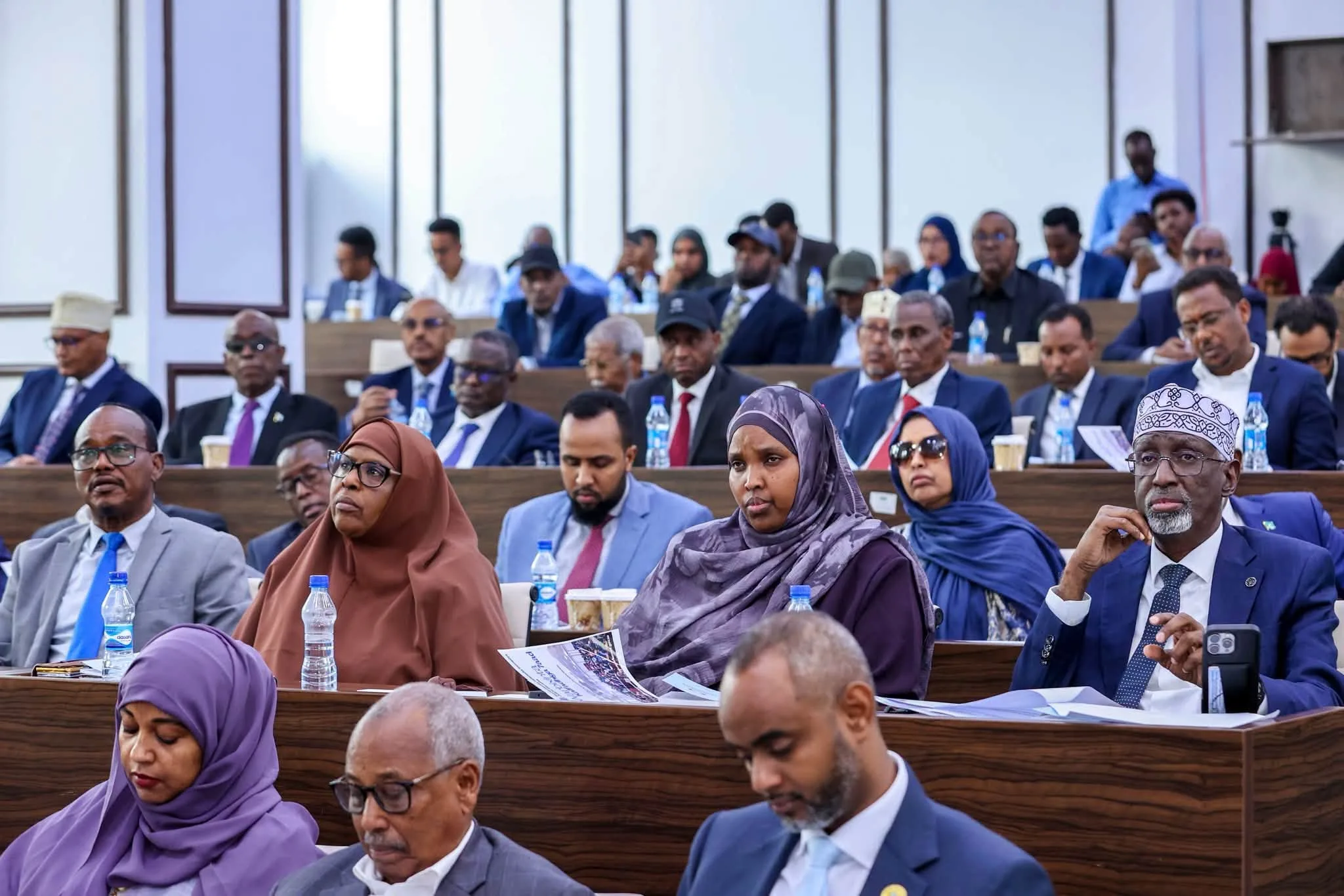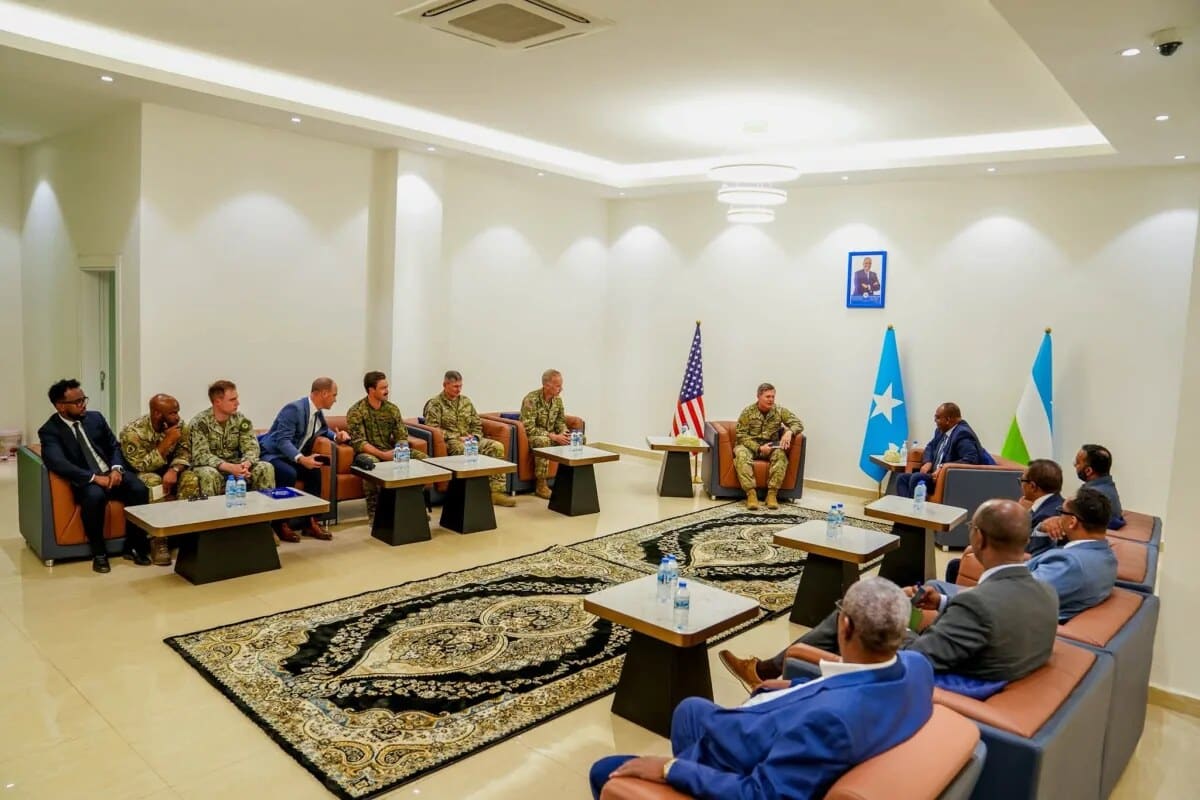
BOSASO, SOMALIA – President Said Abdullahi Deni met the officer who runs American special operations across Africa in Bosaso on Sunday. The two sides signed an agreement to widen their cooperation. Major General Claude K. Tudor Jr. led the American delegation. The text lets the United States expand its footprint at Bosaso. The stated purpose is to step up operations against armed groups and to secure the sea lanes off Somalia’s northern coast. Deni brought ministers, commanders and advisers. Washington brought the man who commands the units that do the fighting.
Read it plainly and the meaning is hard to miss. The United States has spent two years telling Mogadishu that its support depends on Somali politics improving. In Bosaso it stopped waiting.
What was signed in Bosaso
The Puntland State House published the meeting on its official page and on its official account. The photographs show the delegations facing each other beneath American, Somali and Puntland flags. The published account describes talks on counterterrorism and on maritime security, covering the Red Sea and the Gulf of Aden, followed by the signing.
Ahead of the meeting, Puntland said the agenda would cover training support, intelligence sharing and the development of its security forces. Those three items are the substance. An expanded American presence at Bosaso matters less for the runway than for what the runway carries. That means trainers, surveillance and the intelligence that makes an offensive work.
Garowe framed the deal as a commitment to fight armed groups and any threat to the Horn. The federal government in Mogadishu has not commented. Nor has it said whether it was consulted. Under the federal constitution that would be the expected courtesy on a foreign security arrangement.
The pivot has been visible for a year
This did not arrive from nowhere. American officials have been travelling to Bosaso for a year, and the visitors have grown steadily more senior. In September 2025 the ambassador to Somalia went north with Tudor and the head of the American special operations mission in East Africa. They praised Puntland’s leadership in the fight against terrorism. Two months later the AFRICOM commander met Puntland’s vice president in Bosaso to discuss counterterrorism and maritime security.
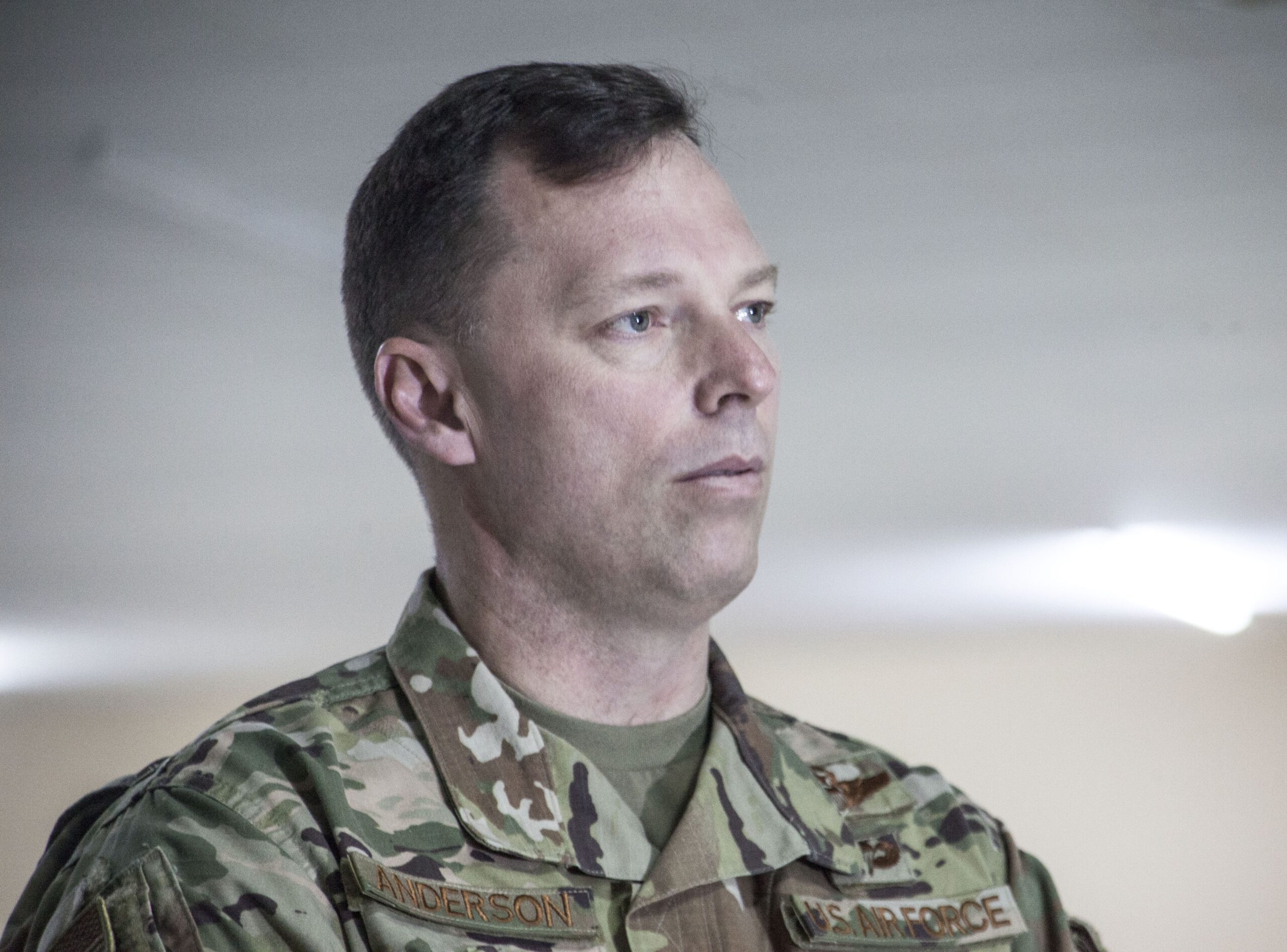
The public language has followed the same line. Speaking to Somali television days ago, General Dagvin Anderson credited work with local forces in the Golis mountains. That work, he said, has kept the Islamic State branch isolated. He did not name Puntland. The campaign in the Cal-Miskaad range is Puntland’s, run by Puntland’s forces, and everyone listening knew whose local forces he meant.
Set that beside what he said about the federal capital in the same interview. He warned that continued political infighting makes American engagement very hard to sustain. One partner gets a warning. The other gets a signature.
Why Bosaso and not Mogadishu
The American case for working with Puntland is uncomplicated. Puntland fights the enemy Washington cares about, and it produces results that survive contact. Its offensive pushed the Islamic State branch out of its mountain strongholds. Its maritime police interdict pirates when federal bodies cannot. It has not turned its army on domestic rivals for political advantage.
Mogadishu’s record reads differently in every one of those categories. Anderson noted that towns he helped clear in 2019 are back on the target list because the focus moved elsewhere. Federal forces have spent two years deployed against member states. Puntland has also accused Mogadishu of arming clan militias inside its territory, and its troops now surround a federally aligned camp in Galkayo.
There is a second reason, and it is about water. The Bosaso agreement covers maritime security in the Gulf of Aden. Somalia has just joined a Saudi-led coalition it cannot help defend. The federal government signed for a coastline it does not administer. In Bosaso the Americans went to the administration that does.
What Villa Somalia can say about it
Mogadishu’s objection writes itself. Security and foreign affairs are federal competencies. Member states may not conclude arrangements with foreign militaries, and a base agreement negotiated in Bosaso bypasses the state. Hassan Sheikh Mohamud has made versions of that argument against Turkish patrols, Emirati contracts and Ethiopian deals.
The argument lands harder than usual this week, for one reason. At the Kampala summit on Friday the president had Somalia’s internal politics struck from the communique. His grounds were that foreign gatherings should not touch domestic Somali affairs. A government that invokes sovereignty to stop six presidents discussing a political settlement has spent some of the credit it now needs in Bosaso.
Puntland’s answer has been given many times. It stopped recognising federal authority over its security while the constitutional dispute remains open, and it will work with whoever helps it fight. Mogadishu rejects that reading. Neither side has moved in two years.
What Bosaso is taking on
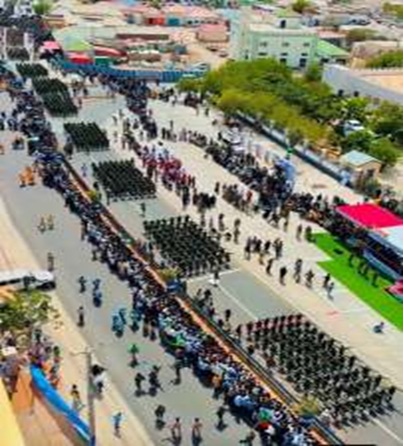
Deni gains real things from this. Training, intelligence and equipment arrive without passing through Mogadishu. A signature from an American general is worth more to Garowe than any communique. It also lands as Puntland marks its twenty-eighth anniversary, which makes the timing useful at home.
The costs are less visible. An expanded foreign presence at Bosaso makes the city a target for the group Puntland has been pushing into the mountains. It also deepens a dependence that has caused trouble before. Puntland knows what happens when a unit answers to a foreign paymaster rather than to Garowe. The force it is now surrounding in Galkayo began that way.
The wider risk is being drawn into somebody else’s war at sea. Houthi forces have struck vessels linked to states they regard as belligerents. Bosaso sits within easy reach of the Gulf of Aden. Puntland has taken on a maritime role without a navy, for a partnership whose priorities are set in Washington. That is a familiar bargain on this coast, and it rarely stays as narrow as it looked on signing day.