By Ali H. Warsame
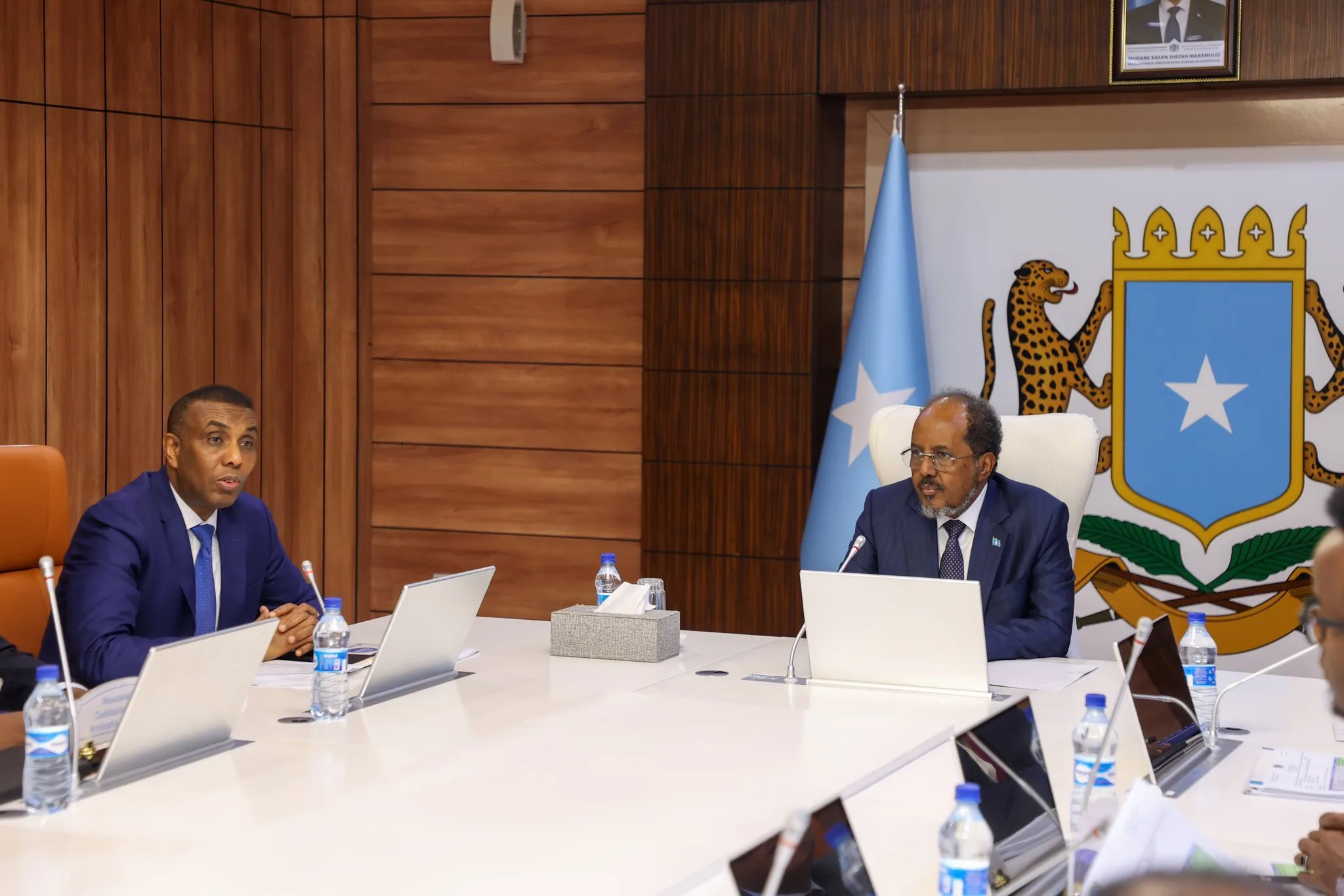
Anyone who closely followed the recent development of Israel’s unilateral recognition of “Somaliland” on 26 December 2025, and the response from the Federal Government of Somalia (FGS), supported by most international organizations, have raised serious concerns about the approach taken by the current government of Somaliland and its implications for Africa and the wider world. According to the President of FGS, Hassan Sheikh Mohamoud, Israel’s decision was driven by broader geopolitical interests. These include building alliances in the Horn of Africa, securing access to Red Sea corridors, countering Iranian influence in the region, and advancing policies such as the forceful resettlement of Palestinians.
Long before Israel’s recent involvement in matters affecting Somalia’s independence, sovereignty, and territorial integrity, the secessionist project in Hargeisa had already been deeply flawed. From the outset, Somaliland’s leadership pursued a reckless and unilateral course, declaring “independence” in 1991 without negotiating with the Somali people or obtaining their consent. This approach not only violated the spirit of Somali unity but also ignored political realities and international law.
Moreover, the administration in Hargeisa laid claim to vast territories in the northwestern and northeastern regions—particularly Sool, Sanaag, and Parts of Togdheer—despite these areas being inhabited by communities that have consistently rejected secession. Since Somalia’s independence in 1960, its territorial boundaries have been internationally recognized and protected under the UN Charter and African Union principles. By attempting to resurrect the borders of the former British protectorate as a basis for statehood, Somaliland has placed itself on legally shaky ground and in permanent political isolation. Its failure is therefore not merely diplomatic, but structural and self-inflicted.
During the colonial scramble for Africa in 1884, Somali territories were divided, leading to the establishment of French Somaliland along the coast of Djibouti, British Somaliland in the north, and Italian Somaliland in the south. British Somaliland functioned as protectorates, in plural form, until 1960, governed under six different protectorate agreements, which recognized Isaaq, Warsangeli, Easa, and Gadabursi clans. The claim that it was a single entity under one protectorate agreement is entirely false.
The British Library holds original treaties signed between the British Government and various Somali clans in the 1880s, which led to the establishment of the Protectorates in Northern Somalia. These agreements—made with clans such as the Habr Awal, Gadabursi, Eesa, Habr Gerhajis, Habr Toljaala, and Warsangeli—are preserved as colonial records and can be accessed through the Library’s archives and related collections.
The Dervish Movement, led by Sayyid Mohamed Abdulle Hassan, resisted colonial rule from 1899 to 1920, particularly in the northern regions. The Dhulbahante territories in the north rejected British protectorate status and fought for Somali liberation. The Somali Youth League (SYL), initially founded in 1943 as the Somali Youth Club (SYC), became the leading nationalist movement advocating for independence and unity among Somalis.
Negotiations between Somaliland and the Federal Government of Somalia (FGS) formally began in 2012 and have continued intermittently since then, starting with a meeting in Dubai between Somali President Sharif Sheikh Ahmed and Somaliland President Ahmed Mohamed Silanyo. The 2013 Ankara Document outlined thirteen points of cooperation, including intelligence-sharing and joint management of airspace. The 2014 Istanbul Conference enabled Somaliland to receive international aid directly and control its airspace.
Discussions in Djibouti in 2020 resulted in a five-point compromise, which included a code of conduct. In 2023, another Djibouti agreement outlined eight principles for future negotiations, focusing on open dialogue and international support. Despite these efforts, the core issue of recognition remains unresolved, with discussions focusing instead on cooperation, aid, and governance.
While the Isaaq clan has played a dominant role in Somaliland’s political leadership, other northern clans have often contested Hargeisa’s claims of representing all communities under the former British Protectorates. This imbalance has complicated dialogue and contributed to a climate of mistrust. The FGS has engaged in these talks, while recognition of Somaliland’s unilateral secession remained off the table. However, the overwhelming rejection of this recognition by Somalia, the African Union (AU), the Arab League (AL), the Organization of Islamic Countries (OIC), and the United Nations (UN) underscores the enduring principle of territorial integrity.
The case of Somaliland highlights the tension between self-determination and sovereignty. Unless this issue is managed inclusively and strategically, the pursuit of recognition risks deepening divisions both within Somalia and across Africa. Secessionist movements have emerged across Africa and the world, with outcomes varying from success to failure. For instance, Eritrea gained independence from Ethiopia in 1993 after decades of armed struggle and a UN-supervised referendum. Similarly, South Sudan seceded from Sudan in 2011 through the Comprehensive Peace Agreement and a referendum supported by international actors.
This highlights the role of international supervision and referenda in Eritrea and South Sudan. At the same time, Somaliland’s unilateral path lacked external legitimacy and support of the whole territories and clans under British Protectorates. Biafra’s attempt to break away from Nigeria in 1967 resulted in a civil war and eventual reintegration, while Katanga’s secession from the Congo during the 1960s was suppressed by military intervention. Other movements, like those in Casamance (Senegal) and Cabinda (Angola), remain unresolved. Globally, Catalonia in Spain, Quebec in Canada, and Chechnya in Russia illustrate how secessionist aspirations frequently clash with constitutional frameworks and geopolitical realities.
These examples demonstrate that legal criteria do not solely determine the recognition of new states but are also influenced by political consensus, regional stability, and international involvement. International law provides limited clarity on the issue of secession. The Montevideo Convention of 1933 outlines the criteria for statehood: a permanent population, defined territory, functioning government, and capacity to enter into relations with other states. The UN Charter enshrines the principle of self-determination but also emphasizes the territorial integrity of member states, creating a tension that is difficult to resolve.
The International Court of Justice’s advisory opinion on Kosovo in 2010 held that declarations of independence are not prohibited under international law, but it did not establish a right to recognition. Recognition remains a political act by existing states. The concept of remedial secession — the idea that oppressed groups may secede — remains controversial and lacks firm legal grounding. Somaliland’s claim, therefore, rests on legal arguments that are legally contested and politically constrained. The AU’s position stance is influenced and shaped by the principle of “uti possidetis juris”, inherited from the Organization of African Unity (OAU), which mandates respect for colonial borders upon gaining independence.
This principle was designed to prevent fragmentation and border disputes across Africa. The AU supported Eritrea’s independence because it was framed as a reversal of annexation and legitimized by a referendum. Somalia lost the Northern Frontier District (NFD), which Kenya annexed under British rule at its independence in 1963. South Sudan’s secession was accepted as part of a negotiated peace settlement and internationally supervised referendum. Somaliland, however, is viewed as a unilateral secession. The AU fears that recognizing Somaliland would set a precedent for other secessionist movements, potentially destabilizing the continent.
The Somaliland case demonstrates the limits of international law in resolving secession disputes. Meeting statehood criteria is insufficient without recognition, and recognition itself depends on political consensus. The AU’s cautious stance reflects its commitment to territorial integrity, but it also reveals the need for pragmatic solutions.
Eritrea and South Sudan were treated as exceptional cases, legitimized by referenda and international supervision. This paradox challenges assumptions about legitimacy: recognition does not guarantee stability, as shown by Eritrea and South Sudan. Somaliland’s quest for international recognition highlights the enduring tension between self-determination and territorial integrity.
While international law provides a framework for these issues, the decision to recognize a state ultimately relies on political considerations. The AU’s policy tends to prioritize stability in the region. A constructive path forward involves engaging inclusive negotiations and seeking regional consensus. By focusing on pragmatic solutions and innovative political arrangements, a sustainable resolution can be achieved – one that respects Somalia’s territorial integrity while accommodating the interests of Somalilanders within the context of stability in the Horn of Africa.
Potential pathways include enhanced autonomy and devolution of authority for Somaliland within Somalia’s federal system, hybrid arrangements such as confederation or shared sovereignty, or full reintegration with negotiated power-sharing. Additionally, it is vital to honor the voice and decision of unionists in the north. It is inconsistent for separatists to advocate for secession from Somalia while rejecting the same rights for others living in the former British protectorates.
Somaliland can not expect to have it both ways.
Ali Haji Warsame MBA MA CPA CGMA
Email: ali.warsame@hiilinstitute.org
———-
Ali Haji Warsame is the Executive Director of Hiil Institute for Governance, the former Puntland Minister of Education, and WardheerNews contributor.
—————–
References:
- WardheerNews. (2026, January 3). The division among Somalia’s political elite may ultimately lead to its downfall. WardheerNews. Retrieved from https://wardheernews.com/the-division-among-somalias-political-elite-may-ultimately-lead-to-its-downfall/
- Al Jazeera. (2025, December 26). Israel becomes first country to recognise Somaliland. Retrieved from https://www.aljazeera.com
- Israel Ministry of Foreign Affairs. (2025, December 26). Israel recognizes the Republic of Somaliland as an independent and sovereign state. Retrieved from https://www.gov.il
- Times of Israel. (2025, December 26). Israel becomes first nation to recognize Republic of Somaliland as independent state. Retrieved from https://www.timesofisrael.com
- International Court of Justice. (2010). Accordance with international law of the unilateral declaration of independence in respect of Kosovo (Advisory Opinion). Retrieved from https://www.icj-cij.org
- University of Pretoria. (2022). Between self-determination and the African Union’s position on uti possidetis: A legal analysis of Somaliland’s secession claim. Pretoria: University of Pretoria Press.
- Academia.edu. (2023). Comprehensive legal foundations supporting Somaliland’s de jure sovereign recognition under international law. Retrieved from https://www.academia.edu
- Modern Diplomacy. (2023). A legal and diplomatic analysis of Somaliland’s quest for international recognition. Retrieved from https://moderndiplomacy.eu
- Hiiraan Online. (2024, December). Ankara Agreement redraws Horn of Africa dynamics. Retrieved from https://www.hiiraan.com
- Somali Magazine. (2025, February). Ethiopia and Somalia begin technical talks in Turkey. Retrieved from https://somalimagazine.so
- Britannica. (2023). Biafra civil war (Nigeria). In Encyclopaedia Britannica. Retrieved from https://www.britannica.com
- Britannica. (2023). Katanga secession (Congo). In Encyclopaedia Britannica. Retrieved from https://www.britannica.com
- British Library Online Catalogue: Search under “Somaliland Protectorate treaties” or “India Office Records.”