By Abdisaid M. Ali
By 2028, Puntland will be thirty years old. Its first three decades were largely about constructing and preserving political order. Its fourth must be about what that order can produce. The founding generation established a functioning political community during one of the most difficult periods in Somalia’s modern history. The task now is to convert that inheritance into capable government, impartial institutions and a more productive economy.
Puntland emerged in 1998 through negotiation among communities and political actors who understood that a common political order required accommodation. Authority had to be bargained, competing interests recognised and disputes contained before they threatened the wider settlement. Successive transfers of presidential power reinforced these habits and made political succession one of Puntland’s most valuable achievements. Thirty years of statehood now demand a higher standard, with citizens entitled to expect reliable public services, wider economic opportunity and institutions capable of carrying the state across administrations.
Meeting that standard requires disciplined and responsible leaders supported by modern, talented teams. Good leadership combines inclusion, restraint, respect for the law and responsibility for results, while leaving institutions stronger. Elections therefore shape far more than who holds office. They determine how the state uses time, and five years can strengthen institutions, skills, infrastructure and production or leave another period of opportunity behind.
Seven Years and a Changing Political Method
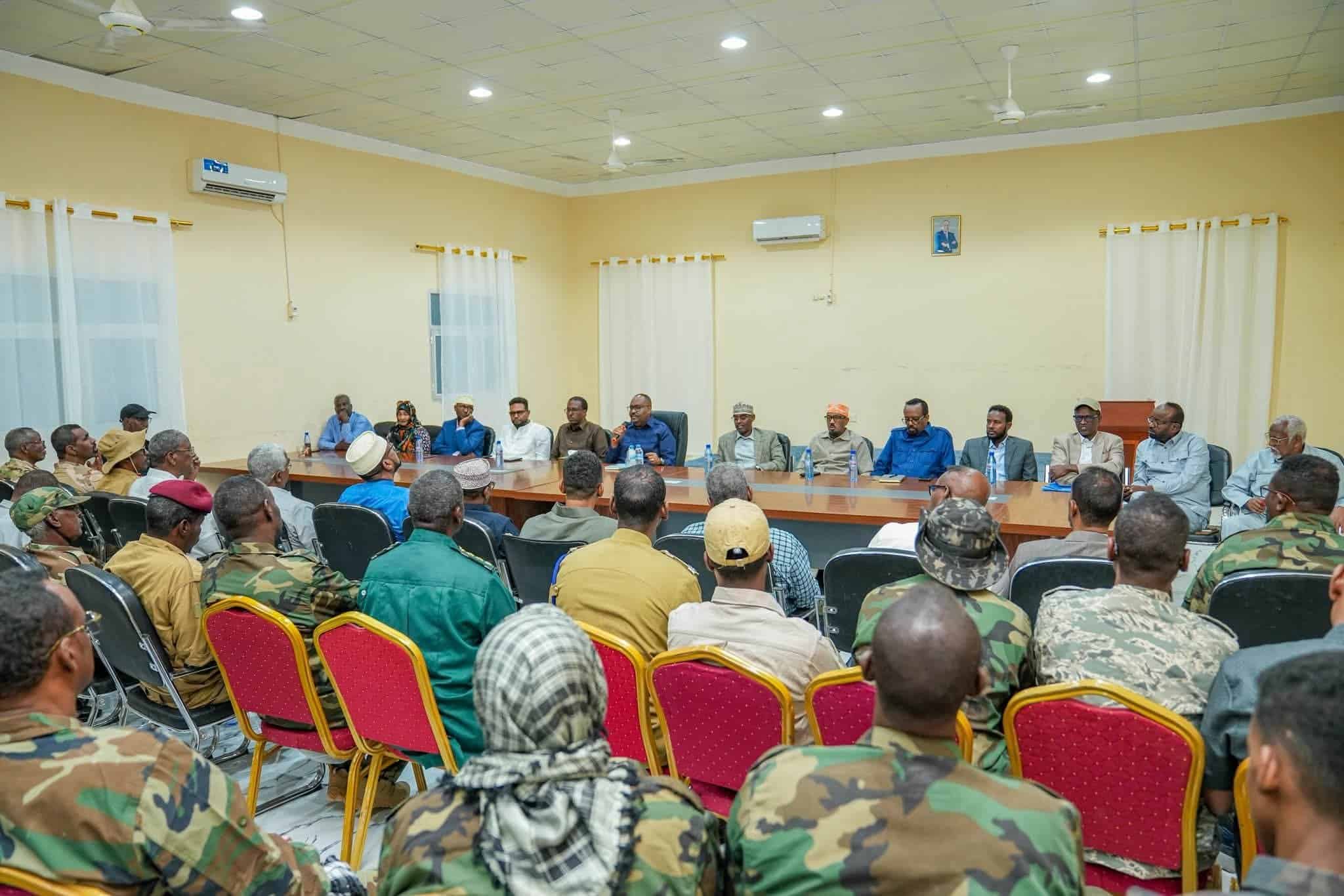
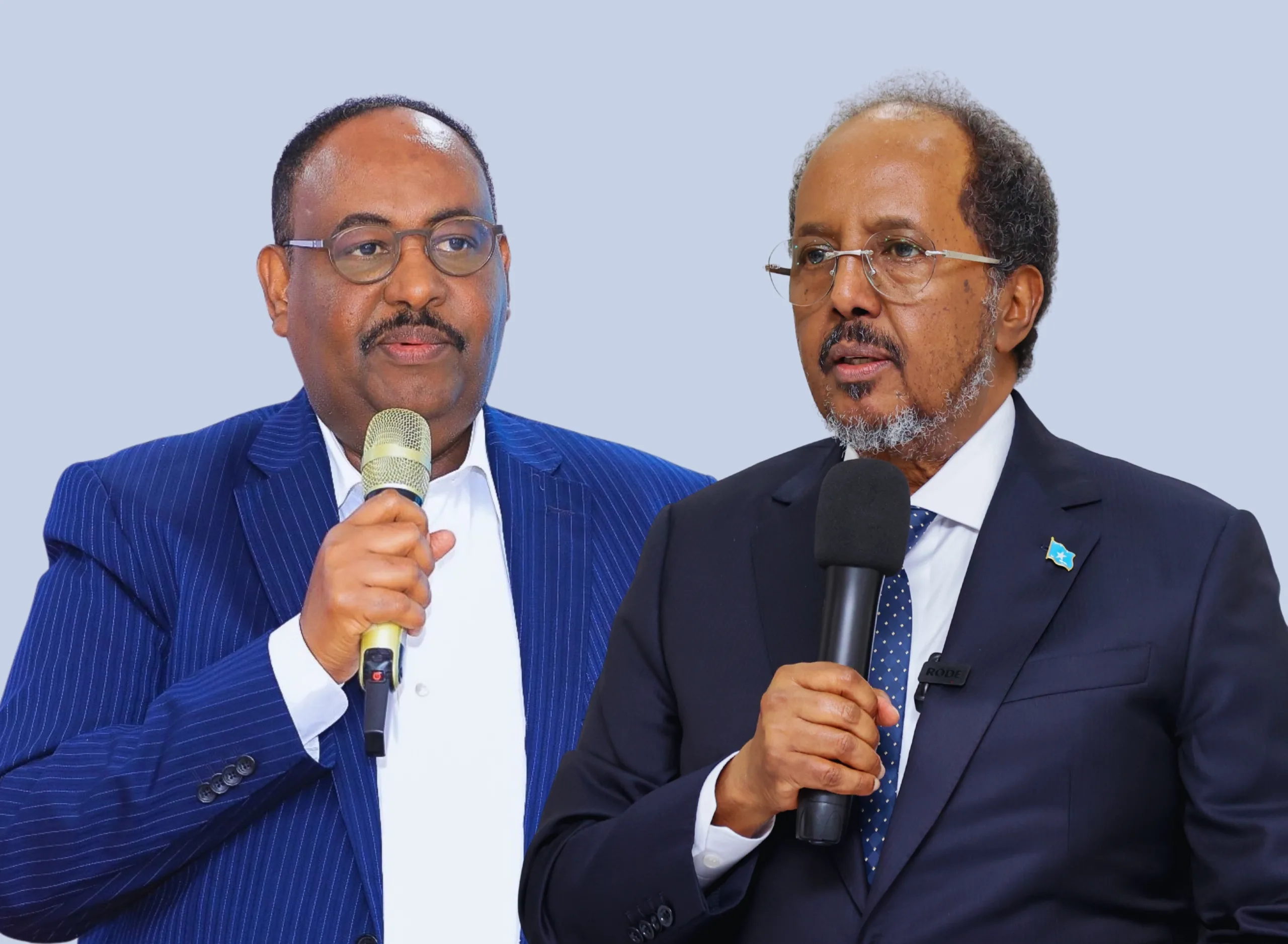
The Deni presidency provides an important test of this transition. President Said Abdullahi Deni entered office in 2019 with considerable advantages. Puntland had an established political order, an entrepreneurial population, extensive diaspora networks, strategic ports and a record of negotiated political succession. Seven years offered substantial room to deepen that inheritance, yet a recurring feature of the period has been the movement of political disagreement into the security arena.
President Deni of Puntland
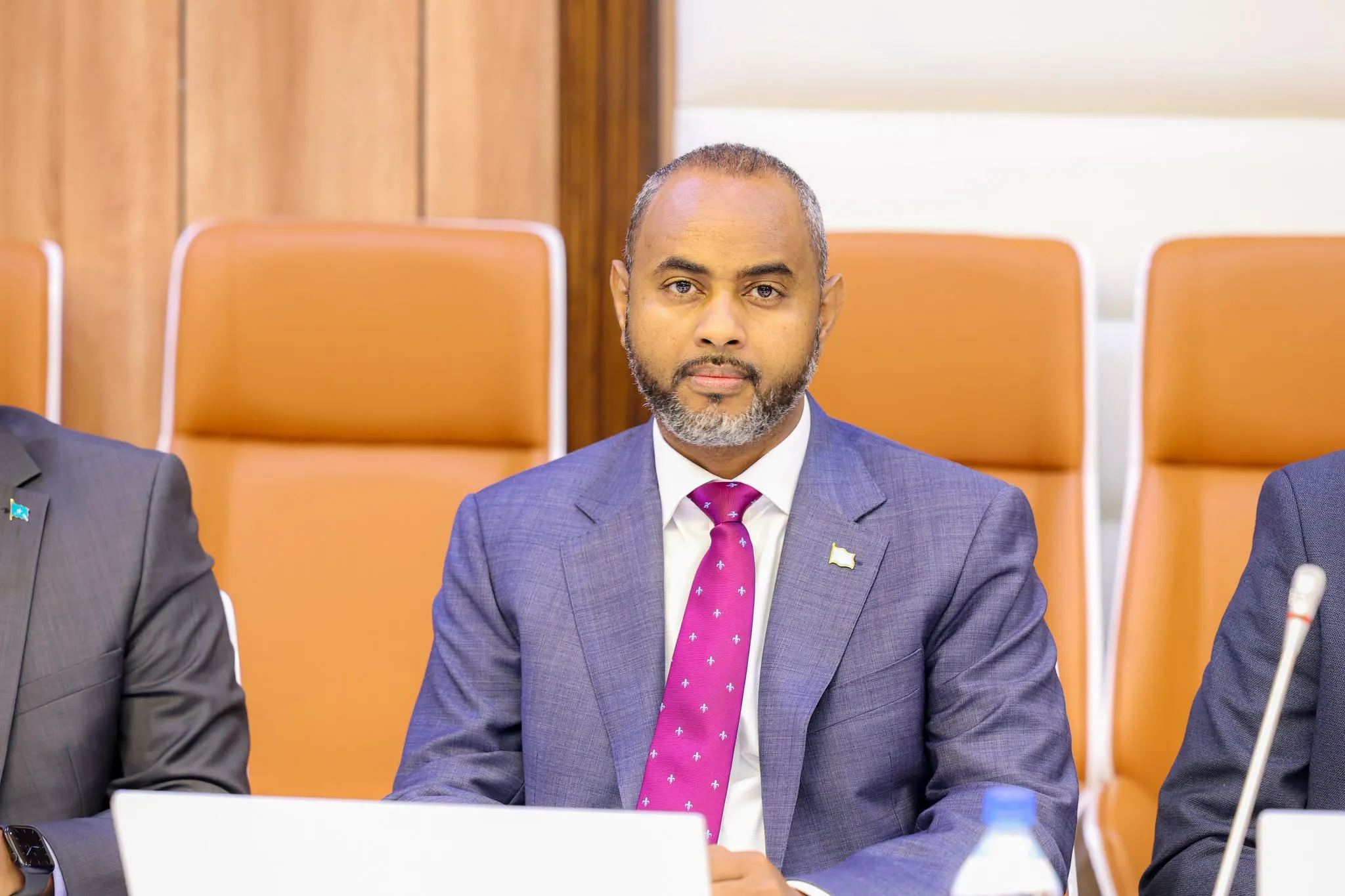
The confrontation surrounding the removal of Parliament Speaker Abdihakim Dhoobo-Daareed turned deadly in Garowe in 2019. Two years later, disagreement over command of the Puntland Security Force escalated into armed fighting in Bosaso. The pattern became more serious in April 2022, when Somalia’s then Foreign Minister Abdisaid Muse Ali survived an assassination attempt in Gaalkacyo. Armed forces attacked the compound of senior traditional elder Yasin Abdisamad, where the minister and his family had gathered for iftar. One of the minister’s bodyguards was killed and Elder Abdisamad was seriously wounded, injuries that left him permanently disabled. The 2023 electoral dispute again brought armed mobilisation into a contest over political authority, while Gaalkacyo witnessed another armed confrontation involving Puntland forces in August 2026.
These episodes arose from different circumstances, but their recurrence is the larger point. Disputes involving parliament, security command, elections, political rivals and relations with Mogadishu have repeatedly acquired an armed dimension. Negotiation eventually returned, often after disagreements had travelled much further than Puntland’s political settlement could comfortably absorb. The deeper concern is the gradual securitisation of political disagreement.
Puntland’s historical political method rested on a different instinct. Its founders faced weak formal institutions and profound disagreements, yet bargaining and accommodation entered early because preserving the common order took precedence over immediate political victory. Authority carried recognised limits, and restraint became part of the practical machinery through which Puntland held together. Political culture develops through such repeated practice. Institutions that settle disputes teach political actors to rely on rules, while early negotiation gives restraint political value. Repeated recourse to coercion produces different incentives, drawing security institutions into political competition and gradually making practices once considered exceptional part of ordinary political calculation.
This cuts against the political logic through which Puntland was built. Security institutions derive their legitimacy from protecting citizens and constitutional order, while parliament, courts and electoral bodies exist to process political disagreement through law and procedure. Puntland’s institutional maturity therefore depends on strengthening these boundaries and keeping coercive power firmly within its constitutional purpose.
From Grievance to Agency
A second political habit deserves equal attention. Puntland has legitimate grievances within Somalia’s unsettled federal order, and defending its constitutional interests is part of the responsibility of any Puntland government. The larger question is what political leadership does with those grievances. During the Deni years, Puntland’s cause has increasingly been framed around what Mogadishu has done, what others have denied Puntland and who bears responsibility for its difficulties. Grievance can rally political support, but sustained too long it can also crowd out agency.
Research on victimhood offers a useful caution rather than a diagnosis. Work discussed in Scientific American distinguishes genuine experiences of injustice from a mindset organised around continuing victimhood. At both individual and collective levels, persistent attention to injury can encourage rumination, sharpen perceptions of hostile intent and reduce attention to possible solutions. The more constructive response is to turn adversity towards growth, agency and possibility.
That distinction matters for Puntland. Its constitutional interests deserve vigorous defence, but Puntland’s political imagination should reach beyond resistance to Mogadishu. The more demanding questions concern what Puntland itself can build, reform and produce. How can its schools develop better skills? How can its cities work better? How can its institutions earn public confidence? How can its ports support production as well as trade? How can young people turn entrepreneurial ability into firms that employ others? Leadership becomes consequential when it converts grievance into a programme of achievement.
Puntland’s cause should therefore be defined increasingly by agency. Its strongest defence of autonomy and federalism is the practical value those arrangements create for its people. A Puntland that governs well, produces more, develops capable institutions and creates opportunities for its youth would make a stronger political argument than grievance alone. Its influence across Somalia would then arise from what others can see working.
The Cost of Confrontation
Political confrontation also carries an opportunity cost because government has finite attention, administrative capacity and political authority. Years absorbed by recurring contests leave less governing energy for public administration, infrastructure, human development and economic transformation. This is where Deni’s political and economic records intersect.
Puntland entered his presidency with inherited structural weaknesses. Its productive base was narrow, imports were high and private enterprise operated through thin formal institutions. Yet the foundations for greater ambition were substantial. The diaspora brings capital and expertise, Bosaso and Garacad connect Puntland to regional commerce, livestock and fisheries offer opportunities for value addition, and its cities contain a younger generation increasingly exposed to technology, finance and entrepreneurship. Seven years of political continuity provided an opportunity to connect these assets, yet the scale of transformation remains modest.
Investment follows confidence in the future. Entrepreneurs commit capital where rules are predictable, institutions reliable and politics stable. The same calculation shapes diaspora choices about property, education, business and return. Across thousands of households and firms, these decisions determine where capital, skills and enterprise accumulate. Where Puntland’s political and business elites educate their children, buy property and place their major investments therefore offers a revealing measure of how people with choices assess local institutions and long-term prospects.
Puntland’s next leaders should ask why an entrepreneur with ambition and resources would establish the next factory, technology company, logistics firm or processing plant in Puntland rather than Nairobi, Addis Ababa or Dubai. The answer lies in the environment created at home, including infrastructure, finance, property security, predictable taxation, useful skills and institutions that inspire confidence.
From Commerce to Production
Official Puntland statistics illustrate the structural challenge. A decade ago, imports were about 38 per cent of Puntland’s economy. They crossed 60 per cent in 2019, reached 76 per cent in 2022 and remained near 70 per cent through 2024. The figures point to a deeper structural issue. Puntland has developed considerable capacity to finance, import, transport and distribute goods produced elsewhere, while domestic productive capability has expanded more slowly.
The next economic task is to turn commercial strength into productive capability. Livestock and fisheries can support processing and value addition, Bosaso and Garacad can connect domestic production to regional markets, and digital services offer another frontier. Much of the underlying potential already exists. The harder task is institutional, creating conditions in which capital, skills, infrastructure and enterprise can combine, grow and accumulate over time.
Somali entrepreneurs have shown remarkable adaptability under difficult conditions. Puntland’s next step is to reduce the institutional friction surrounding that enterprise so that secure property rights, predictable rules, credible commercial institutions, reliable infrastructure and access to finance allow businesses to move towards larger firms, long-term investment, technology, value addition and exports. Fiscal policy should reinforce the same objective. A narrow formal economy concentrates revenue collection on a limited group of ports, traders and companies, while a growing productive economy broadens the future revenue base through more firms, jobs, knowledge and taxable wealth. Building businesses is therefore also part of building the state.
From Negotiated Authority to Institutional Authority
The political and economic arguments ultimately converge on institutions. Puntland’s next transition is from negotiated authority towards institutionalised authority. Negotiation, accommodation and restraint helped construct the state when formal institutions were young. Maturity requires these principles to become embedded in organisations capable of carrying authority across administrations.
Courts should command confidence through consistent application of law, parliament should exercise its constitutional responsibilities independently, and the civil service should preserve professional competence across political transitions. Municipalities and tax authorities should operate through predictable rules, while security institutions protect constitutional order impartially. Together, these qualities give citizens, political actors and businesses confidence that public authority rests on institutions rather than personalities.
Institutional quality also carries direct economic value. Credible property rights encourage investment, predictable taxation permits planning, reliable courts strengthen contracts and professional administration reduces uncertainty. Political performance should therefore be judged by what remains after an administration leaves office. Stronger institutions, better public services, deeper productive investment, growing firms and greater confidence among citizens and diaspora investors provide a more meaningful measure of governing success. After seven years, these are legitimate tests of the Deni administration and should become the standard applied to whoever governs next.
The Leadership Question
Puntland now faces a generational choice as its society and the region around it change rapidly. Its population is younger, businesses compete in a more demanding regional economy, capital and professional talent move easily, and technology is reshaping production and government. The institutions created by the founding generation are entering their fourth decade. Political time therefore carries greater value, making the quality of the next leadership especially consequential.
That leadership requires a different governing temperament, one that moves political differences early towards negotiation, law and institutions and keeps security forces focused on protecting constitutional order. Public institutions should exercise authority impartially, while economic policy concentrates on enterprise, skills, investment and production. Leaders should accept responsibility for results and surround themselves with modern, talented teams chosen for their ability to govern.
The need for renewal lies in the political habits taking root. When coercion and violence become recurring tools of politics, institutions lose authority and political competition grows more dangerous. When economic opportunity remains narrow, capital and talent gravitate towards places offering stronger prospects. Together, these trends weaken confidence in the rules and make future political crises harder to contain.
Puntland’s founding generation achieved something historically significant through negotiation, accommodation and restraint, constructing political order during Somalia’s institutional collapse. The generation approaching 2028 inherits a different responsibility. It must convert that political inheritance into impartial institutions, productive enterprise and a state capable of accumulating competence across successive administrations. Puntland’s influence across Somalia should increasingly come from the same source, through institutions that command trust, businesses that create opportunity, cities that function and leaders whose conduct offers an example others can learn from.
Puntland now needs renewal in leadership, political method and governing purpose. Its next generation of leaders should move the state from confrontation towards restraint, from grievance towards agency and from commercial resilience towards productive power.
The next political cycle will shape how disagreements are settled, how security institutions exercise power, where capital and talent accumulate and whether public institutions grow stronger across changes of government. The founding generation built Puntland by preserving a common political order. The next must secure that inheritance through restraint, stronger institutions and an economy that gives its people compelling reasons to invest their talent, capital and future at home.
Abdisaid M. Ali
———–
Abdisaid is the chairperson of Lomé Peace and Security Forum, Former Minister of Foreign Affairs and International Cooperation and Former National Security Advisor, Somalia. X account @4rukun.
_________
Footnote
1.Abdulkadir Khalif, “Somali minister survives ‘assassination’ attempt,” The EastAfrican, April 22, 2022. The EastAfrican report