By Dayib Sh. Ahmed
Introduction
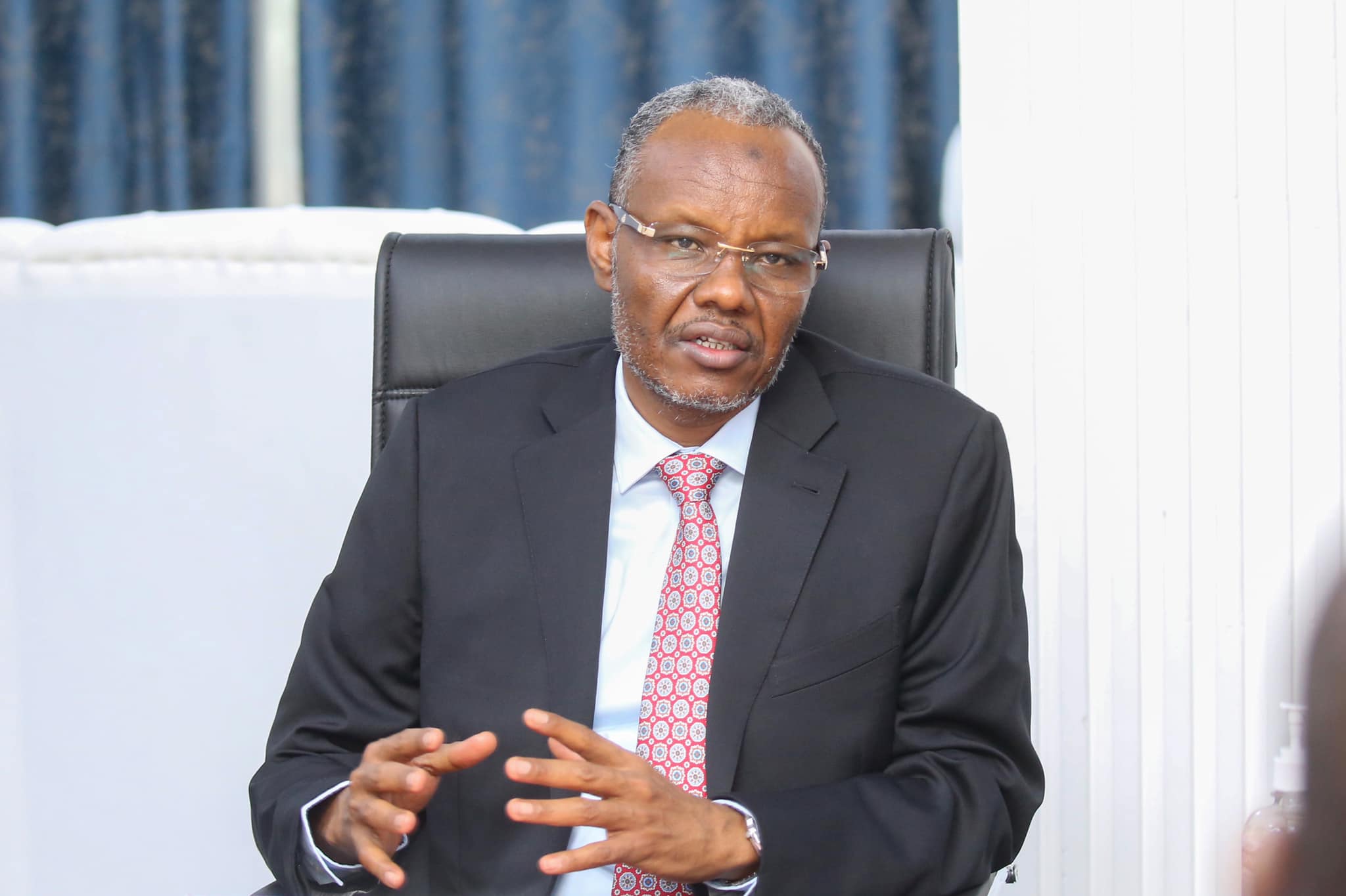
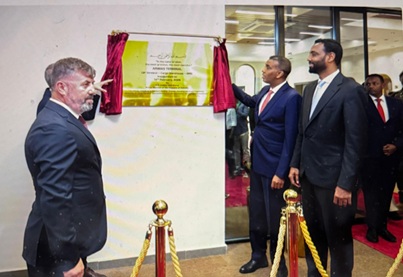
The CEO, of Arimas Group of Companies, Abdirisaaq, who is also the son of President Hassan Sheikh Mohamud, and his family have taken direct control of all cargo operations and warehouse facilities at Aden Adde International Airport in the capital Mogadishu, consolidating one of Somalia’s most important economic gateways under their company, Arimas Group of Companies. In partnership with Favori LLC Airport Management, the family now oversees the airport’s commercial cargo activities, with business operators reporting explicit instructions to comply under threat of administrative or regulatory action. Logistics executives and several officials familiar with airport operations say Arimas moved with unusual speed to assume dominance over cargo services, sidelining long-standing arrangements and consolidating authority in a single private entity closely associated with the presidential family. To many in the business community, the episode reflects not technocratic reform but a broader pattern in which political proximity translates into economic power, raising acute concerns about conflicts of interest, accountability, and the privatization of public infrastructure through informal influence. What began as a purported restructuring of logistics has evolved into a high-stakes struggle defined by coercive enforcement, opaque decision-making, and the effective transfer of operational control to a company widely viewed as aligned with the president’s family and inner circle — developments that critics say blur the line between state authority and private enterprise.
Multiple traders, aviation professionals, and civil servants — many speaking on condition of anonymity for fear of retaliation — say the changes were implemented with extraordinary speed and without the institutional scrutiny normally required for decisions affecting national infrastructure. Under mounting backlash, Abdirisaaq announced a temporary concession allowing importers to retrieve goods under the previous system for 15 days, after which sweeping new rules described as non-negotiable would take effect. For merchants whose cargo remained locked inside the new facility, the announcement read less as compromise than as a countdown to compelled compliance.
Business leaders describe the situation as economic coercion, arguing that control over essential imports effectively deprives companies of meaningful negotiating power and forces them to accept terms set by the new operator. The confrontation comes at a particularly precarious moment for global commerce, as supply chains remain strained by conflict and instability across the Middle East. Traders warn that further disruption at Somalia’s principal international gateway could exacerbate shortages, accelerate inflation, and deepen hardship for consumers already under economic pressure. In that context, the dispute has taken on significance beyond airport logistics, intensifying scrutiny of how political authority intersects with private business interests. At stake, critics argue, is a fundamental question of governance: whether strategic national assets are being managed transparently in the public interest or leveraged through informal networks of power that privilege a narrow circle while exposing the broader economy to risk.
Complaints From International Agencies and Foreign Missions
Alarm quickly spread beyond local businesses to international organizations and diplomatic missions operating from the heavily fortified Halane compound. Several agencies reported that their shipments had been diverted to a newly constructed warehouse and subjected to sharply inflated invoices lacking any clear legal basis or publicly available tariff schedule. Officials from humanitarian groups warned privately that the unexpected charges could disrupt critical aid operations if allowed to continue, while diplomats questioned the abrupt shutdown of previously authorized storage facilities without formal notice or consultation. Aviation experts also raised serious safety concerns about the warehouse’s location near aircraft parking zones, cautioning that intensive cargo activity in such proximity to active flight operations could compromise established safety protocols.
According to multiple accounts from government officials and airport personnel, Abdirisaaq — the son of President Hassan Sheikh Mohamud — convened an emergency meeting with senior authorities, including Commerce Minister Gamal Mohamed Hassan, Civil Aviation Director Ahmed Moallim Hassan and the Director of Government Revenue. Participants say they were instructed not to conduct an independent review but to produce documentation retroactively legitimizing the project. In the words of one official, the exercise appeared “designed to create legality after the decision had already been made.” The Commerce Ministry was reportedly pressed to adjust regulatory frameworks to grant the Arimas Group of Companies authority over cargo operations, effectively displacing the long-standing airport operator Favori llc. Civil aviation authorities issued letters affirming the legality of the new warehouse within hours, while revenue officials were directed to formalize fee collection on behalf of the new operator and deploy tax personnel to the site, ensuring that all incoming cargo would be processed under the new system regardless of prior agreements.
Why the New Warehouse Ignited Outrage
Importers, logistics firms and humanitarian agencies describe the new cargo Authority, as a sweeping and coercive overhaul imposed without consultation, transparency or a credible regulatory framework. Central to the controversy is the facility’s placement in a highly sensitive aviation zone near aircraft parking areas — a location industry professionals warn could jeopardize safety standards and expose flight operations to unnecessary risk from congestion, equipment movement and heavy cargo handling. At the same time, long-standing procedures, including a 24-hour grace period for free storage, have been abruptly eliminated and replaced with immediate per-kilogram charges, sharply increasing costs from the moment shipments arrive. Essential scanning and inspection services that were previously provided under established arrangements — including those involving Favori — have now been consolidated under a single operator at significantly higher fees and without any visible competitive tender or oversight.
Compounding the burden, every vehicle entering the compound to collect goods is required to pay a flat $25 access fee, effectively turning routine cargo retrieval into a toll operation. Traders are also prohibited from using their own workers, drivers or equipment and must instead hire company-approved laborers, a policy widely viewed as stripping businesses of operational autonomy while creating guaranteed revenue streams for the operator. Business associations argue that, taken together, these measures amount to a de facto monopoly enforced through physical custody of goods: importers cannot retrieve their property without accepting the new conditions, however onerous they may be. Several airport employees, speaking anonymously out of concern for their jobs, said the system effectively ensures steady income for the operator regardless of service quality while eliminating competition and market discipline. Critics warn that such an arrangement undermines confidence in the neutrality and professionalism of operations at Aden Adde International Airport and raises broader questions about fairness, legality and the future of commercial activity through the country’s principal international gateway.
Mounting Alarm Within the Business Community
Cancer treatment medicine
The broader business community fears the consequences extend far beyond a single dispute. Commercial associations warn that sharply rising logistics costs could cascade through the economy, increasing prices for basic goods and undermining already fragile supply chains in a country heavily dependent on imports. Aid organizations caution that delays and bureaucratic choke points could jeopardize life-saving deliveries, while exporters worry that unpredictability at the airport will damage Somalia’s reputation as a trading partner. Particularly alarming to many observers is the concentration of inspection, storage and revenue collection in the hands of a politically connected private entity without publicly disclosed contracts, competitive tendering or independent oversight. In interviews with traders, diplomats and civil servants, a recurring concern emerges: the perception that strategic infrastructure is being captured by a narrow political circle.
Critics argue that the episode reflects deeper governance problems under President Hassan Sheikh Mohamud, reinforcing the belief that key economic institutions are being treated as instruments of patronage and family enrichment rather than neutral state assets. furthermore, A businessman in the pharmaceutical trade, who asked to be identified only as Ahmed and declined to reveal his full name out of fear of possible repercussions, described a troubling incident involving life-saving medication. He said a shipment of expensive drugs used to treat Cancer had arrived packed in ice and required strict cold storage. According to him, the medicine was intended to remain properly refrigerated for up to 48 hours, but it was held at the facility until the ice completely melted, causing the temperature-sensitive drugs to spoil. The shipment, he noted, was extremely costly and vital for patients whose lives depend on timely treatment. As a result of the delay and loss of proper cooling, the medication was rendered unusable, depriving critically ill patients of urgently needed therapy and inflicting both financial damage and human suffering.
Final Assessment
Taken together, the allegations — drawn from traders, international officials, aviation specialists and airport staff speaking on condition of anonymity — suggest not merely an administrative restructuring but a system acutely vulnerable to corruption at the highest levels of authority. Critics argue that the sidelining of established operators, the absence of transparent procurement procedures and the use of importers’ own goods as leverage point to an effort to consolidate commercial power within the president’s family orbit. Supporters of President Hassan Sheikh Mohamud reject that interpretation, maintaining that long-delayed modernization of logistics at Aden Adde International Airport is both necessary and legitimate. Yet the continuing lack of publicly disclosed contracts, regulatory clarity and independent oversight has intensified suspicion — widely voiced in recent weeks — that private interests may be shaping public policy.
In my view, no society with a healthy political system and functioning institutions can credibly treat critical national infrastructure as a de facto family enterprise or a vehicle for self-enrichment without undermining its own legitimacy. A state whose strategic assets appear to operate through personal networks rather than transparent law risks eroding public trust, discouraging investment and weakening international partnerships. As the controversy continues to unfold, analysts warn that the longer these perceptions persist, the greater the danger that Somalia’s economic recovery and institutional credibility will suffer lasting damage — reinforcing the belief that proximity to power, rather than rules or merit, determines access to opportunity.
Dayib Sh. Ahmed
Email: Dayib0658@gmail.com
——
Dayib is a writer, political analyst and WardheerNews contributor