The School of Tourism and Hospitality Management (STHM) at the Solomon Islands National University has officially launched a new waste management project in partnership with the Honiara City Council Waste Management Division.
The project aims to promote sustainable waste practices among students and staff while strengthening environmental responsibility within the tourism sector.
Over the past two weeks, Japanese Overseas Cooperation Volunteers (JOCV) from HCC’s Environmental Health Division have been conducting awareness sessions at the school.
Madam Christina Kafukese Ariki and Head of School Madam Emarlyn Hiele supported these sessions. The training focused on waste challenges in Honiara, relevant laws and ethical responsibilities, and the importance of proper waste management in tourism.
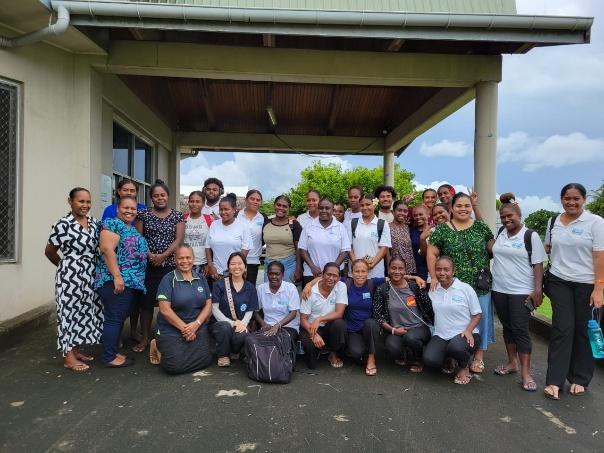
A total of 283 students and staff participated in 10 sessions. Participants not only learned theory but also took part in practical activities based on the 3R principles: Reduce, Reuse, and Recycle.
These activities helped build a better understanding of how waste can be managed effectively in both daily life and future workplaces.
JOCV volunteer Mifuyu Abe expressed hope that the project would become a model for other schools and faculties.
Japanese Overseas Cooperation Volunteers (JOCV) from HCC’s Environmental Health Division, Miss Mifuyu, lecturing students at SINU.
She said the initiative could be expanded across SINU to strengthen environmental awareness at a wider level.
Madam Christina highlighted that teaching tourism students about waste management and the Global Code of Ethics in Tourism is very important.
She said this knowledge will help students contribute to sustainable practices in the tourism industry.
She also noted two key goals: to include waste management in the tourism curriculum and to establish proper waste systems at STHM as a model for the university.
Madam Emarlyn Hiele said the project is the first of its kind at the school. She thanked HCC for the partnership and said the program will help improve attitudes and behavior toward waste management among students and staff.
From Weeks 8 to 14, the school will begin a trial phase where waste will be separated into three categories: food waste for composting, recyclables like plastics and cans, and general waste for landfill. This will position STHM as a leader in environmental responsibility at SINU.
– HCC Press