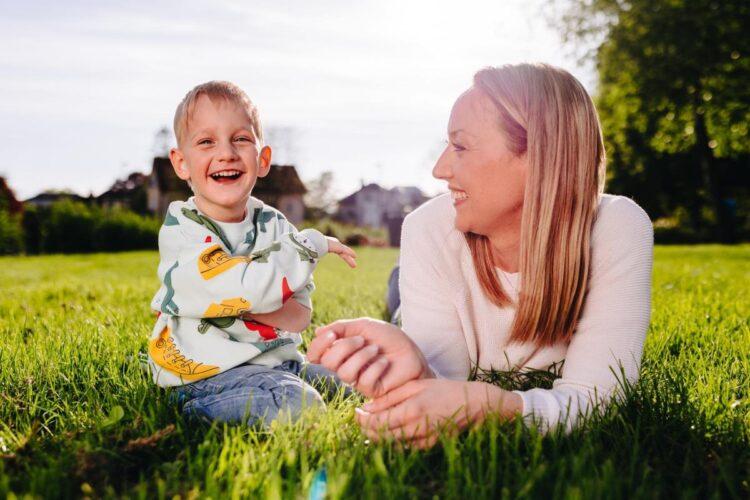
Urban, a six-year-old boy suffering from a rare genetic neurodevelopmental disorder, is the first patient in the world to have received a pioneering gene replacement therapy for the CTNNB1 syndrome as a clinical trial started at the UKC Ljubljana Medical Centre.
At least 12 children suffering from this congenital gene mutation that causes varying degrees of intellectual disability, developmental delays, and problems with motor control will receive Urbagen, the therapy named after the boy, as part of the clinical trial. The therapy’s development has been spearheaded by Urban’s mother, researcher Špela Miroševič.
Damjan Osredkar, head of the department of paediatric neurology at the Ljubljana Paediatric Clinic, hailed the development as a major success for Slovenian medicine as he addressed the press on 19 December. The study is currently in phase I/II, which means they are evaluating the safety and efficacy of the therapy. Initial results are expected within two months.
Urban underwent surgery to be administered the therapy last week, then spent a day in intensive care, followed by another week in hospital. The operation and the first few days after the procedure went without complications, and he was discharged two days ago to recuperate at home.
Urban will now be monitored for three months before the next child can receive the therapy. The next three candidates are girls from the United States, Canada, and Portugal. About a hundred families have expressed interest in participating in the clinical trial.
Therapy relying predominately on Slovenian expertise
Osredkar pointed out that this is the first therapy in the world developed specifically for the CTNNB1 syndrome. He noted the rarity of a non-profit organisation guiding a therapy through every stage of development, relying predominantly on Slovenian expertise.
Urban’s mother Špela Miroševič, the founder of the CTNNB1 Foundation, said her son is recovering well and appears happy. In 2020 he was the youngest child in the world to be diagnosed with the syndrome. Without the early diagnosis, the programme would not exist, she said.
Neurosurgeon Peter Spazzapan confirmed the administration procedure was safe and successful, offering optimism for future patients.
The trial was authorised by the Slovenian Agency for Medicinal Products in November following five years of research.
The CTNNB1 syndrome, which was first identified in 2012, affects approximately 500 identified patients worldwide. However, UKC Ljubljana says that figure is likely a significant underestimate, as the mutation is frequently found in children misdiagnosed with cerebral palsy.