
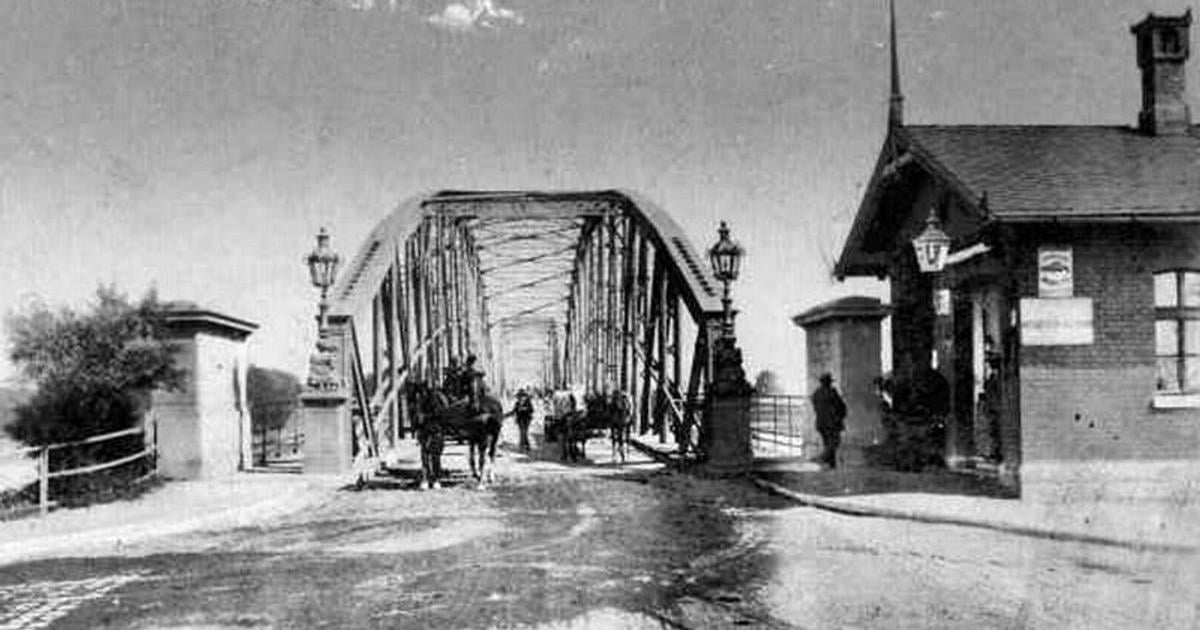
A ford used to exist near what is today the southern Slovak town of Komárno, which could easily be crossed even by a fair-sized army. However, it soon became insufficient for the growing traffic and a foot ferry system was therefore introduced to span the river Danube. Small boats shuttled to and fro on the river until the turn of the 19th century.
Article continues after video advertisement
Article continues after video advertisement
Then, in 1892, the first “solid” bridge was erected over the Danube and named after the then-king’s wife, Elisabeth.
It has lasted until today, linking Komárno with Komárom, its northern Hungarian neighbour, for more than a century. Until World War I, the two towns were actually one and the same.
The bridge that was meant to bring the two towns, and the two countries, closer, sometimes played a completely opposite role.
In 1938, Hungarian naval officer Miklós Horthy crossed it in the saddle of a horse. Shortly afterwards, the officer was followed by an occupying army, which seized most of southern Slovakia.
Hungary’s president from 2005 – 2010, László Sólyom, was barred from crossing the bridge. Firstly, perhaps, because he had no horse and secondly because of the Slovak government’s heroic obstinacy.
This postcard shows Elisabeth Bridge as it looked some time in the early 1900s.
This article was first published by The Slovak Spectator on September 21, 2009. It has been updated to be relevant today.


