
You can read this exclusive content thanks to the FALATH & PARTNERS law firm, which assists American people with Slovak roots in obtaining Slovak citizenship and reconnecting them with the land of their ancestors.
Article continues after video advertisement
Article continues after video advertisement
Autumn in Zvolen reveals a town full of quiet surprises. One moment you’re climbing a via ferrata beneath one of central Europe’s largest medieval castles; the next, you’re unwinding over Balinese dishes inspired by a love story that began on the other side of the world.
With every visit, Zvolen shows another side of itself — historic, adventurous, unexpected — and it never seems to run out of stories to tell. Over three autumn trips, The Slovak Spectator returned again and again, each time discovering something new.
It is all the more striking that such variety lies less than a two-hour drive from Bratislava.
Something for climbers
One rainy weekend led us to the recently opened via ferrata at Sokolie Skaly, situated directly below Pustý Castle. The castle’s vast remains, with origins in the 12th century, rank among the largest historical complexes in central Europe. Locals even claim it once surpassed Spiš Castle in size, though much of Pustý Castle now lies subterranean, giving Spiš the more dramatic silhouette.
Jaroslav Stehlík, owner of the Koliba u Rytiera cottage and a member of the Pustý Hrad Civic Association, explains that the via ferrata was created not to compete with the castle, but to complement the experience of visiting it.
For those who appreciate a touch of adrenaline, the route delivers. The metal ladders are steep — especially slippery after rainfall — but the panorama from the top, stretching over Zvolen and the Hron River valley, makes the climb worthwhile. Even those uneasy with heights are rewarded for their courage.
The via ferrata at Sokolie Skaly includes steep ladders. (source: Jozef Ryník)
Stehlík notes that via ferrata routes have become particularly popular with younger visitors. Many, especially women, enjoy taking striking photographs on the ladders, helping fuel a steady rise in climbers each year.
Affordability plays a part, too. Access to the rocks is free, and climbing equipment can be hired for €10 for four hours. The easier of the two routes usually takes around two and a half hours to complete, while a full-day set rental is available for €15.
Climbers increasingly travel from Poland, Stehlík says, while Hungarian visitors more often prefer Pustý Castle itself, historically linked to King Béla IV.
His biggest challenge is weaving all these local attractions into a coherent offering. “Tourists should know what there is to do here,” he says. “If they did, they would spend longer in the region.”
Cemeteries in the Zvolen district
For many foreigners tracing their Slovak heritage, finding the burial sites of their ancestors is a deeply personal journey. To aid in this quest, we have provided maps of the districts we visited, with every cemetery carefully marked. Here you can find cemeteries in the Zvolen district.
Little Bali restaurant in Zvolen. (source: Jozef Ryník)
Bali restaurant
After a day of hiking or climbing, those looking for rest and good food should head to Little Bali, an Asian centre just outside Zvolen’s old town.
Its founder, entrepreneur Július Polónyi, first built his career crafting wooden barrique barrels for winemakers in California and France. Later, he invested in a resort in the Seychelles, and when that project faltered, he pursued opportunities in Bali. Though the business plan never materialised, he fell in love with the island — and with the woman who became his wife.
He built a resort in Bali and later decided to bring a touch of the island back to Slovakia, opening Little Bali. The centre offers fragrant Asian cuisine prepared by a chef trained in traditional Balinese cooking, alongside Balinese massages, yoga classes and displays of Indonesian art, including teak-wood furnishings.
Polónyi’s passion for wood remains central to his story. His company, Iron Art, produces around 22,000 oak barrels annually from Slovak oak, supplying some of the world’s leading wineries and distilleries.
If you’ve had your fill of outdoor activities and are looking to unwind with some delicious food, we recommend visiting the Little Bali centre.
A room commemorating Adela Ostrolúcka and Ľudovít Štúr at the Forestry and Woodworking Museum. (source: Jozef Ryník)
Forests belong to town
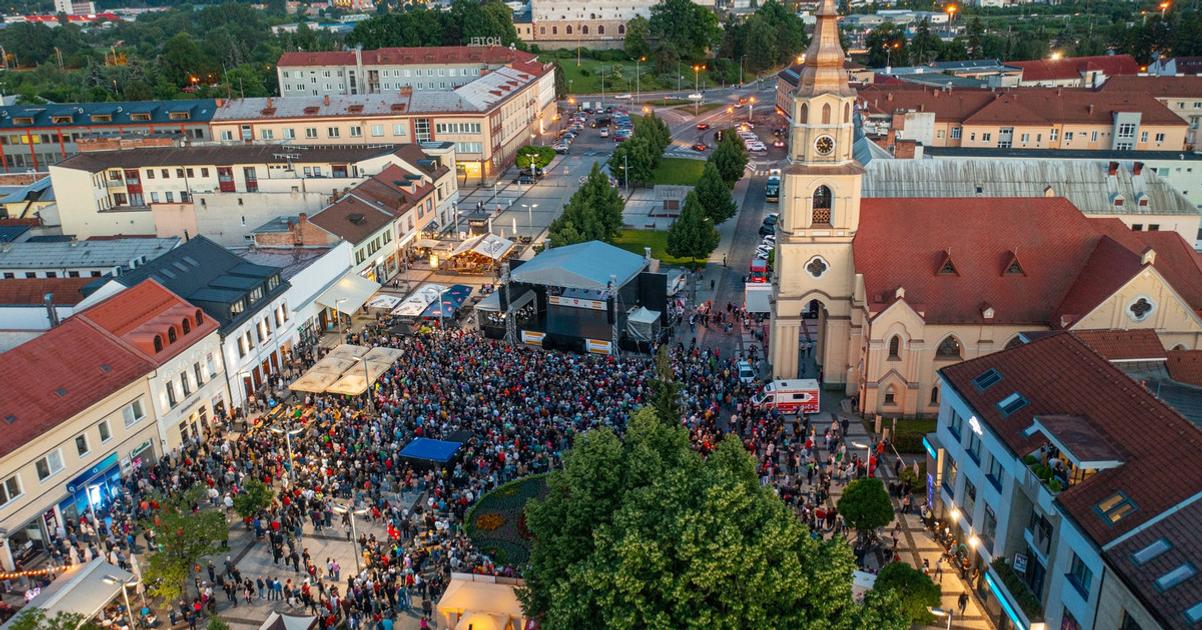
After a restorative massage or a meal at Little Bali, Zvolen’s main square is well worth exploring. One of its highlights is the Forestry and Woodworking Museum. Visitors lucky enough to be guided by lecturer Ivana Hofbauer will hear not only about the region’s logging heritage, but also about the connection between national revivalist Ľudovít Štúr and his platonic muse, Adela Ostrolúcka. The museum even dedicates a room to her.
Štúr, though elected as a representative of Zvolen in the Hungarian Parliament, likely never lived in the city itself. He tutored Adela, a noblewoman from nearby Ostrá Lúka, where the Ostrolúcky family mansion still stands.
An exhibition in the museum explores the family’s relationship with Štúr. Alongside their correspondence, the museum houses a library of some 6,000 books in various languages. There is original furniture from the Ostrolúcky manor, a spinet played by the musically talented Adela, and even a lock of her hair preserved by her mother after Adela’s premature death at 29.
Romantics may be disappointed to learn that historians have found no evidence of a secret love affair between Ľudovít and Adela.
The park at Ostrá Lúka Manor is open to the public. (source: Róbert Díčer’s archives)
Ostrá Lúka Manor to open the the public
The Ostrolúcky family manor in Ostrá Lúka, just 12 kilometres from Zvolen, is slowly regaining its former dignity. Businessman Róbert Dičér bought the crumbling estate in 2019 for €250,000 and has since invested hundreds of thousands more into its restoration.
“I feel a connection to history,” Dičér says, speaking by candlelight during a temporary power cut in the manor’s kitchen. “When I heard the property had been on the market for so long, I decided to buy it and save another monument.”
Both the manor itself and the former farm building have now been restored, the latter transformed into a community centre.
Once electricity returns during our tour, the corridors reveal Dičér’s passion for collecting historical objects: tapestries, ceramics, paintings and maps line the interiors.
His plans extend further. On the site of the vanished upper manor, he hopes to create a cultural centre for public events. Though he still uses part of the estate privately, he has begun opening sections to visitors. One tower now houses a memorial room dedicated to the Ostrolúcky family, and he has invited their descendants to visit.
He also plans to reopen the surrounding park. “Tourism cannot thrive without infrastructure,” he says. “There’s no restaurant in the village any more, and even the pub has closed. All of that will be added here, including space for horses.”
The café in the courtyard of Zvolen Castle. (source: Jozef Ryník)
Zvolen Castle cries out for repair
No tour of the region is complete without Zvolen Castle. With its Gothic foundations and Renaissance flourishes, it bears a silhouette reminiscent of Bratislava Castle. Yet its potential is muted by a neglected access road and the unfortunate fact that it stands directly beside the main road.
The courtyard café, however, is a pleasant stop. During our visit, a bride and her guests passed through for photographs, and we later learned the castle hosts weddings.
Lucia Malatincová, who works at the café, believes Zvolen is well worth visiting, though she thinks most travellers can cover the main sights in a day. Aside from the castle, she recommends the local arboretum.
“There’s a theatre and a few cinemas,” she adds, smiling, “but young people usually head to the famous disco in Banská Bystrica.”
Zwolenčan Brewery is housed in a historic building on the main square. (source: Jozef Ryník)
Beer at Zwolenčan
For a break from sightseeing, Zwolenčan — the local brewery on the main square — is an excellent stop. Owner Peter Mišurda, who has long worked in hospitality, bought the historic building at the first opportunity. Renovations began shortly before the pandemic, leading to delays, but the restaurant, brewery and guesthouse finally opened at the end of 2023.
“The building had potential for more than just a restaurant,” Mišurda says. “So we decided to add a brewery.”
Running such a business is challenging, he notes, not only in Zvolen but across Slovakia. Rising taxes and wage expectations leave little profit margin.
The brewery mostly serves local residents, business clients and event guests. Foreign visitors, Mišurda observes, rarely stay long in Zvolen due to the limited attractions beyond the castle and museum.
He recommends exploring the surrounding mountains or Pustý Castle — though even there, he laments, basic refreshment stands are lacking. “Unfortunately, there’s nowhere simply to buy a drink,” he says, highlighting gaps in regional tourism infrastructure.


