
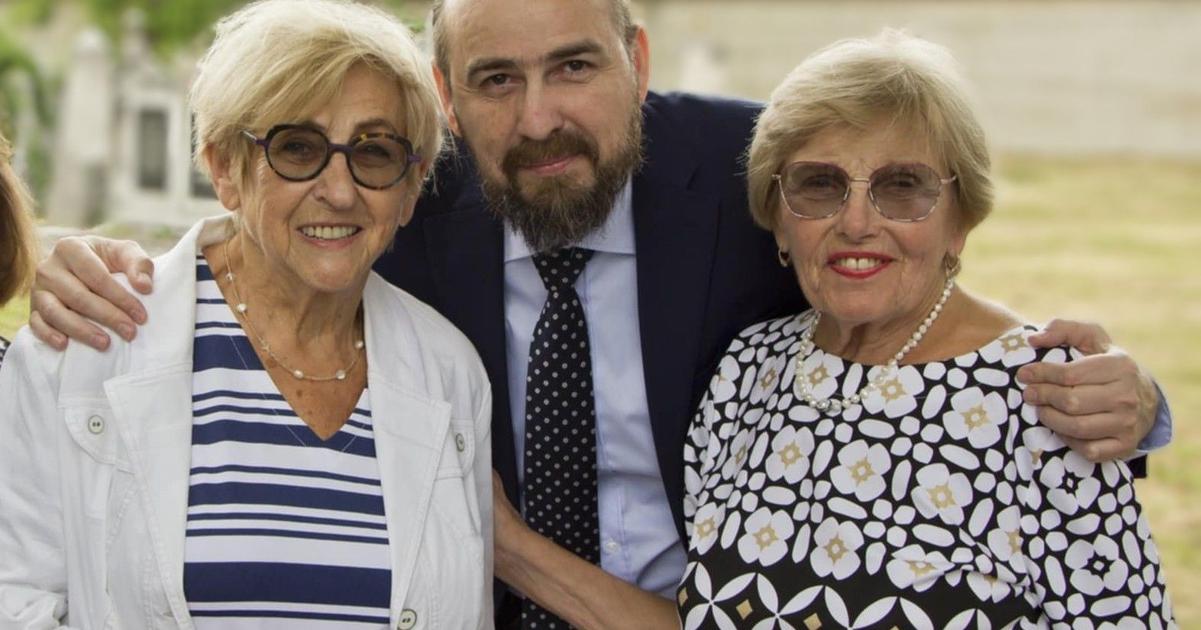
Members of the Slovak Jewish community were among those present at a Hanukkah event on Sydney’s Bondi Beach on Sunday, when a terrorist attack took place, Slovak sources said.
The gathering had been organised to mark the first day of Hanukkah, also known as the Festival of Lights, a traditionally joyful Jewish holiday that falls around the same period as Christmas.
Article continues after video advertisement
Article continues after video advertisement
Among the victims was Marika Pogany, a woman originally from Slovakia who had lived in Australia for decades. According to Slovak sources, she is one of 16 people who died in the attack.
Pogany was at the event together with her long-time friend Agátha, originally from the town of Komárno in southern Slovakia. Both women emigrated to Australia in 1968, during the Soviet occupation of Czechoslovakia, and regularly returned to Slovakia after the fall of communism.
Foreign media reported that Pogany was sitting in the front row during the beach event when she was shot.
The Jewish community in Komárno said in a Facebook post that it was saying farewell “with deep sorrow” to a friend it had met regularly in recent years. The community said Pogany had been killed during a Hanukkah celebration on her favourite beach and expressed condolences to her family and friends.
Former Slovak president Zuzana Čaputová said Pogany was a close personal friend. In a social media post, Čaputová recalled Pogany’s family history, marked by the Holocaust, noting that only her mother and an uncle survived Auschwitz. She described Sydney as a refuge for Pogany, far from fascism and communism.
Martin Korčok, director of the Holocaust Museum in Slovakia, remembered Pogany as an energetic and cheerful woman who chose to build her life in Australia during the period of totalitarian rule. He urged the public not to remain indifferent to the spread of anti-Jewish hatred.
Slovak Foreign Minister Juraj Blanár expressed regret over the attack, while President Peter Pellegrini condemned what he described as anonymous hatred directed at people because of their faith, origin or identity. Pellegrini offered condolences to Pogany’s family.
According to Slovak sources, Pogany’s family originated from the eastern Slovak town of Rožňava. She was a graduate of a grammar school in Bratislava and emigrated to Australia in 1968. Her mother tongue was Hungarian, but she spoke Slovak and English fluently. She had a brother living in Israel.
Friends and colleagues described her as an active, optimistic and sociable woman who travelled frequently and spent several months each year in Slovakia, including regular visits to Komárno.
According to the Jewish news outlet Tachles News, Pogany was 82 years old and volunteered extensively in Australia, distributing more than 12,000 kosher meals over a period of 23 years.
The attack was carried out by two attackers, a father and son, who killed at least 15 people and injured dozens more. One of the attackers was shot dead by police, while the other was seriously injured. One of the gunmen was disarmed by a local fruit seller of Syrian origin.
The attack has been described as a terrorist act and, by the number of victims, as the second-deadliest mass shooting in Australia’s history, after the 1996 shooting in Tasmania.
Slovak media also cited data showing a sharp rise in antisemitic incidents in Australia since the outbreak of the war in Gaza, including physical assaults, vandalism and hate graffiti.


