
24. Nov 2025 at 22:14
A survey by Denník N shows public concern centring on the same areas police consider problematic.
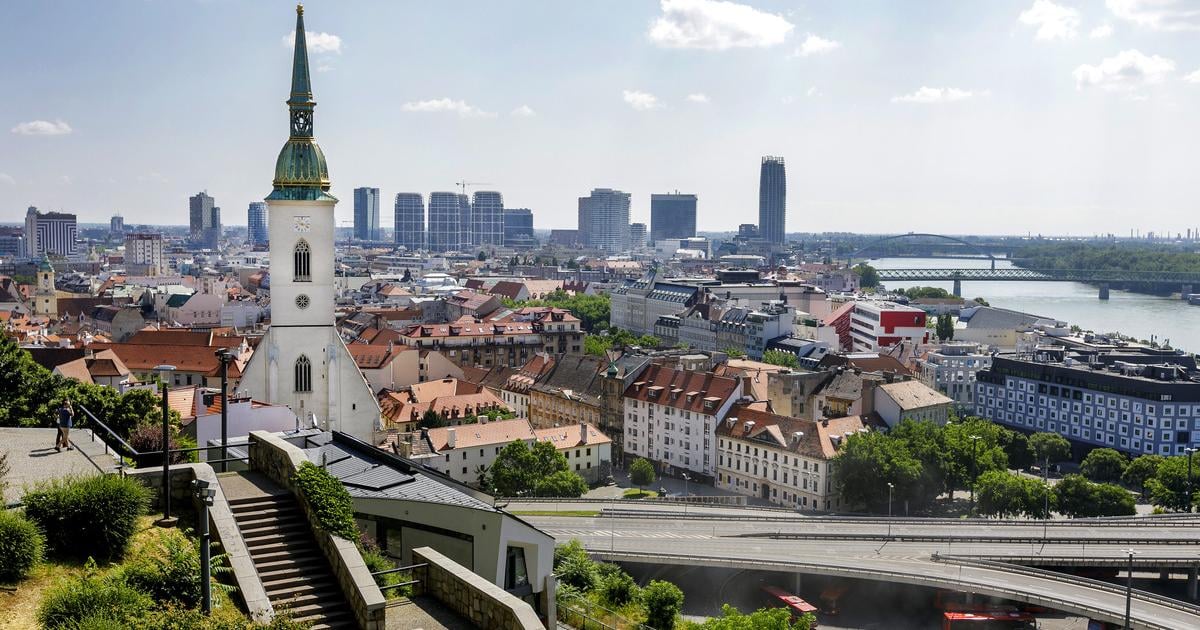
Bratislava. (source: TASR)
Children witnessing loud arguments, people openly drinking alcohol or exchanging suspicious items, a woman calling a taxi late at night to get home safely from work, and drug users taking substances in full view of passersby — these are just some of the scenes Bratislava residents say they are encountering today.
Article continues after video advertisement
Article continues after video advertisement
Concerns about security and public safety have intensified in recent months, with mayors across Slovakia warning of rising theft and related problems.
In Bratislava, the issue began gaining traction more than a year ago, when residents of the 500 Bytov area near the Nivy shopping centre and bus station started reporting used syringes on playgrounds and frequent encounters with drug users.
The situation worsened after an amendment to the Criminal Code raised the threshold for prosecuting theft as a crime from €299 to €700 — roughly £590 or $750. City officials say the change has emboldened offenders, contributing to a surge in shoplifting, drug-related incidents and aggressive behaviour in public spaces.
“The sense of safety in our streets is vanishing,” Bratislava Mayor Matúš Vallo said.
Related article
Bratislava leaders blame theft law for crime surge, urge government to act
Read more
Survey respondents and officials in agreement
The daily Denník N recently surveyed its readers about which areas in the capital they consider unsafe and what kinds of threats they perceive. More than 700 people responded.
The 10 most often mentioned streets and localities:
-
Obchodná (79)
-
Kamenné Námestie (72)
-
Trnavské Mýto (66)
-
Mlynské Nivy (27)
-
Páričkova (18)
-
Kopčianska (10)
-
Dudvážska (8)
-
Kukučínova (8)
-
Mariánska (8)
-
Námestie SNP (8)
The survey is not representative — readers form a specific segment of the population, responses were subjective, and perceptions may differ from those of the general public.
Still, the streets and neighbourhoods readers identified largely match those flagged by police and city officials as problematic: Obchodná Street, Kamenné Námestie square, to name a few.
In general, the locations mentioned tend to be busy, densely frequented areas with shops, businesses and public spaces such as parks and benches.
Click here to view the map of all streets mentioned by respondnts at least twice.
When explaining why they feel unsafe, respondents most frequently cited encounters with homeless people and drug users, perceived police inaction on theft, and poorly lit public spaces. A total of 607 respondents specifically mentioned the presence of “suspicious individuals or groups.”
Related article
Košice officials debate volunteer citizen patrols amid crime concerns
Read more
What residents report seeing
One respondent wrote that groups of drug users and thieves regularly gather on Páričkova Street next to the Nivy centre and bus station, as well as inside the centre itself. According to this account, these groups are easily recognisable. They steal goods from shops in Nivy, pawn them at a nearby pawn shop, and then purchase drugs from a dealer around the corner.
Another respondent said they had witnessed conflicts among drug users even early in the morning while walking their children to school.
The Trnavské Mýto area and the surroundings of Nové Mesto railway station were also frequently mentioned, with reports of people injecting or using drugs in broad daylight, behaving loudly, and leaving rubbish behind.
Other major concerns include fear of theft or robbery (cited by 335 respondents) and poor lighting or low visibility (mentioned by 244). Many residents also say property crime is rising and police remain inactive. Multiple burglaries of apartment buildings and flats have been reported in the Slnečnice Viladomy zone on the outskirts of Petržalka. According to one account, police have neither identified the perpetrators nor investigated damage amounting to less than €700.
The map shows dangerous streets and localities in Bratislava’s boroughs. Red dots signify those identified by mayors, green by the police. (source: Denník N)


