Published Sat, May 9, 2026 · 12:24 PM
[SINGAPORE] Cyberattackers are targeting Singapore and using artificial intelligence to make attacks cheaper and faster.
This is a serious issue for the country, and operators of critical services here must urgently raise their defences, said Coordinating Minister for National Security K Shanmugam on Saturday (May 9).
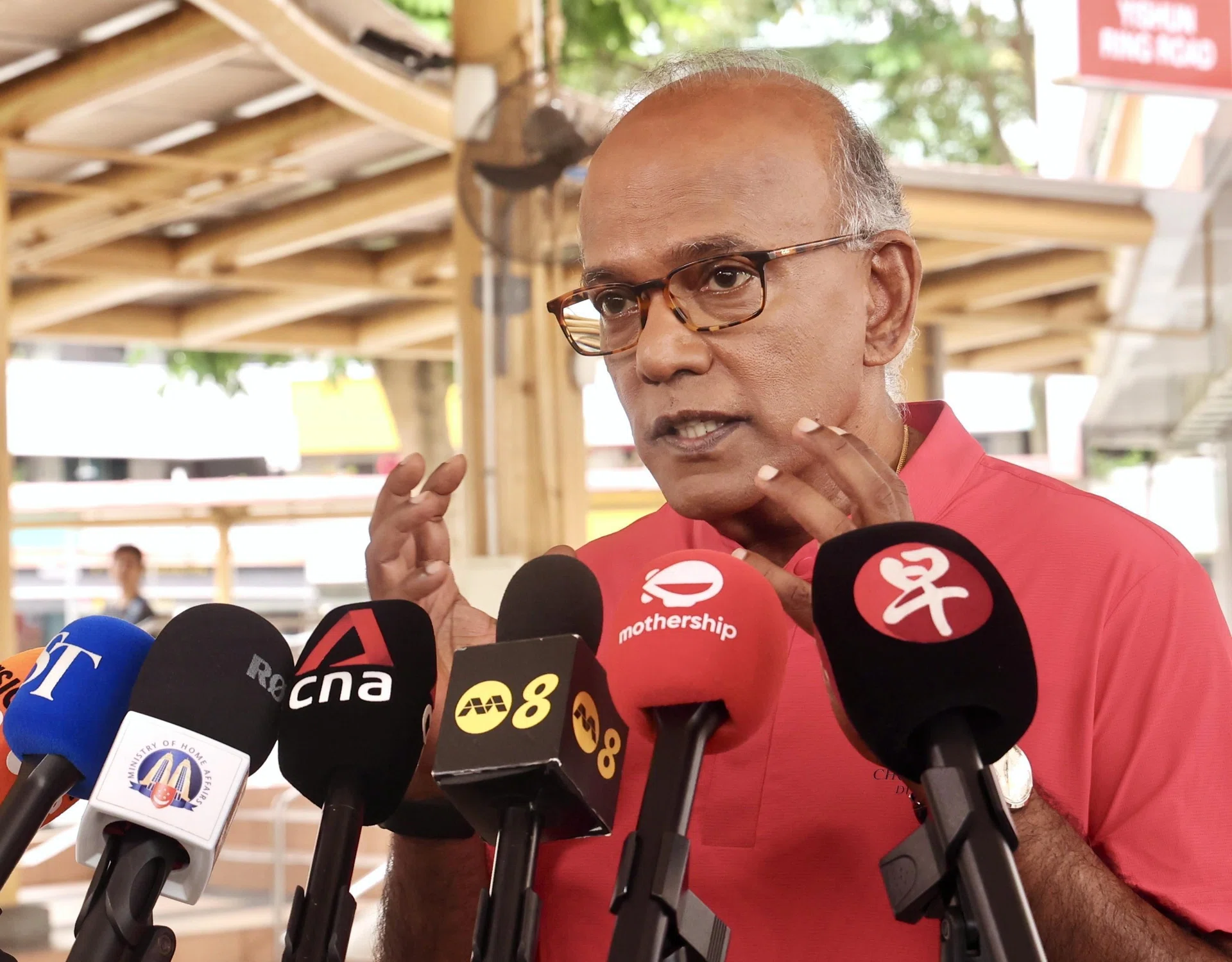
Speaking to reporters on the sidelines of a community event in Yishun, Shanmugam, who is also home affairs minister, said some sectors such as telecommunications are at particular risk.
“All the owners of CII, which is Critical Information Infrastructure – telecoms networks, for example – have to urgently raise their cybersecurity posture,” he said.
“This has to be the responsibility at the board level, and cannot be delegated to the IT departments alone. The board of directors will have to say ‘we are responsible for it’.”
The 11 CII sectors here are aviation, healthcare, land transport, maritime, media, security and emergency services, water, banking and finance, energy, info-communications, and government.
Navigate Asia in
a new global order
Get the insights delivered to your inbox.
Shanmugam said Singapore is facing sophisticated cyberattacks, some of them by state-linked attackers, and warned that such groups are integrating AI into their operations.
He mentioned UNC3886, the cyber espionage group that attacked the four major telcos here in 2025.
He said the cyberattackers posing a threat to Singapore are capable and determined.
SEE ALSO
“They can steal sensitive data. They can attack your essential services. They can play havoc with your systems.
“The attackers who are the most capable, most well resourced, will be the ones who are adapting to advanced AI quickly, integrating into their capabilities.”
Frontier AI models, which refer to the most advanced models available, are the foremost concern.
In April, it was reported that Anthropic’s Claude Mythos was able to identify vulnerabilities and hack systems on the day they are released.
It was further reported that when tested, Mythos found vulnerabilities in every major browser and operating system.
This meant that in the wrong hands, it could be used to hack almost every system and cause chaos around the world, leaving cybersecurity experts struggling to keep up. Because of this danger, access to Mythos has been restricted to the highest levels of cyber defenders.
Singapore agencies do not currently have direct access to it, but Shanmugam said many of these frontier tech companies have engineering teams deployed in Singapore.
He said: “We work closely with them. We look at what they have to offer, we decide what works best for Singaporeans. We have agencies tasked to do this, and they are looking at it closely.”
The Cyber Security Agency of Singapore issued an advisory on Apr 15 warning that frontier AI models can shorten the time hackers engineer exploits, from months to just hours.
It urged companies to immediately patch critical vulnerabilities in Internet-facing systems, which, if compromised, could cause widespread impact on company systems.
On May 5, Senior Minister of State for Digital Development and Information Tan Kiat How told Parliament that the chief executives of major financial institutions here met the Monetary Authority of Singapore to discuss the collective action to be taken against the threat.
He warned that most breaches begin with unmanaged assets, such as forgotten Internet-facing systems or a shadow cloud account.
Shanmugam said the Infocomm Media Development Authority has issued an advisory to the telcos to reinforce the urgency of the matter.
He said the advisory includes guidance on measures they can take, such as using AI themselves for cybersecurity and updating risk management plans to account for AI-enabled threats.
He added that the government is taking steps to work with different parties in this respect.
He said: “We have to do two things in parallel. First, we have to become better in defending ourselves against against AI threats. And second, we must ourselves become experts at using AI for our own purposes.”
The government has been building and experimenting with AI tools for cyber defence and working with industry partners to keep pace with developments, added Shanmugam.
“We will partner CII owners in this effort, which is really a whole-of-country effort,” he said.
“We know what needs to be done urgently to strengthen our cyber defences and we are taking the steps.” THE STRAITS TIMES
Decoding Asia newsletter: your guide to navigating Asia in a new global order. Sign up here to get Decoding Asia newsletter. Delivered to your inbox. Free.