SINGAPORE: Questions about Singapore’s fiscal projections resurfaced after the government reported much larger budget surpluses than initially forecast in recent years, prompting some Singaporeans to question whether the estimates were overly cautious.
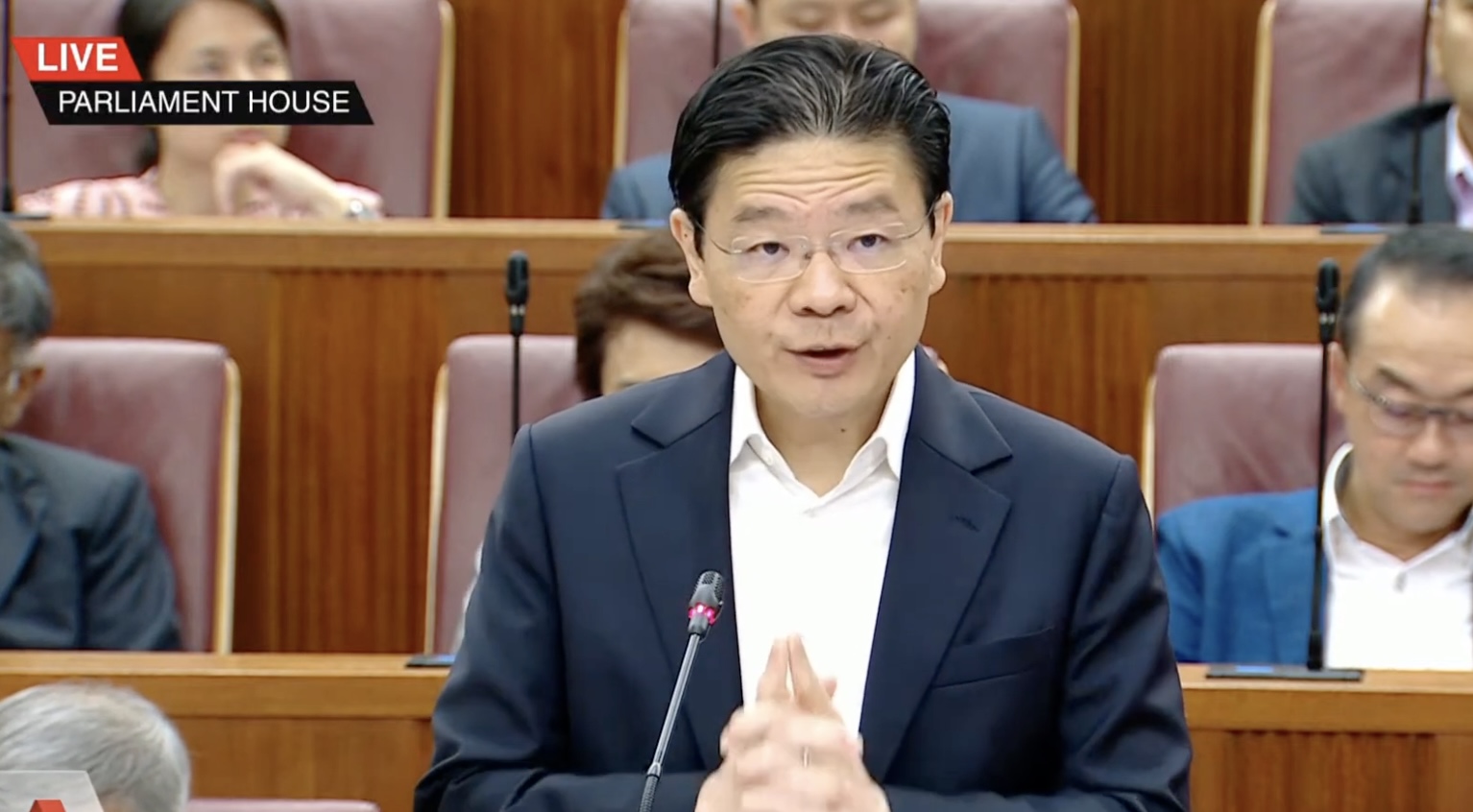
Prime Minister Lawrence Wong, who previously served as Finance Minister, is widely regarded as a careful steward of Singapore’s public finances. However, the repeated gap between projections and outcomes has also led some observers to characterise his fiscal approach as highly conservative.
The debate raises a broader question: in public finance, is being risk-averse a flaw — or a deliberate strategy designed to safeguard stability during economic downturns?
He underscored that Singapore is dependent on global trade, which makes it difficult to accurately forecast economic growth. The unpredictability of the worldwide economy has led to Singapore having larger budget surpluses than expected. Conversely, it is better than having a chronic fiscal deficit.
Re-evaluating the GST hike
Additionally, Gerald Giam (Aljunied) had called for a re-evaluation of the Goods & Services Tax hike, and also asked for the use of fiscal surpluses to support workers and Small and Medium Enterprises (SME) that are struggling amid high living costs.
The GST, which went from 7 to 8 per cent on Jan 1, 2023, and from 8 to 9 per cent on Jan 1, 2024, was raised to fund healthcare spending for Singapore’s rapidly ageing society. PM Wong said that it ensures funding that is stable and long-term, which is why new tax revenue from multinational companies cannot replace it.
The government has already raised other taxes, including property taxes, taxes on luxury cars, and the highest income tax rates. However, due to the substantial increase in spending needs, these will not be enough.
The Prime Minister also shot down the idea of using more of Singapore’s reserves, as this would affect future generations of Singaporeans, as well as weaken financial discipline.
What Singaporeans are saying
On Reddit, some Singaporeans did the math, particularly regarding the GST.
“Singapore collected **S$21.30 billion from GST in Revised FY2025. If the GST is rolled back from 9% to 7%, the government would lose about S$4.73 billion. They would still have a surplus,” the commenter wrote.
The arithmetic behind the claim is broadly correct. If GST revenue of S$21.3 billion collected at the current 9% rate were adjusted proportionally to a 7% rate, the government would collect roughly S$16.6 billion, implying a revenue reduction of about S$4.7 billion.
However, economists note that such comparisons rely on a single year’s fiscal outcome. The S$15.1 billion surplus projected for FY2025 was driven partly by strong economic conditions and higher-than-expected tax revenues. If economic growth slows, revenues from sources such as corporate income tax, property-related taxes, and investment income may decline.
As a result, reducing GST could potentially push the budget into deficit during weaker economic cycles, even if the government appears to have a surplus in stronger years.
A commenter said they believe that “Of all the prime ministers, LW is the most risk-averse of them all. Defending a projection amidst tough times is the lowest of hanging fruits to pick. They have been in charge of Singapore for decades.”
“I get the need for pragmatism and it’s essential Singapore’s leadership does not get complacent and rest on its laurels but his leadership feels like he’s constantly waiting for the next disaster,” a Reddit user commented, adding, “He really needs to learn how to make hay while the sun shines once in a while instead of constantly obsessing over the clouds on the horizon.”
“Then take the money and pay more to important services like healthcare, education, defense, etc,” another urged. “Don’t just keep in pocket.”
One expressed dissatisfaction over the “huge surplus when Singaporeans are feeling the stress and finding it tough to survive, to be happy, to start a family, to maintain a family.”
The remarks reflect a broader sentiment among some Singaporeans who say that while the country’s fiscal position remains strong, the rising cost of living continues to weigh heavily on many households. For some, the repeated gap between projections and actual surpluses has also raised a broader question — whether Singapore’s fiscal strategy is simply prudent, or among the most risk-averse approaches to budgeting. /TISG
Read also: WP MP Gerald Giam points to Budget surplus, says GST hike should be re-evaluated
Edited by Kumaran Pillai