By Foday Moriba Conteh
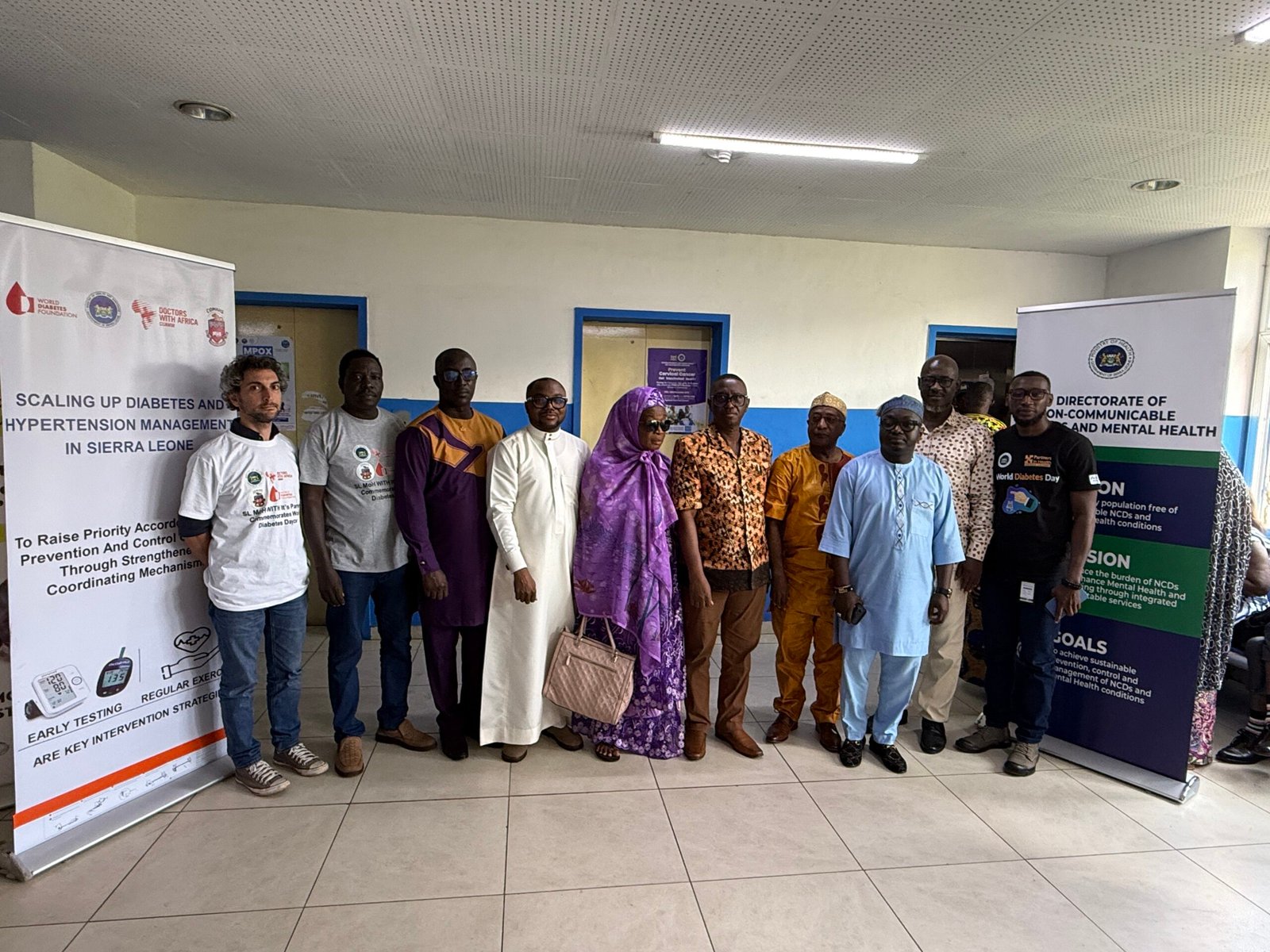
Sierra Leone’s Ministry of Health, through the Directorate of Non-Communicable Diseases (NCDs) and Mental Health, has commemorated World Diabetes Day 2025 under the global theme: “Diabetes and Well-Being” and the national focus “Diabetes in the Workplace.” The event, held at the Ministry of Health Conference Hall on Youyi Building, brought together senior health officials, partners and civil society groups to raise awareness on the growing burden of diabetes in Sierra Leone.
In his welcome address, Dr. Abdul Jalloh, Director of the Directorate of Non-Communicable Diseases and Mental Health at the Ministry of Health, emphasized the Ministry’s commitment to combating diabetes nationwide, underscoring the urgency of continued awareness and prevention efforts. He noted that diabetes is affecting people across all age groups, from children to the elderly making it a national public health concern.
“This day is not only to highlight the challenges posed by diabetes, but also an opportunity to showcase the progress made and the interventions we intend to implement moving forward,” he said. Dr. Jalloh further appealed to the media to support the Ministry’s efforts by amplifying messages on prevention, early detection and healthy lifestyle choices.
He described World Diabetes Day as a moment for collective commitment from stakeholders, including Government institutions, partners and the public, to tackle the increasing prevalence of the disease.
Dr. Jalloh expressed gratitude to all attendees for honoring the Ministry’s invitation and reaffirmed the Directorate’s dedication to strengthening diabetes prevention and care services nationwide.
Michele Soci, Country Manager for Doctors with Africa (CUAMM) raised concern over the growing number of undiagnosed Type 1 diabetes cases among children and young people in the country.
He highlighted CUAMM’s ongoing support to diabetes prevention and care, particularly in the Western Area and Pujehun District. He noted that their interventions are implemented through key donors and partners, including the University of Health and Allied Sciences and the World Diabetes Foundation.
While commending the Ministry of Health for its continued collaboration, Soci stressed that despite progress made, significant challenges remain especially regarding early detection among children.
He described the growing number of undiagnosed Type 1 diabetes cases as an emerging emergency. “This form of diabetes affects mostly the younger generation, but many families do not recognize the symptoms at home,” he said. “Because of this lack of awareness, children often arrive at health facilities too late. Without timely treatment, Type 1 diabetes can rapidly become life-threatening.”
Soci called for a nationwide awareness campaign to help parents, caregivers, and communities quickly identify symptoms and seek immediate medical care for affected children.
Soci concluded by thanking the Ministry of Health and partners for their continued cooperation and urged sustained efforts to protect Sierra Leone’s young population from preventable diabetes-related deaths.
Delivering the keynote address, Dr. Alie Wurie, Deputy Medical Officer, underscored the alarming rise of diabetes globally and nationally. He noted that the World Health Organization reports a fourfold increase in global diabetes cases over the last 30 years, while the International Diabetes Federation estimates that one in every nine adults worldwide currently lives with diabetes, with the steepest rise occurring in low- and middle-income countries.
“Sierra Leone is no exception,” Dr. Wurie said. “National estimates show a dramatic increase—from about 7,000 recorded cases in 2011 to approximately 170,000 cases in 2024. In some urban areas, prevalence is as high as 6.2%. Many people living with diabetes remain undiagnosed, leaving them vulnerable to complications such as heart disease, kidney failure, stroke, blindness, and limb amputations.”
He emphasized that workplaces are crucial platforms for promoting early detection and healthier lifestyles, noting that adults spend a significant portion of their lives at work. “Healthier food options, routine screenings, and physical activity within workplaces can significantly improve well-being,” he said.
Dr. Wurie commended the Directorate of NCDs and its partners—including WHO, Partners in Health, Sanofi, PATH, and others—for expanding diabetes prevention and management nationwide. He highlighted that Sierra Leone has, for over a decade, operated a specialized diabetes team at Connaught Hospital, led by Prof. Fode, offering weekly clinics and treatment support.
He also announced ongoing reforms, including the revision of the National NCD Policy and Strategic Plan, aligning it with global best practices and strengthening diabetes care at the primary health level. “This week alone, we engaged with WHO on equipping community health units with diagnostic capacity for early diabetes detection,” he disclosed.
Calling for stronger public participation, Dr. Wurie urged employers, workers, civil society organizations, and communities to support regular screening, healthier lifestyles, and increased awareness. He also issued a warning about the excessive sugar content in many locally produced beverages and snacks.
“These products are extremely sweet, and without self-control we expose ourselves to higher diabetes risk,” he cautioned. “Let us choose healthier diets, reduce sugar intake, and increase physical activity.”
He appealed to the media to extend diabetes awareness beyond the day’s commemoration: “Let us use radio, television, newspapers, and social media to continue this campaign throughout next week and beyond. Diabetes is now a major public health crisis we are losing limbs, losing lives, and losing productivity.”
Dr. Wurie concluded by calling for collective responsibility:
“Together, we can do more. Together, we can build a healthier, more resilient Sierra Leone.”
The Calabash Newspaper is Sierra Leone’s leading English‑language news platform—established in 2017 to deliver trusted coverage of politics, culture, health, and more to audiences both at home and abroad.