Aruna Turay, AYV News, October 27, 2026
Cuba has reported estimated economic damage of US$8.0833 billion from the United States’ economic blockade during the period from March 1, 2025, to February 28, 2026, as the country warns of growing pressure on energy supplies, healthcare, food distribution and international trade.
The figures are contained in Cuba’s 2026 report on the impact of the US blockade, which attributes worsening economic and humanitarian conditions to longstanding restrictions and what it describes as a recent escalation of economic pressure.
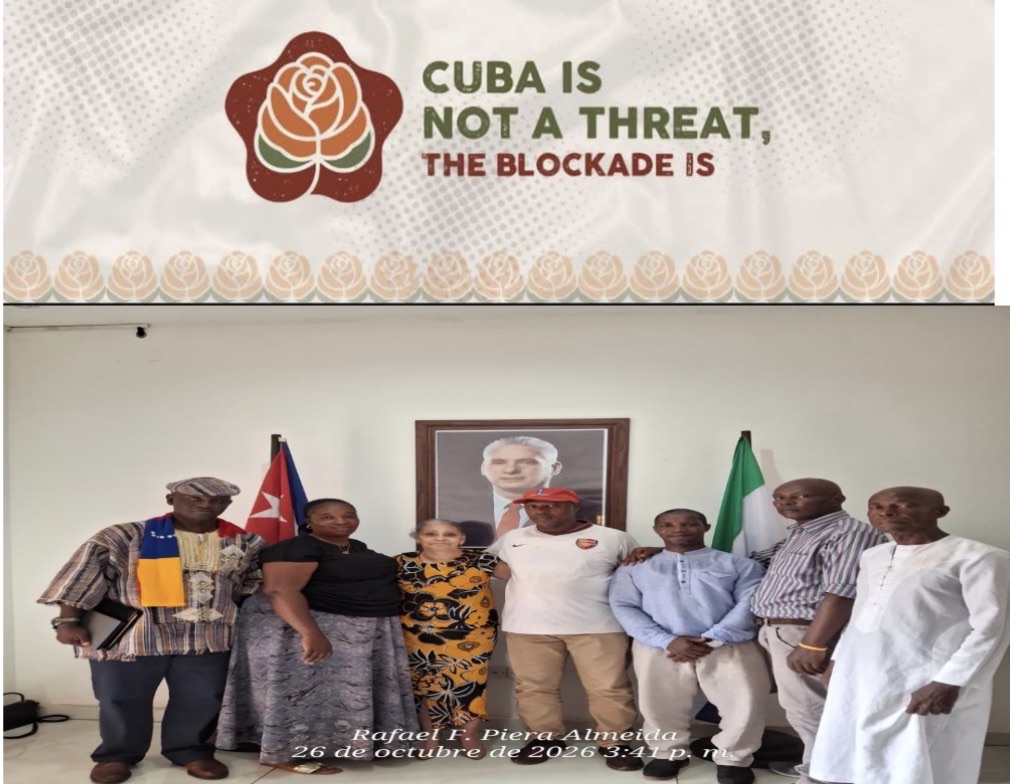
Ambassador of the Republic of Cuba to Sierra Leone, Norma Sánchez Águila said cumulative damage from the blockade has reached US$178.7 billion at current prices. When adjusted for the rise in gold prices, the cumulative estimate stands at US$3.8965 trillion. The report also states that annual damage increased by seven per cent compared with the previous reporting period.
The Cuban government argues that the restrictions have far-reaching consequences for the country’s economy and its ability to provide essential services to its population.
The report identifies energy shortages as one of the most immediate challenges facing Cuba, describing their effects on households, businesses and public services.
It states that only 54.6 per cent of the planned electricity supply for the already deficient economic sector was met, while residential electricity supply fulfilment stood at 83 per cent.
Households across the island reportedly experienced average power outages lasting more than 20 hours, with some communities enduring over 30 consecutive hours without electricity.
The report links the energy crisis to wider difficulties in transportation, refrigeration, industrial production and the delivery of essential services.
It also points to executive orders issued by the United States on January 29 and May 1, 2026, which it says expanded pressure on countries supplying oil to Cuba and increased potential sanctions exposure for certain foreign individuals and entities connected to designated strategic sectors.
Cuba’s report raises concerns about the humanitarian consequences of fuel and resource shortages, particularly for patients requiring urgent medical care and ongoing treatment.
It estimates that approximately 100,000 patients were on surgical waiting lists, including 12,000 children. A further 2,888 patients were reported to rely on haemodialysis.
The report also describes difficulties transporting refrigerated medical supplies, warning that fuel shortages have placed pressure on the distribution of vaccines and other temperature-sensitive products.
According to the Cuban government, these disruptions threaten the continuity of healthcare services and increase the difficulties faced by patients and medical institutions.
The report also describes the effects of fuel scarcity on agriculture, food distribution and education.
It states that irrigation during the agricultural campaign was limited to two hours out of a planned 16-hour period, while the distribution of 20,000 tonnes of food stored in national warehouses slowed.
Transport disruptions have also affected students and teachers, who the report says account for nearly 30 per cent of total enrolment.
The document argues that the impact extends beyond food production and distribution to tourism, transportation, commercial activity and the availability of basic services.
Cuba maintains that the effects of the restrictions extend beyond its borders, affecting shipping companies, foreign suppliers, financial institutions and commercial partners.
The report cites disruptions to humanitarian food shipments totalling approximately 2,900 metric tonnes, as well as seven critical shipments valued at US$630,000 involving emergency medical and other essential supplies.
It further states that major shipping companies paused new orders destined for Cuba while assessing the implications of the May 1 executive order.
Financial institutions and payment networks have also reportedly reduced or discontinued some services because of perceived sanctions risks, creating additional difficulties for transactions and relationships with international suppliers.
The report says these conditions affect private businesses by restricting access to imported materials, equipment, financing and payment channels, while electricity shortages and reduced consumer purchasing power create further operating challenges.
Cuba argues that the US blockade violates international law and the principle of sovereign equality, while raising concerns about what it characterises as collective punishment and the humanitarian consequences for ordinary citizens.
The report particularly highlights the effects of the Helms-Burton Act and Cuba’s designation on the US State Department’s list of State Sponsors of Terrorism.
However, the legal characterisations presented in the report represent the Cuban government’s position, which the United States disputes.
Cuba also points to international opposition to the blockade, stating that the African Union Assembly condemned the US measures for the 17th consecutive year in February 2026. The report further references concerns raised by United Nations officials and human rights mechanisms regarding the humanitarian consequences.
The report presents the economic and humanitarian effects of the blockade as a continuing challenge to Cuba’s development and access to essential goods and services.
It argues that restrictions affecting energy, finance, shipping and trade have contributed to pressures across multiple sectors, from healthcare and agriculture to education and private enterprise.
The document concludes that the consequences are not limited to national economic indicators but extend to the daily lives of Cuban households and the delivery of essential public services.
The US government’s position on the restrictions is not detailed in the supplied presentation. The figures and assessments cited in the report are those presented by the Cuban government and have not been independently verified within the document.