While European car manufacturers struggle with expensive energy, weak sales and a slower-than-expected transition to electric vehicles, Chinese companies are assuming an increasingly important role in the global automotive industry. This is clearly illustrated by the example of Stellantis, which is increasingly shifting production to China while simultaneously developing joint ventures with Chinese companies in Europe.
The global automotive industry, particularly in Europe, has been facing a major crisis for some time, affecting numerous companies.
European manufacturers are confronted with falling sales, expensive energy, high labour costs and a slower transition to electric cars than anticipated. At the same time, Chinese companies are aggressively capturing market share with cheaper electric vehicles.
Major manufacturers are reducing production, temporarily suspending operations at factories and relocating parts of their business to countries with lower costs. The crisis is hitting Europe especially hard, fuelling fears of job losses and weakening an industry that has been one of the main drivers of economic development for decades.
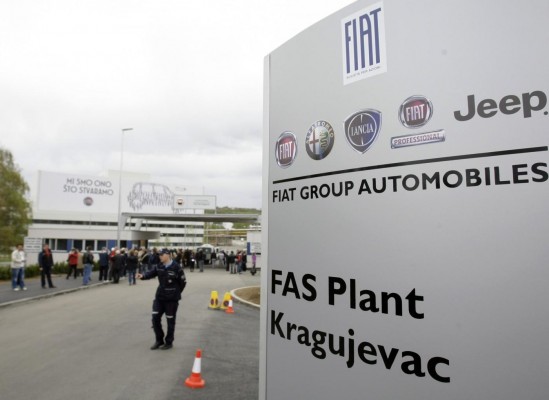
One of the clearest examples is Stellantis, which also operates a factory in Kragujevac.
Production of Stellantis vehicles in Italy has almost halved in just two years. According to official data, production stood at 751,000 vehicles in 2023, while only 379,706 vehicles were produced in 2025.
During 2025, passenger car production – excluding light commercial vehicles – fell by 24.5 per cent, nearly a quarter compared with the previous year. A total of 213,706 vehicles were produced, marking the lowest level since 1954, according to Ferdinando Uliano of the Italian trade union FIM-CISL, as reported by Reuters.
Stellantis recently announced that it is transferring another part of its production to China. From 2027 onwards, new models of the Peugeot and Jeep brands will be produced at the Wuhan factory for the Chinese market and for export globally.
In addition, Stellantis and the Chinese company Dongfeng Motor Corporation signed a Memorandum of Understanding aimed at expanding their partnership. The plan is to establish a joint venture headquartered in Europe for the sale, distribution, production, procurement and engineering of Dongfeng vehicles.
“Through coordination in technology, brands and global markets, the partnership will unlock greater value for the joint venture, accelerate Dongfeng’s global expansion and support Stellantis’ global strategic transformation and presence in China,” said Dongfeng Group Chairman Qing Yang.
From all these developments, it can be concluded that Chinese manufacturers are increasingly entering the European market, while European companies are relocating more production to China and other non-European countries due to lower production costs. This is further confirmed by a recent statement from Chinese giant BYD, which claimed that the company is negotiating with Stellantis and other European car manufacturers regarding the takeover of underutilised factories in Europe.
“Europe is in a deep strategic crisis”
Lidija Piroški, author and editor of the Vrele Gume TV programme, sees the situation at Stellantis as a very clear signal that the European automotive industry is in a deep strategic crisis. “This is no longer merely a question of production costs, but of knowledge, speed of development, technological control and political reality. Above all, however, it is about understanding a reality that is changing at lightning speed,” she said.
According to Piroški, the decision to manufacture some new Peugeot and Jeep models in China demonstrates that Stellantis is currently trying to buy time. “China is no longer just a cheap production base. China has become the centre for the development of electric vehicles, batteries, software and new business models. European manufacturers spent years viewing China as a market; now they see it as a factory, a technological partner and, paradoxically, as a saviour,” she stressed.
In her view, this is simultaneously rational and dangerous.
“Rational because Stellantis must reduce costs and accelerate development of new models. Dangerous because it further strengthens a competitor that is already extremely powerful technologically, industrially and in terms of pricing,” Piroški warned, adding that BYD’s negotiations regarding underutilised factories in Europe show that Chinese companies are entering a new phase.
“They no longer want merely to export cars to Europe. They want to manufacture in Europe, bypass customs barriers, move closer to consumers and take over industrial space that European manufacturers are no longer using efficiently,” she explained.
Europe attempted to shut the door on Chinese vehicles, she noted, but is now effectively “opening a side entrance” through factories, labour and local production.
Nevertheless, Piroški believes cooperation between European and Chinese companies could help the automotive industry in the short term. “It could bring cheaper models, better factory utilisation and faster development of electric vehicles. But in the long term, the question is who is learning in this partnership and who is merely surviving. If Europe is surrendering production, technology and development pace to Asia, then we are no longer speaking of a partnership of equals, but of a complete shift in the centre of power,” she pointed out.
She believes this relocation of production may help Stellantis survive the crisis, but will not resolve the underlying problem unless Europe regains competitiveness. “The crisis was not caused solely by China. It was also caused by expensive energy, complicated regulations and, above all, slow decision-making, poor market assessments and a disconnect from consumers who still seek affordable, practical and reliable cars,” Piroški stated.
Kragujevac – opportunity and risk
Regarding the Kragujevac factory, Piroški emphasised that it has both significant opportunities and serious risks. “The electric Panda is an important project, particularly for Serbia, but within Stellantis’ global network no factory today is completely protected. Everything depends on costs, quality, production stability, logistics and the ability to keep the project competitive. I would not lightly claim that production will move away from Serbia, but I would say Serbia must not live under the illusion that simply having a factory is enough,” she said.
Factories today are relocated, shut down, taken over or repurposed far more rapidly than before, she noted. “The arrival of workers from Nepal and Morocco in Kragujevac demonstrates another problem. If the domestic workforce does not wish to work under the offered conditions, then this is not merely a labour shortage issue, but a question of wages, standards and long-term industrial policy. Replacing domestic workers with foreign labour may fill shifts in the short term, but it does not solve the underlying problem,” she stated.
According to her, Kragujevac can remain an important part of Stellantis’ network only if Serbia is not viewed exclusively as a source of “cheap labour”. “If we remain merely the cheapest bolt in the system, someone even cheaper will always emerge. If we want a more secure position, we must build knowledge, supplier networks, engineering capacity and greater local added value,” she stressed.
Piroški underlined that the automotive industry is entering a phase where the key issue is no longer who has the most attractive showroom, but who controls the battery, software, pricing, factories and speed of development.
“And in that regard, China is currently much stronger than Europe is prepared publicly to admit. What personally interests me most is the arrogance embedded in Europe’s thinking and decision-making processes. That is the root of everything,” she concluded.
Trade unions warn of risks
Aleksandar Đurić, Executive Secretary of the Metalworkers’ Branch Union Nezavisnost, told Danas that Stellantis’ decision to manufacture some new Peugeot and Jeep models in Wuhan for the global market represents, from a trade union perspective, a serious signal of shifting priorities within the European automotive industry.
“The company is likely attempting to reduce production costs and accelerate electric vehicle development by relying on the Chinese industrial system, which today occupies a dominant position in batteries, electronics and supply chains,” he believes. However, Đurić added that for European workers such moves raise questions regarding long-term job security.
“Every relocation of production outside Europe carries the risk of reducing factory capacities, shutting down facilities and weakening the industrial base. Trade unions believe the transition to electric mobility must not be carried out at the expense of European workers and local communities that have supported the automotive industry’s development for decades,” he stressed. According to him, BYD’s negotiations with Stellantis regarding unused European capacities indicate the rapid expansion of Chinese manufacturers across the European market.
“This is also reflected in the growth of Chinese cars’ market share, estimated at around 17 per cent domestically. This is no longer simply about importing Chinese vehicles, but about the strategic positioning of Chinese companies within Europe itself through factories, logistics and supplier networks,” Đurić explained.
From a trade union perspective, he added, the issue is not merely the arrival of new investors but the conditions under which they arrive.
“The question is whether these investors will respect European labour standards, collective bargaining, wages and employees’ social security. European institutions and national governments must ensure that industrial transformation does not become a race towards lower workers’ rights,” he warned.
European companies, according to Đurić, have for years contributed to the development of China’s automotive industry through joint projects and cooperation with Chinese partners.
“Today we see that Chinese companies hold technological advantages in many areas of electric vehicles. Cooperation itself is not negative and can contribute to the development of new technologies and markets, but the problem arises when Europe gradually loses its own production, development centres and technological expertise while China maintains industrial growth. From a trade union perspective, the key objective must be preserving production and development in Europe, because without that European workers become hostages to global corporate decisions,” he stressed.
In the short term, relocating part of production to China may help Stellantis weather the current crisis more easily, Đurić believes.
“The company faces enormous costs related to the transition to electric vehicles, high energy prices, falling demand and fierce competition from Chinese manufacturers. Reducing production costs is a logical move from a corporate perspective. However, trade unions warn that short-term financial stabilisation must not destroy Europe’s industrial infrastructure in the long run. If Europe loses factories and expertise, rebuilding them will be extremely difficult,” he warned.
As he points out, there is a genuine danger that key technologies and production will increasingly move to Asia. “China already dominates battery production, processing of critical raw materials and electronic components for electric vehicles. Unless Europe develops a clear industrial strategy and mechanisms to protect its own production, it could become dependent on imports of strategic technologies. For trade unions, this is not merely an economic issue but a matter of industrial security, preserving quality jobs and safeguarding the future of European manufacturing,” Đurić stated.
Regarding Stellantis’ factory in Kragujevac, he said its current position depends primarily on the success of new electric models and the group’s long-term strategy. “Serbia currently has a certain competitive advantage due to lower labour costs compared with Western European countries, but experience shows that in global competition there is always a risk that capital will move wherever costs are lower or subsidies greater. Leoni and other companies relocating production to North Africa are examples of this. That is why trade unions insist that the state and the company ensure a long-term development strategy for Kragujevac and other Serbian cities, rather than merely temporary production,” he said.
As for the employment of workers from Nepal and Morocco at the company, Đurić reiterated the trade union position that every worker must enjoy equal rights, dignified working conditions and equal protection regardless of origin.
“The problem arises if imported labour is used as a tool to lower wages, weaken collective organisation or exert pressure on domestic workers. The objective must be to preserve quality and stable jobs for all employees while preventing social dumping and the erosion of labour standards. The key question for Serbia is not merely who works in the factories, but whether we will retain production, development and high-value technologies in the long term – or remain merely a cheap production base in global supply chains,” Đurić concluded.
(Danas, 21.05.2026)
https://www.danas.rs/vesti/ekonomija/automobili-stelantis-autoinudstrija-kina-evropa/