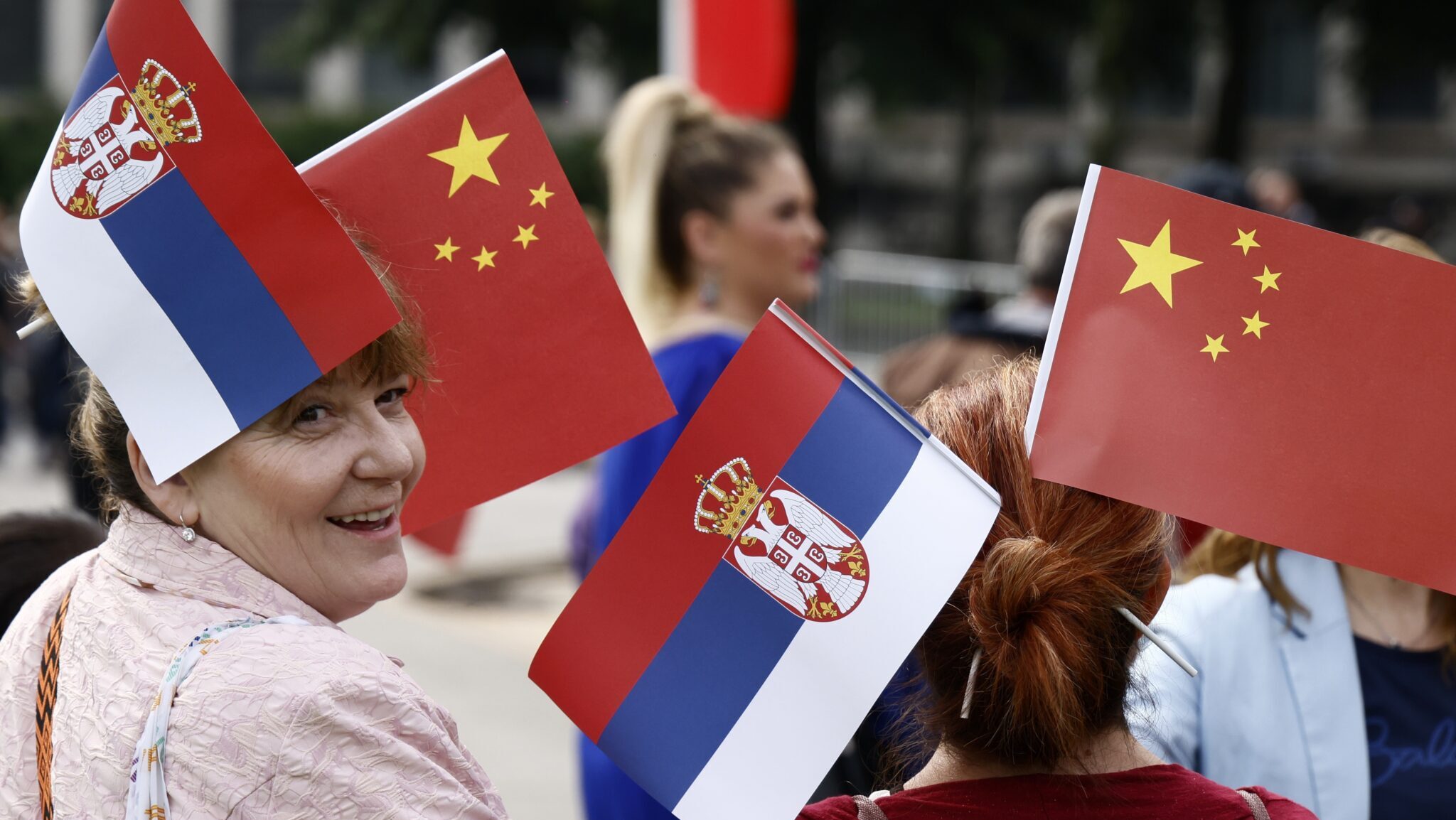
Even though Georgia signed a Free Trade Agreement with China in 2017 and has long been economically dependent on its much larger neighbour, Russia, the EU remains the country’s dominant trade partner, with total turnover exceeding that with Russia and China combined.
Despite claims of rising Chinese and Russian financial influence and a Georgia-China strategic partnership sealed in 2023, data shows that the EU remains the dominant investor in the South Caucasus country. Between 2013 and 2023, Georgia imported products worth more than 23.8 billion euros from the EU and exported around seven billion.
So why the red carpet treatment for China?
According to Aleksandar Matkovic, a postdoctoral researcher at the University of Barcelona specialising in the economic history of Europe and the Balkans, China gets better press because, “for the past five years, [it] has focused on key industrial infrastructure, unlike European investments”.
European investment is more complex, from privatisation to donations and other financial support; China’s, on the other hand, “is an expression of a planned economy that primarily targeted industrial sectors – mining, energy, transport, and there is no doubt that the effect of China is visible in a different way”, Matkovic told BIRN.
This is all part of China’s Belt and Road Initiative, a sprawling infrastructure investment strategy spanning Asia and reaching deep into Europe. It often involves roads or bridges built by Chinese companies, using Chinese workers, and paid for by loans from Chinese banks.
Such projects make headlines, but, under the surface, when it comes to the far more consequential matter of trade, the value of imports and exports between the two countries and the EU far outstrips the value of their trade with China.
In 2023, Serbia imported 24 million euros worth of goods from the EU, five million from China and less than two million from Russia; the same year, the country exported almost 21 million euros worth of goods to the EU, compared to roughly 1.3 million for both China and Russia.
Stefan Vladisavljev, programme director at the Belgrade-based NGO Foundation BFPE for a Responsible Society, said that China is perceived in both countries as a benefactor, regardless of the specifics.
“There is no clear distinction, either in Serbia and Georgia, between investment, infrastructural projects financed by loans, and trade exchange, which can be seen as a third pillar of economic cooperation,” Vladisavljev told BIRN.
Instead, he said, it is a matter of how such actors are “presented to them [the public] by the political elites”.