People walk past the destroyed Gandhi hospital in Tehran, Iran, 02 March 2026. Gandhi hospital was hit in Israeli airstrikes on 01 March. Photo: EPA/ABEDIN TAHERKENAREH
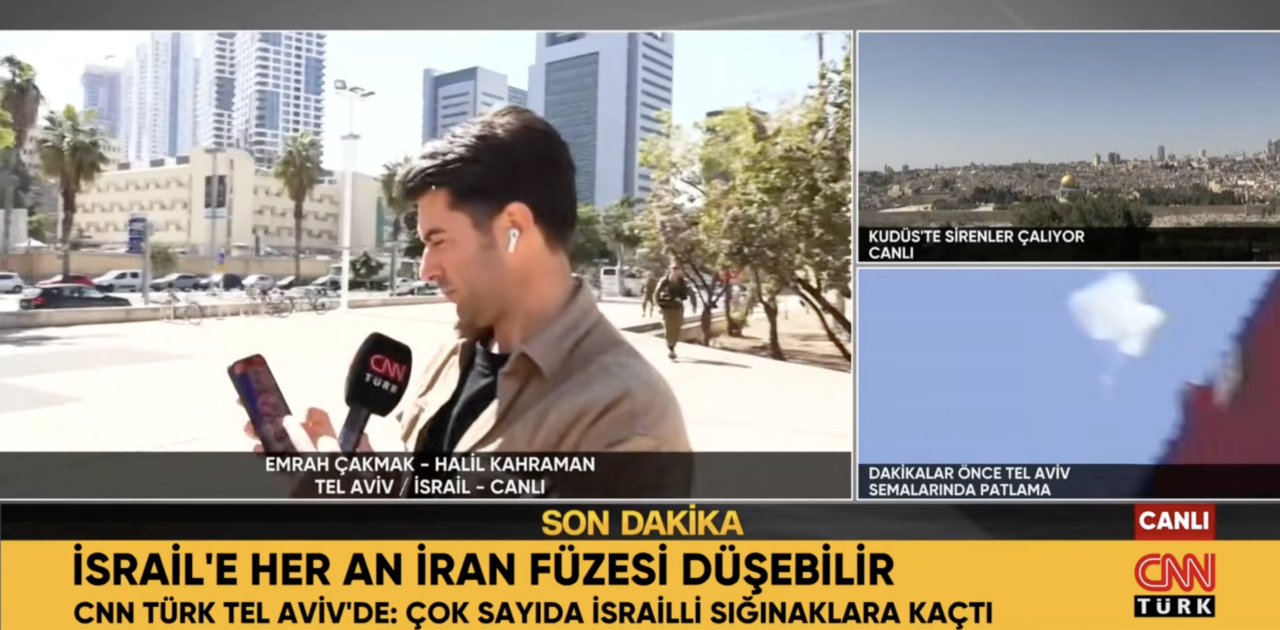
Countries across the Balkans have been scrambling to evacuate citizens stranded in the Middle East after the US and Israel attacked Iran at the weekend – or working on plans to get their nationals out of the conflict zone as soon as they can.
The three land border crossings between Turkey and Iran remain open for Turkish citizens and third-country nationals who wish to flee, Turkish Trade Minister Omer Bolat said on Monday. However Turkish citizens living in Iran are being urged to stay indoors and avoid military zones amid the ongoing US-Israeli assault.
“Turkish citizens in Iran are advised to stay in safe areas, avoid military zones and buildings, refrain from going outside, and those planning to travel to Iran are advised to postpone their trips except in emergencies,” the Foreign Ministry said on Sunday.
Bosnia and Herzegovina on Saturday said it had already evacuated most of its embassy staff in Iran and citizens who wished to leave. Bosnian citizens in other Middle Eastern countries, including United Arab emirates, Qatar and Kuwait, are being urged to contact diplomatic missions.
“The ministry will, if necessary, take all necessary measures for evacuation,” Foreign Minister Elmedin Konakovic said on Saturday.
The Foreign Minister of Croatia, Gordan Grlic Radman, said the evacuation of Croatian citizens from Iran has also taken place already. “We previously evacuated most of our citizens from Iran,” Grlic Radman said on Sunday.
“One person remained at the consulate [in Teheran] due to administrative and logistical functions, but also some football players who had their contracts with their club. There were two of them; they left Iran yesterday,” he added. “Croatian citizens, whether residents or tourists, who are currently in the United Arab Emirates, can rely on consular assistance.”
Fourteen citizens of Serbia reportedly remain in four cities in Iran. Serbian President Aleksandar Vucic told Prva Television on Sunday that embassy staff will withdraw to Baku, Azerbaijan, but that the ambassador will go back to Tehran.
“We have a couple with a child there and we want to help that couple in every way. The procedure and situation are complicated, so we want to see how we can help those people,” Vucic said.
The Serbian embassy in the Iranian capital was slightly damaged by a US attack on a nearby military base. Vucic said that as soon as the skies above Abu Dhabi and Dubai are open, “Air Serbia planes will be sent there to take people who want to come back to the country.”
Smoke billows into the air above the Jebel Ali port in Dubai after it was struck by debris from an Iranian intercepted missile, 0 March 2026. Photo: EPA/STRINGER.
Romania has intensified efforts to repatriate its nationals from the Middle East. So far, 1,066 citizens have formally requested evacuation. The first operation is scheduled for Monday, when a group of 360 Romanians is expected to be flown from Israel to Bucharest via Cairo on a chartered aircraft.
According to the Foreign Ministry, 624 citizens now in Israel have asked for repatriation, including several pilgrims, as well as 159 in Qatar, 25 in Saudi Arabia, 46 in Ramallah, eight in Kuwait, nine in Iran, 90 tourists in Oman, and 99 in Jordan.
Several hundred Romanians remain in the United Arab Emirates. However, authorities say their situation is not considered critical at this stage.
“Romania’s institutions … are closely monitoring developments and are taking all measures required under these circumstances … The protection of civilians is one of our main objectives,” President Nicusor Dan said on Sunday on Facebook.
Media in Greece are reporting that 50 Greek tourists are stranded in Bethlehem in the Israeli-run West Bank. The ARIS Betsson U18 basketball team is also stranded in Abu Dhabi, which it had visited for a match against Monaco. A further 1,500 Greek citizens are registered in Dubai, plus tourists.
The Foreign Ministry has created a special platform where Greeks can apply for repatriation. Deputy Foreign Minister Harry Theocharis told the Hellenic Broadcasting Corporation on Monday that, “whenever and if there is a need for evacuation, plans for the Greeks are ready”.
Several well-known figures from Bulgaria are among those stranded in the Middle East, such as former football star Blagoy Georgiev, currently in Dubai, banker Violina Marinova, also in Dubai, and basketball coach Titi Papazov, in Tel Aviv.
Bulgaria’s interim Prime Minister, Andrei Gyurov and the Foreign Ministry have posted hotline numbers and emails in case of emergency but so far no rescue mission from the Middle East has been announced.
The total number of the Bulgarian citizens in the Middle East is not known but media reports suggest they number in the thousands, including tourists and workers in the United Arab Emirates and Qatar.
North Macedonia’s Foreign Ministry said it has formed a crisis board and opened an emergency phone line to help its citizens currently in Qatar, Kuwait, Saudi Arabia, the United Arab Emirates, Bahrain and Jordan, as well as Israel.
The ministry said that more than 150 people have already asked for advice in the country’s embassies in Tel Aviv, Abu Dhabi and Doha. It said that if they wish to be evacuated, it will prepare the ground, but gave no more details. It advised those who are stranded to “diligently follow the safety instructions issued by local security services who are in charge”.
Some Balkan states have offered little information about possible evacuations.
In Montenegro, the Foreign Ministry advised Montenegrin citizens currently in Iran, Israel, the United Arab Emirates, Qatar, Kuwait and Bahrain to follow local authorities’ instructions, avoid public gatherings and stay in contact with airlines amid flight disruptions.
The Foreign Ministry in Kosovo has urged its citizens in Israel, Qatar, Saudi Arabia, Kuwait, Bahrein, Oman and United Arab Emirates to “stay informed regularly through official sources and the media; follow the instructions of local authorities; avoid areas near security and military facilities”.
In Albania, the Foreign Ministry has issued several warnings for Albanian citizens living in Israel, Iran and United Arab Emirates “to exercise increased caution and vigilance” and follow local warnings.
The total number of citizens of each Balkan country residing in the Middle East is unknown.