By Biagio Carrano
Serbia is approaching the end of 2025 with economic growth of around 2 per cent, less than half of what was estimated twelve months ago by the main international institutions. This is a result well below estimated potential and far from what would be needed to reduce the gap, in terms of GDP and living conditions, with the countries of Central Europe or even just Romania and Bulgaria.
The slowdown of the economy in 2025 points to the exhaustion of the growth cycle at an average rate of about 3 per cent per year that has characterised the country since 2016. This growth model, based on construction and consumption, is now showing clear signs of strain. In the first three quarters of the current year, wholesale and retail trade recorded a decline of 1.1 per cent in the first quarter of 2025, followed by modest growth of 1.1 per cent and 1.3 per cent in the subsequent quarters, around five times lower than the trend recorded in 2024. The construction sector fell in the first three quarters by 5.3 per cent, 11.8 per cent and 11.7 per cent, respectively, compared with the same periods in 2024. Public investments linked to the Leap into the Future programme and to projects connected with Expo 2027, which were supposed to boost the sector, have failed to compensate for the general decline in construction, both residential and infrastructural.
While it is not technically possible to speak of a recession, the economic dynamism of previous years is clearly running out. This has been compounded by the fall in foreign direct investment, by geopolitical tensions that have led to the impasse over NIS, and by the withdrawal of many industrial investors who had settled in the country in previous years, attracted by low wages and low energy costs.
But who actually benefited from this decade-long growth cycle, excluding, of course, the Covid year of 2020? Which segments of the Serbian population saw a real improvement in their living standards, and which instead merely endured rising prices, soaring food costs and restaurant services, higher rents and property prices, and increasing fees for professional or maintenance services?
The fact remains that the trade, construction and real estate supply chain, the two factors that have accelerated the growth of the Serbian economy over the past decade, have also increased income inequality and disparities in living standards among the population.
Construction and real estate, the lottery won by those who had the money to bet on it
It had been decades since so many newly built properties had entered the Serbian real estate market, yet far from lowering housing prices, between 2017 and 2024 there was a three-digit increase in the cost of rents and properties.
In 2017, the average price per square metre for new-build properties in the Belgrade area was around 1,200 euros, with peaks of 2,500 euros for new developments in the districts of Novi Beograd and Vračar, while in Novi Sad, prices reached 1,500 euros in the most prestigious areas. As for rents for non-new apartments, the cost per square metre in the most central districts of the capital ranged from 4 to 8 euros. As early as the following year, rising demand produced a jump of up to 30 per cent in the prices of new constructions.
The growth in housing demand in Novi Sad and Belgrade was driven by several factors. The arrival of new buildings on the market encouraged many to sell their old homes, and often also family agricultural land recovered through restitution processes of property confiscated after the Second World War, in order to move into new properties. The revival of the real estate market, with the prospect of good returns through buying and reselling or simply through an increase in the value of the property in use, absorbed capital that had been parked in current accounts, often abroad, and also persuaded many Serbian emigrants to invest in the country. The real estate market in Belgrade and Novi Sad was further fuelled by the financial resources of citizens from the rest of the country, convinced that properties in the two cities would soon see an increase in value.
Indeed, the boom in the property markets of the country’s two largest cities was counterbalanced by stagnation in other cities. A highly indicative fact is that 82 per cent of property transactions are carried out in cash, and in a country where the shadow economy is estimated to account for at least 21 per cent of GDP, it is quite clear who has driven a large part of the real estate market.
In 2022, real estate transactions reached a record total value of 7.5 billion euros.
The property boom increased the wealth of the segment of the population that had the means to contribute to and benefit from the sector’s growth, with property prices doubling between 2017 and 2022. That year a new and unexpected phenomenon led to an explosion in rents and to the displacement of tens of thousands of Serbian families from the apartments in which they were living. This refers, of course, to Russian immigration following the conflict with Ukraine, which generated new demand for rental housing from no fewer than 50,000 households concentrated in Belgrade and Novi Sad. Thanks either to corporate relocation packages or to the sale of assets in Russia, these households were able to afford rents that were unattainable for many Serbian families.
This phenomenon did not affect only the most prestigious areas of the two main Serbian cities, but also more peripheral neighbourhoods. Today in Belgrade, despite the market slowdown recorded in 2025, rental prices in working-class districts rarely fall below 10 euros per square metre, while in the most exclusive areas or for higher-end properties they reach 25 and even 30 euros per square metre. In this case as well, rental income has more than doubled compared with ten years ago.
Thousands of Serbian families have thus found themselves faced with frustrating alternatives: leaving Belgrade and Novi Sad, also as a result of increases in electricity and other utility costs, and returning to live in their home towns with elderly parents or relocating to smaller towns near the two cities; changing apartment and adapting to living in fewer square metres; or dipping into savings and taking out a mortgage rather than paying rent equivalent to a monthly instalment. In every case, this has meant a deterioration in living standards. By contrast, those who were able to invest in the growth of the real estate market have enjoyed greater financial resources thanks to rental income or profits from reselling the properties they invested in.
The increase in disposable income for a segment of the Serbian population as a result of the growth of the real estate sector as a whole, including builders, suppliers, agencies, professionals and craftsmen, has fuelled the growth of consumption, the second driving factor of the Serbian economy in recent years.
The success of an intermediary-based economy
Over the past decade, various categories of intermediaries have recorded growth in their turnover and margins far exceeding the growth of the country’s overall wealth. Yet intermediation has always been not a value but a cost for any economic system. After all, the success of many digital businesses has stemmed from bypassing traditional intermediaries, transferring part of the gains that were previously captured by intermediaries to end users.
What follows is not intended to be an exhaustive sectoral analysis, but rather to show, through a number of leading companies in their respective sectors, how intermediary activities in Serbia have enjoyed golden years, also thanks to low levels of market competition, based on fixed fees or agreed margins.
Let us start with real estate agencies, which between 2019 and 2024 saw a 39 per cent increase in the number of registered entities. Today, around 1,600 real estate agencies operate in Serbia, many of them established after 2020, riding the wave of the record year of 2022, when 140,592 contracts were signed for a total value of 7.5 billion euros.
In a sector long characterised by widespread use of undeclared transactions, the figures of the largest agencies also give an idea of how much cash has circulated in recent years. The country’s largest real estate agency, City Expert, increased its revenues from 1.4 million euros in 2021 to over 3 million euros in 2024, with operating profits jumping from 11,000 euros to more than 364,000 euros. Kredium recorded even more spectacular results: from revenues of 150,000 euros in 2021, it reached 1.26 million euros in 2024, with operating profits rising from zero, as the company was founded in 2020, to 173,000 euros in 2024. The smaller and long-established Art Nekretnine quadrupled its revenues over four years, rising from 139,000 to 609,000 euros, with operating profit almost tripling from 18,000 to over 49,000 euros.
The success of shopping centers such as Galerija at Belgrade Waterfront indicates the emergence of a new affluent class, while part of the country relies on loans to maintain a level of consumption that prevents them from feeling socially excluded.
As is well known, Serbs like to dress well, even though buying clothing in the country is far more expensive than in many other European countries. From 2021 to 2024, Fashion Company, the leading Serbian distributor of fashion brands, including Armani Exchange, Hugo Boss, Diesel and Camper, recorded an increase in sales revenues of around 63 per cent, rising from 78 to 127 million euros, with operating profits growing from 4.8 million euros in 2021 to 6.5 million euros in 2024. A smaller distributor such as Promoda, which represents brands including Barbolini, Gant and Navigare, also saw its operating turnover grow significantly over the four-year period, from 6.5 to 10.2 million euros, with operating profit quadrupling over the same period.
Business has not fared badly in other product sectors either. Despite the demographic crisis that has gripped the country for decades, the revenues of Kepron, the leading distributor of powdered milk, including Novalac and Humana, and baby products such as Chicco, Pic and Inglesina, have grown steadily. Over the past four years, the group has increased its turnover from 33 to 39 million euros, but above all, margins have expanded, rising from 312,000 to 831,000 euros. The main distributor of cosmetics and perfumes, Radix, which imports and distributes brands including Max Factor, Shiseido, Chanel and Collistar, has also achieved excellent results over the past four years, with a 50 per cent increase in operating revenues, from 16.5 to almost 25 million euros, and operating profits ranging between 19 and 30 per cent of revenues.
The availability of food products in the country is far lower than in European Union member states. The increase in the purchasing power of a segment of the population should encourage the introduction of new product lines, but both distributors and large retail chains prefer a conservative approach to their product range and a speculative approach to margins. As a result, many imported products are subject to substantial mark-ups, as companies focus more on margins than on increasing volumes and expanding their range. In this way, many high-quality foreign products are not available in the country, while many others fail to reach Serbian households because the price barrier imposed by distributors is virtually insurmountable for a large number of families.
These issues, however, do not appear to trouble the main food distributors in Serbia, who between 2021 and 2024 have celebrated excellent results. A few examples illustrate this. AWT International, a distributor of brands such as Barilla, Mondelez, Franck and Colgate-Palmolive, recorded solid revenue growth of 24 per cent over four years, from 46 to 57 million euros, and a 46 per cent increase in operating profit, from 3.9 to 5.7 million euros. Delta DMD, which distributes, among others, brands such as Ferrero, spirits from the multinational Diageo and Nivea products, exceeded 118 million euros in 2024, a 72.5 per cent increase in turnover over four years and an impressive 125 per cent rise in operating profit over the same period. Silbo, specialising in fresh-chain products and distributing brands such as Aia, Zanetti, Rana and Farchioni, grew from 61 million euros in 2021 to 91 million euros in 2024, an increase of 49 per cent, with operating profit up by 26 per cent.
Although these examples are not representative of the entire sector, the dynamics of revenues and profits, and their relationship, among these import and distribution companies suggest that either we are dealing with firms at the very top of efficiency in the sector, or these companies are able to apply mark-ups on the products they place on the Serbian market that similar companies in other European countries cannot, or are not allowed to, apply, if only because of genuine competition.
We will not dwell further on large-scale retail, which was the subject of a specific in-depth analysis of ours last February, well before the government became aware of the sector’s extra margins. It remains telling that one of the most efficient large retail chains in Europe, such as Esselunga, concentrated in the wealthiest regions of Italy, records a net profit of 1 per cent, while in some years Delhaize Maxi has managed, in an incomparably poorer market such as Serbia, to reach peaks of 7 per cent net profit.
For financial intermediaries such as banks as well, recent years have been years of prosperity. The process of sector consolidation has sharply reduced competition and discouraged innovation. Today Serbian banks do not stand out for innovation in customer services or for their ability to offer diversified investment options. The congestion of the real estate market is also a consequence of the limited investment alternatives available to Serbian savers for deploying liquidity that remains idle in current accounts. Property investments, together with commissions, fees, short-term use of deposits and high interest rates on cash loans, have enabled Serbian banks to present the best financial statements ever approved by their boards of directors, with year-on-year growth dynamics that have few parallels in Europe. A few figures from some of the country’s leading banks illustrate this. Banca Intesa Beograd increased its balance-sheet assets between 2021 and 2024 from 6.35 to 8.78 billion euros, with revenues rising from 257 to 463 million euros and net profits growing from 88.5 to 228.5 million euros. OTP saw its assets grow from 5.6 to over 8 billion euros, with revenues doubling to 340 million euros and profits almost quadrupling to 167 million euros. Raiffeisen Bank increased its assets from 3.6 billion to 6.3 billion euros, with revenues almost tripling to 418 million euros and profits more than quadrupling to 248 million euros (Data from Company Wall).
These are spectacular results, but they are partly the product of interest and fees that weigh heavily on the budgets of businesses and households.
Fixed incomes under siege
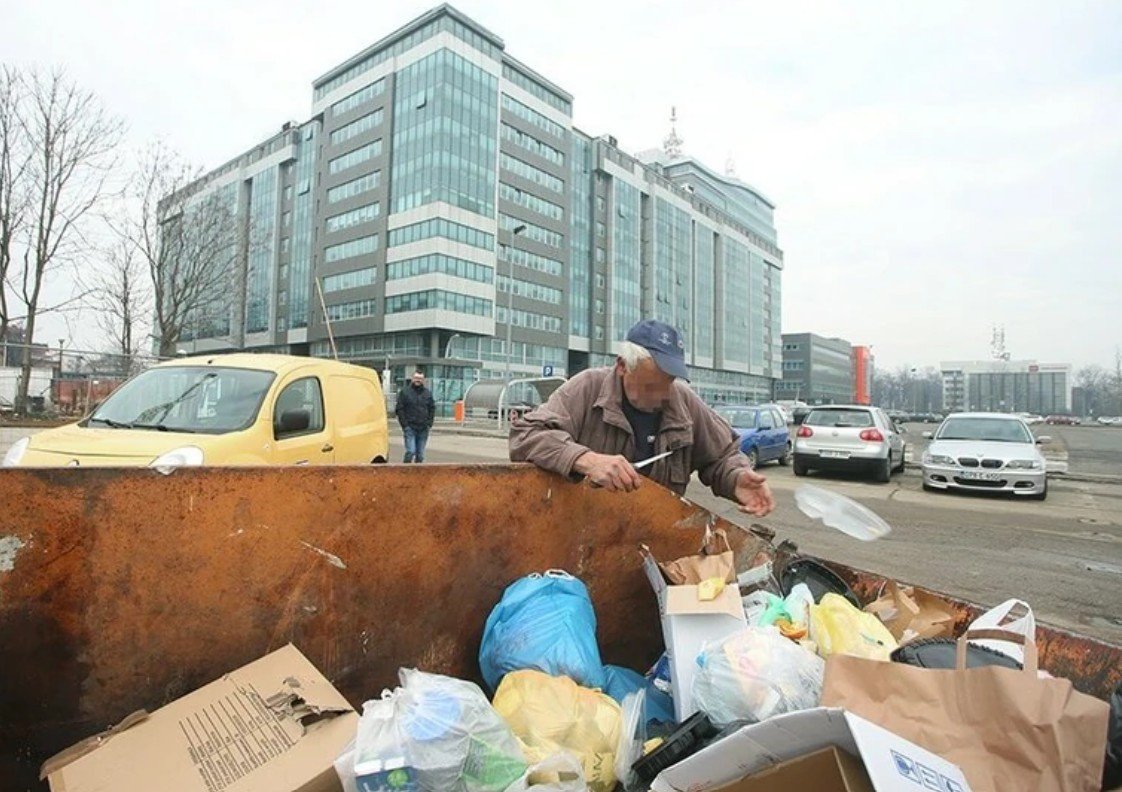
Low-income workers have thus found themselves caught in a multiple squeeze caused by a rising cost of living that is not limited to food prices. They have therefore been forced to supplement household income not only with undeclared second jobs, but very often by resorting to cash loans, with interest rates generally above 10 per cent. It is therefore no surprise that in May 2025 the total amount of cash-related debt exceeded 800 billion dinars, or more than 6.3 billion euros.
This economic situation entails a constant transfer of resources from fixed incomes to intermediaries and professionals, which increases in the national minimum wage, rises in public-sector salaries and one-off cash payments do not resolve. Raising the minimum wage, in other words, shifting onto employers the distortions of poorly competitive or entirely speculative sectors, is a short-sighted measure that in the long run has harmful effects if it does not reflect a real increase in productivity. Indeed, the continuous increase in the national minimum wage without an overall policy of price control risks creating two interlinked problems for the state budget. It accelerates the closure of companies that had chosen to invest in the country because of low labour costs, thereby reducing tax revenues and increasing unemployment claims, and it increases current public spending, diverting resources away from investment and productive expenditure.
But who ultimately pays for these latter costs, in other words, from whom does the Serbian state draw its resources?
A fiscal policy that increases inequalities
According to data from the World Inequality Database, in 2024 the top 1 per cent of the population, shown by the yellow line, accounted for 16.2 per cent of total income, the top 10 per cent, shown by the red line, accounted for 40.3 per cent, while the bottom 50 per cent of the population, shown by the blue line, were left with 16.9 per cent of total national income. The chart highlights the persistent trend towards polarisation in income distribution.
The Serbian taxation model is a flat one and follows the 10-15-20 formula. Personal income from labour and dividends is taxed at 10 per cent, corporate profits at 15 per cent, while VAT and withholding tax are applied at a rate of 20 per cent. Serbian fiscal policy is essentially based on taxing consumption, with VAT accounting for 52 per cent of all tax revenues in the country, compared for example with 31 per cent in Italy. Personal income taxation contributes 7 per cent, compared with 38 per cent in Italy, and corporate income taxation 13 per cent, compared with 10 per cent in Italy.
This fiscal model tends to underestimate the damage caused by inflation, since any increase in inflation leads to higher VAT receipts. It also enables revenue collection downstream, but ends up being indifferent to differences in taxpayers’ income. Indeed, as it has been demonstrated for decades, flat tax models are regressive, meaning that they naturally produce distortions in favour of higher incomes. A flat tax model can work when a country is underdeveloped and poorly structured for tax collection, with a stagnant economy and where most incomes fall within a relatively narrow band. When, by contrast, a significant diversification of incomes begins to emerge, flat taxation greatly favours higher incomes, which end up contributing a smaller share of their income to general taxation than poorer taxpayers. By contrast, taxation based on progressive rates and brackets aims to make those who have more pay more, affecting incomes proportionally.
A progressive tax system, therefore, has a redistributive function, as it recovers resources from the wealthiest segments of the population and redistributes them not in the form of direct income support, which tends to fuel inflation, but through public welfare services.
However, this issue is not on the agenda. Even the latest state budget, approved a few weeks ago, does not address the question of tax progressivity at all. On the contrary, it envisages a substantial increase in revenues derived from VAT, an additional 82 billion dinars, or 8.2 per cent more. How this target is to be achieved if consumption begins to stagnate is not explained.
When economic growth is not enough
Of course, there are societies in Europe that are more unequal than Serbia. But it is undeniable that the widespread perception of growing income disparities and difficulties in accessing consumption has exacerbated the country’s social, and therefore political polarisation.
The much-vaunted growth of the past decade has widened the gap, in terms of quality of life, demographics and job opportunities, between the two largest cities and the rest of the country. It has increased the cost of living, fuelling discontent among middle- and low-income earners. It has inevitably created a new affluent urban class that expects to live in a country where the rule of law is not understood as the right of state authorities to operate without oversight or limits. A paradox has thus emerged: economic growth has generated dissatisfaction with the government both among those who have borne its costs and among many of those who have benefited from it, because it has failed to respond in a timely and adequate manner either to the needs of the former or to the expectations of the latter.
That economic growth has intensified already significant income inequalities is also shown by a simple indicator. While it is true that the minimum wage, the average wage and public-sector salaries have grown significantly in recent years, the gap between the abstract average net wage, 109,147 dinars or 932 euros, and the actual median wage, 85,267 dinars or 728 euros, which marks the dividing line between those earning more and those earning less than this threshold, has also widened, reaching 28 per cent, compared with 27 per cent in August 2018, when the average net wage was 421 euros versus a median of 330 euros. This is a further sign that GDP growth and rising nominal wages are not sufficient to guarantee social cohesion. Moreover, using the average net wage as the benchmark for calculating the monthly basket of goods and services in order to assess consumers’ ability to meet expenses is misleading, because the average net wage is pushed upwards by the high salaries paid to professionals and managers, particularly in Belgrade and Novi Sad.
After all, in a country where food inflation reached 25 per cent on a monthly basis in July 2023, the platform for checking supermarket prices was only launched by the Ministry of Trade on 9 December 2025. For years, the problem was either ignored or not properly recognised, and today consumers and employers find themselves confronting pricing trends along supply chains in many sectors, not only food, that are almost impossible to reverse. Thus, the much-touted economic growth of the country over the past decade has helped to generate discontent and social tensions that for more than a year have shaped the country’s political and economic life.
While imagining a wealthier and more hedonistic country, those in government failed to realise in time that it was becoming more unequal and more divided. A slowing economy will not change this trend.
(The first article in the series can be found here: https://www.serbianmonitor.com/alle-origini-della-crisi-serba-1-belgrade-waterfront-paradosso-dubai-balcanica/
The second article here: https://www.serbianmonitor.com/alle-origini-della-crisi-serba-2-la-corruzione-in-un-paese-dove-e-crollata-la-fiducia/ )
You can support Serbian Monitor by clicking here: https://www.serbianmonitor.com/donate-serbian-monitor-2024/