Iron Gate 3, or Đerdap 3, is one of Serbia’s strategic projects, but also one of the key topics in the strategic dialogue with the United States.
Both sides have recognised the construction of the pumped-storage hydropower plant as a significant investment, not only for Serbia’s energy sector but also for advancing relations between the two countries. Although the idea behind Đerdap 3 is not new, the project is only at the beginning of its implementation and is the first to be carried out under an interstate agreement between Serbia and the US. A great deal concerning the project, which is meant to represent “Serbia’s largest battery”, has yet to be defined – from technical solutions and financing to the choice of partners. Nevertheless, the first steps have already been taken, and the outlines of the future pumped-storage hydropower plant are slowly coming into view.
The celebration of 145 years of diplomatic relations between the US and Serbia was marked by the signing of various agreements, but the focus, by all accounts, is on energy. Thus, a joint statement by the two countries highlights that the US and Serbia have signed a Memorandum of Understanding on energy infrastructure and regional energy security.
Alongside other projects, the main emphasis is nevertheless placed on the construction of Đerdap 3. According to the statement, the United States welcomed Serbia’s preliminary decision to proceed with this project, which they described as “a step towards a more energy-independent Serbia”.
However, beyond caring about the flow of electricity in this region, the US also has a geopolitical and economic interest, given that the construction will be led by an American company. For now, this is one of the few known details about the project.
What is Đerdap 3?
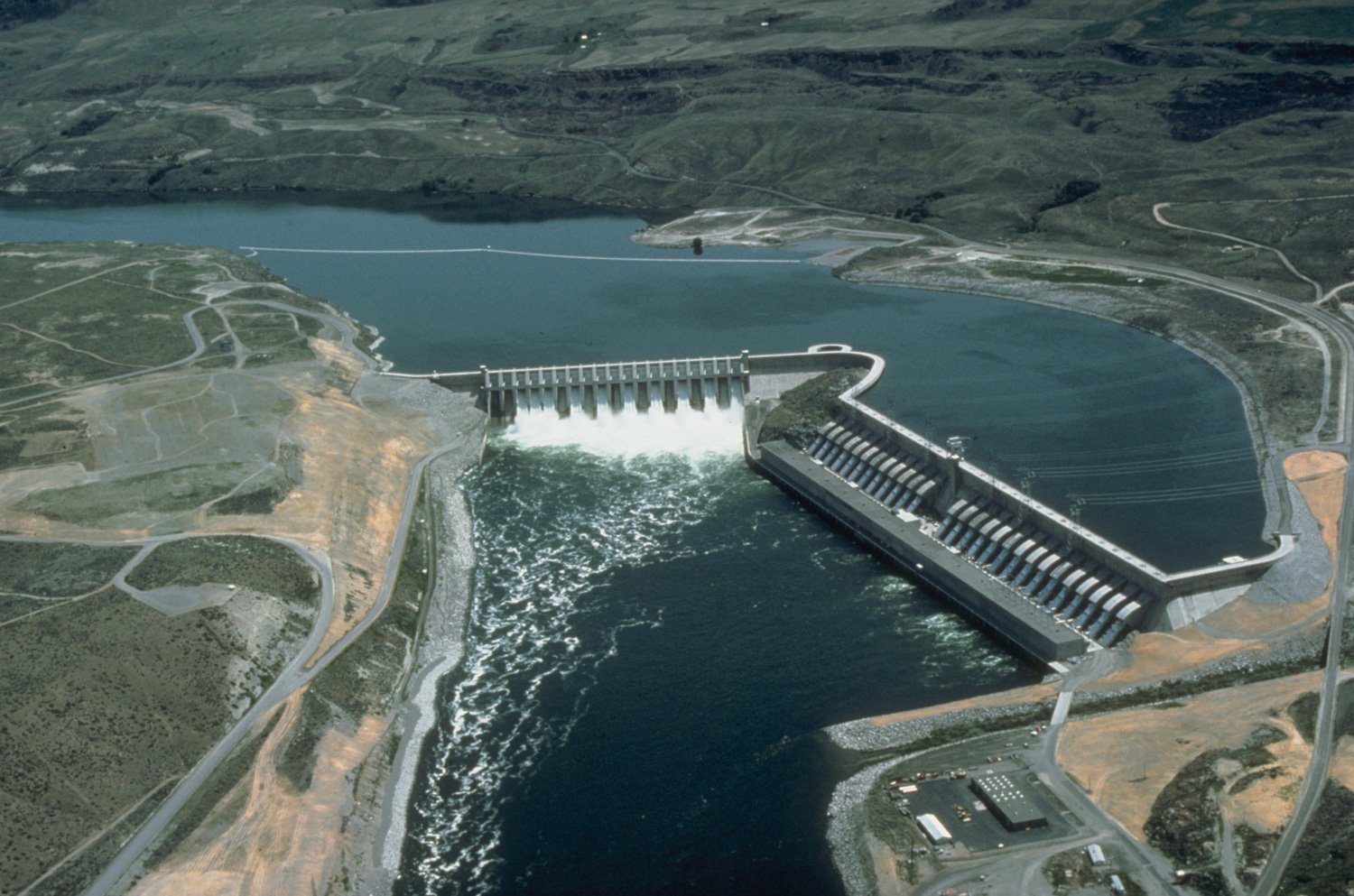
Đerdap 3 would be the first hydropower plant encountered downstream from Belgrade, while further along the Danube lie the already well-known hydropower plants Đerdap 1 and Đerdap 2. Those hydropower plants were built as a system consisting of a dammed and a run-of-river hydropower plant, whereas Đerdap 3 is conceived differently.
According to data from the EPS (Elektroprivreda Srbije) website, this pumped-storage hydropower plant would draw water from the already existing artificial Đerdap Lake. That water would then be pumped from the Danube into the artificial accumulation lakes Pesača and Brodica, which would be built beforehand at an altitude between 380 and 407 metres above sea level.
In this way, the plant would function as a sort of “battery” for storing energy – when there is a surplus of electricity in the power system, which mostly happens at night when consumption is minimal, water would be pumped up into the upper lakes.
When consumption is high, the water would be released back through pipes and, falling from a height, generate electricity.
According to the line minister, Dubravka Đedović Handanović, depending on the technical solution chosen in the coming period, the capacity of Đerdap 3 would be between 1,200 and 2,400 megawatts.
For comparison, the entire Kostolac Thermal Power Plant has an installed capacity of 1,357 megawatts, which means that, in the best-case scenario, Đerdap 3 would be nearly twice as powerful as the entire Kostolac basin.
Why now?
This is a project dating back to the old Yugoslavia, which has come back into focus due to growing energy demands and the shrinking capacities of the existing infrastructure. Plans for Đerdap 3 were drawn up as early as the 1970s by Energoprojekt and the Jaroslav Černi Institute.
However, this pumped-storage hydropower plant suffered the fate of numerous major infrastructure projects from the Yugoslav era – much like the planned nuclear power plants, it was never built.
Nevertheless, Đerdap 3 is being reconsidered today as a potential solution to some of the energy challenges brought by the modern age. Bearing in mind the state’s plans to build multiple data centres and procure new supercomputers, the operation of which requires vast amounts of electricity, the possibilities of developing nuclear energy are also being reconsidered alongside this project.
Among the important goals to which Đerdap would certainly contribute is decarbonisation, which is also vital in the context of aligning Serbia with the Paris Agreement – the main, legally binding international treaty adopted to limit global warming caused by climate change.
The Decarbonisation Action Plan presented by Elektroprivreda Srbije (EPS) in November last year involves a gradual reduction in electricity generation from coal, the construction of pumped-storage hydropower plants, and more than 20 gigawatts of new capacity from renewable sources.
What do the Romanians say?
When it comes to ownership, the situation is somewhat different compared to Đerdap 1 and 2, which are located on the border with Romania and are jointly owned by the two states. Đerdap 3 is intended to be entirely domestically owned.
However, the project cannot be implemented without Romania’s consent, given that Đerdap 3 will essentially take a portion of the water that would otherwise flow through the shared hydropower plants.
Because of this, representatives of the Ministry of Mining and Energy of Serbia are, as they stated, in continuous communication with their colleagues from that country. Although there was some initial resistance, it appears to be weakening over time.
On 10 June, the Romanian portal Economica carried the Romanian government’s response regarding their stance on Đerdap 3, stating that the government is in the phase of an inter-ministerial evaluation of the project, but is “in principle, completely open to this project”.
This cooperation is further confirmed by the fact that on 16 July in Bucharest, the Minister of Mining and Energy, Dubravka Đedović Handanović, signed a Memorandum of Understanding to facilitate the exchange of information regarding the Đerdap 3 Pumped-Storage Hydropower Plant project with the Prime Minister and Acting Minister of Energy, Ilie Boložan.
“This year, Serbia plans to begin drafting the spatial planning as well as the project-technical documentation. We have already established joint working groups with our Romanian partners and intend to ensure a regular exchange of information,” said Đedović Handanović after the meeting with Boložan and the signing of the memorandum at the Government of Romania.
There is a strong chance that the Romanian side was swayed by the partner on the Serbian side – the United States. As the minister notes, the US is Romania’s key energy partner. The fact that Đerdap 3 will be built based on an interstate agreement between Serbia and America, by all appearances, certainly helps.
How did the Americans get involved?
Judging by a public call published on the website of the US Embassy, companies from the United States (US) are entering the business of constructing Đerdap 3. The deadline for applications expired on 25 June, and apart from the information that six companies applied, little else is known.
The call is based on the Agreement between the Government of the Republic of Serbia and the US Government on Strategic Cooperation in the Field of Energy, which was signed in September 2024 and entered into force in March 2025.
The agreement emphasizes that each state will cooperate in accordance with its own laws, and that the selection of suppliers for implementing activities and projects is to be carried out by the Government of Serbia in line with the “law regulating the field of public procurement”.
However, by all accounts, the issued call contradicts the Agreement, because the domestic Public Procurement Law is not being applied right from the start. Had it been, it would mean that any company in the world could apply to build Đerdap 3. However, the Public Call is strict in its phrasing, directly stating that this is possible for only one geographic region – the United States.
Apart from excluding domestic laws and imposing geographic restrictions, the entire process involves another deviation from the regular procedure that follows the Public Procurement Law. This concerns a body of the Government of Serbia – specifically a special Working Group – which, as stated in the call, will decide on the future course of the project. Insajder asked the relevant ministry who the specific individuals making up this Working Group are, as well as what the next steps are, but we did not receive an answer.
Incidentally, the American company Bechtel was interested in the construction of Đerdap 3 as early as 2022. This is the same company building the Morava Corridor within the Bechtel-Enka consortium, which was selected as a strategic partner in 2019 following a public call.
According to a statement from the Ministry of Construction, the American-Turkish consortium Bechtel-Enka was actually the only one to submit a bid in the public call for the construction of the Morava Corridor. It was precisely because of this fact that a segment of the opposition at the time accused government representatives of fixing the job for Bechtel outside the law.
At the end of April this year, the President of Serbia, Aleksandar Vučić, met with representatives of this consortium and stated on the social media network Instagram that he discussed the “progress of works on the Morava Corridor” with them.
However, the second part of the sentence passed without much fanfare, stating that in addition to the Morava Corridor, the topics of discussion included “projects in the field of renewable energy sources and energy infrastructure”. The President himself did not elaborate further on this.
A separate question in this entire story is how the construction will affect the Đerdap National Park and all the wildlife within it, which, according to data on its website, covers an area of 63,786 hectares and is home to 398 different animal species and 1,100 plant species and subspecies.
(Insajder, 20.07.2026)
https://www.insajder.net/vesti/projekat-star-pola-veka-ponovo-na-stolu-sta-znamo-o-derdapu-3