March 13, 2026, marks exactly one month since the turquoise waters of the Grenadines were transformed into a theater of high-altitude execution by the Trump Regime. For Saint Vincent and the Grenadines (SVG), this milestone is a grim ledger of national accountability and a testament to the erosion of regional security and national leadership. In the four weeks since the Trump regime’s military drone strike, the Caribbean maritime landscape has shifted from a shared resource to a contested battleground, where the price of sovereignty is increasingly measured in silence.
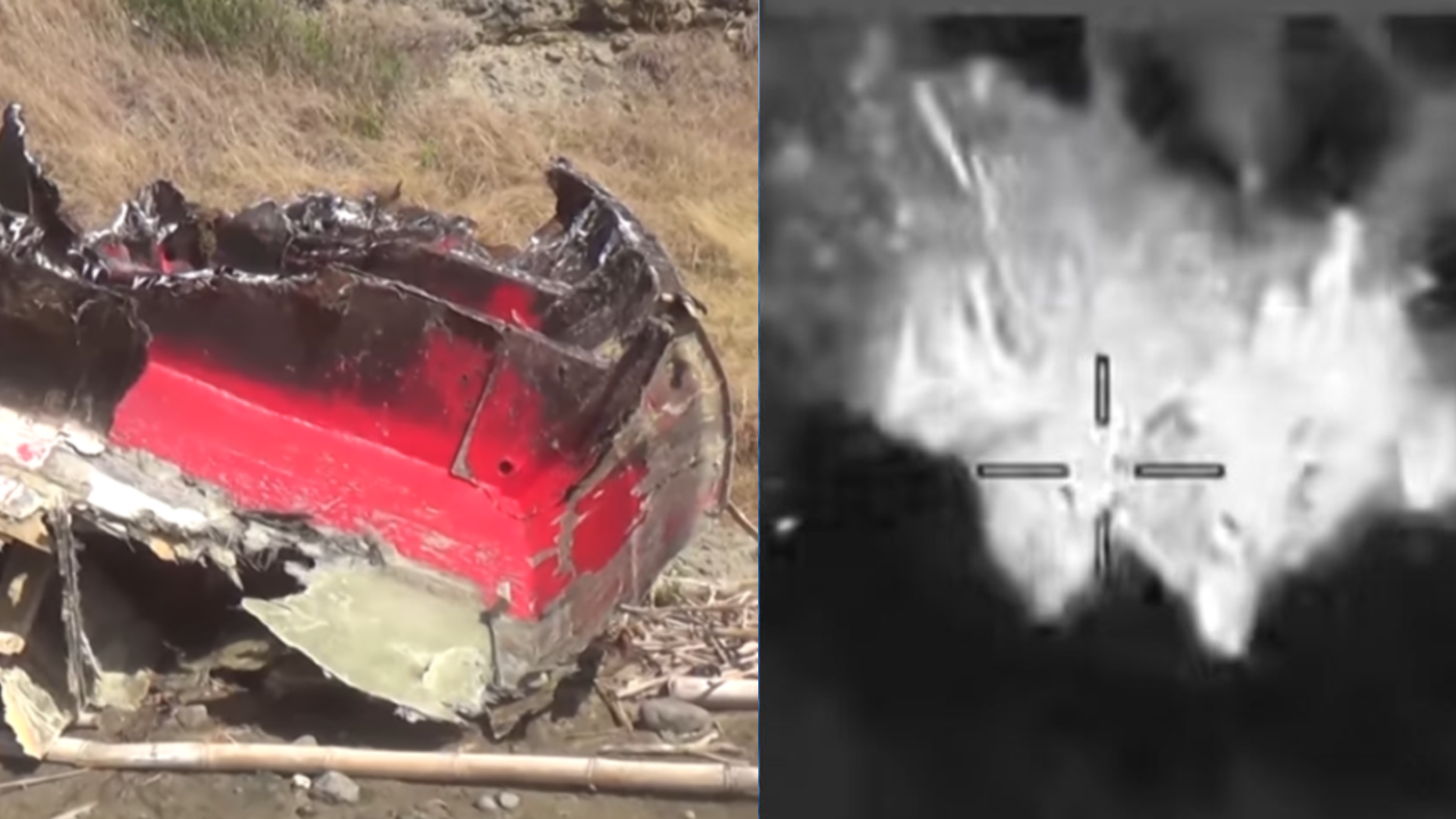
The core facts, though obscured by military jargon, are devastating. On February 13, the U.S. Southern Command (SOUTHCOM), operating under the “Joint Task Force Southern Spear,” conducted what it termed a “lethal kinetic strike” on a vessel transiting the economic zone of St Vincent.
The operation, directed by General Francis L. Donovan, resulted in the deaths of three individuals. In the days following, charred wreckage surfaced and the physical reality of the strike was captured by local fishermen: the bow of the boat remained visible, while the engine and the bulk of the hull lay submerged, a skeletal reminder of a foreign missile’s precision.
The central tension of this tragedy lies in a brutal juxtaposition of narratives. Washington has categorised the deceased as “narco-terrorists,” a designation supported by the staggering alleged $500 million worth of cocaine that washed ashore and was subsequently seized by Vincentian authorities. However, in Castries, the narrative is one of local grief. Reports persist that the three men were Saint Lucian fishermen who left port on February 9 and never returned. This collision between the reality of half a billion dollars in narcotics and the claims of humble maritime livelihoods has plunged the region into a legal and humanitarian crisis.
In the architecture of modern maritime interdiction, labels like “narco-terrorist” serve as more than descriptors, they are bypasses for due process. By stripping individuals of their civilian status before a single piece of evidence is presented in court, the U.S. military effectively places sovereignty on the auction block.
The disparity between the U.S. military’s classification and the ground truth in the Windward Islands remains a raw wound. While SOUTHCOM celebrated the neutralization of “Designated Terrorist Organizations,” Saint Lucian Prime Minister Phillip J. Pierre was left to manage the fallout of three empty chairs in fishing villages.
“I can confirm that people lost their lives and to the circumstances I have got no official notification on the circumstances surrounding their deaths,” Prime Minister Pierre stated, confirming that his administration is forced to seek answers through diplomatic backchannels for deaths occurring in what should be a transparent regional security framework.
St Vincent Opposition Leader and attorney Ralph Gonsalves has emerged as the most vocal critic of this “Dunroe Doctrine” a political ideology he frames as an extralegal expansion of U.S. power. Gonsalves’ legal arguments against these summary executions include:
The Illegality of Death at Sea: Drug trafficking does not carry the death penalty in U.S. or Caribbean law; therefore, penalties must be administered by a court, not a missile.
The Species of Barbarism: He characterises the summary execution of suspects at sea as a “species of barbarism” that contradicts the very American jurisprudence and international laws Washington claims to uphold.
Presumption of Innocence: Gonsalves maintains that everyone is innocent until proven guilty, insisting that law enforcement must involve detention and prosecution, not acting as “judge, jury, and executioner.”
Chilling Effects on Livelihoods: He warns that the lack of clear evidence in these strikes creates a terror-filled environment for legitimate mariners.
Gonsalves push for accountability highlights the vacuum left by the official response or lack thereof from the government in Kingstown.
Necessity dictates a vocal, assertive response to ensure that your borders are not treated as a superpower’s firing range. Yet, the government of Saint Vincent and the Grenadines has adopted a posture of minimalist caution, a failure to protect its own information space that has left the narrative entirely in the hands of the U.S. military.
While Gonsalves has condemned the “silence” of the administration, the Royal Saint Vincent and the Grenadines Police Force (RSVGPF) has issued press releases that can only be described as anemic. Deferring entirely to the SOUTHCOM, the RSVGPF has focused on maintaining “calm” rather than addressing the sovereign implications of a drone strike in SVG’s waters. This approach effectively relegates local security forces to the role of a cleanup crew, tasked with retrieving wreckage and the alleged “9 kilos of cocaine”.
The RSVGPF’s directive for fishermen to “continue normal operations” is particularly tone-deaf. It ignores the profound “chilling effect” described by local mariners who now view the sea as a potential battleground. To a fisherman on a small pirogue, the distinction between a “targeted intelligence strike” and a mistaken identity is a matter of life and death. By failing to challenge the U.S. narrative or demand transparent parameters for these operations, the government has allowed the sea once a highway for commerce to become a corridor of fear and death.
However, the situation gets worst. In Kingstown, the refusal to “flex diplomatic muscle” was astonishing , with Prime Minister Godwin stating that the situation was ‘concerning and worrying’ and Minister of National Security St. Clair Leacock acknowledging that the demand for a sovereign defense is weighed against the threat of U.S. retaliation.
Leacock has argued that SVG’s sovereignty is “buttressed and ensured” through membership in international bodies like the UN, Interpol, and the IMF, rather than through military strength. In this view, international law is the only viable shield for a small nation. However, this reliance on global frameworks appears increasingly hollow as regional intelligence mechanisms collapsed before, during and after the strike.
The Regional Security System (RSS), intended to be the sentinel of the southeastern Caribbean, was reportedly “in the dark” regarding the U.S. operation. This breakdown in communication is a systemic failure of the U.S. to respect its regional partners.
The absurdity of the situation is manifest in the communication breakdown:
RSS Exclusion: Despite operating its own C-26 surveillance aircraft, the RSS was not briefed, rendering the regional security collective a bystander in its own waters.
Communication Gaps: PM Pierre of Saint Lucia was forced to ask Kingstown for information that Kingstown itself did not have, as the U.S. had provided only a “military-to-police briefing” rather than formal state-to-state communication.
CARICOM’s Watchful Eye: CARICOM Chairman Dr. Terrance Drew has confirmed the organisation is monitoring the “shock waves” of these strikes, recognising that the lack of coordination threatens the stability of the entire region.
One can now safely say that the regional security relationship with the Trump regime is no longer a partnership but an occupation by proxy where the regime can carry out “lethal kinetic strikes” with zero regional consultation and absolute post-operational opacity.
In the end, the SVG government has calculated that economic stability, the preservation of remittances and banking ties outweighs the assertive defence of its sovereignty and the human rights of its neighbours. While this may stave off immediate financial ruin, it leaves the Caribbean vulnerable to a superpower that increasingly views the region as a war zone rather than a community of sovereign states.