
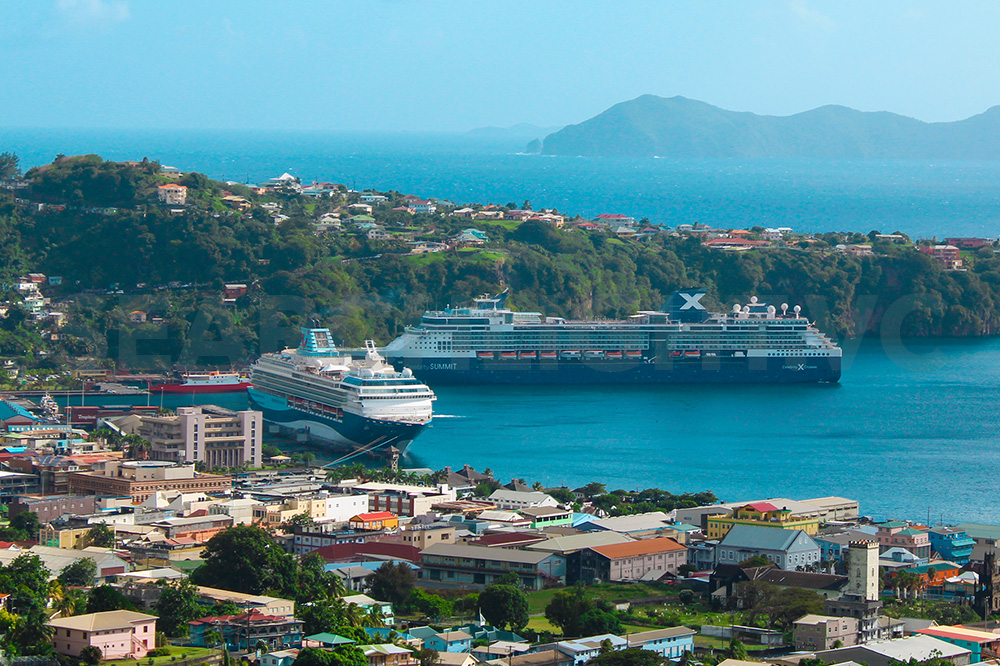
In this week of the ALIS CALA annual Caribbean hotel investment conference, I found the latest report by the World Travel and Tourism Council, titled “Cruising For Impact”, to be highly pertinent – if rather biased. Given its significant reliance on data from the Cruise Lines International Association, the report read more like a P R exercise for the cruise industry.
There may be areas of the world where cruise lines still provide valuable benefits to local communities. However, over recent years, the opposite has become true in the Caribbean. The current business model of the cruise lines has become decidedly exploitive of the region with significant longer-term negative impacts on the region’s on-island tourism development, particularly, for existing hotels and new resort projects.
While my role over more than two decades involves Caribbean resort development, I have previous early experience of three years as a hotel officer on board cruise ships and, later, as Hotel Services V P for four explorer cruise ships. I believe that gives me a well-founded viewpoint in evaluating how passenger spend, operating costs and taxation applies to the cruise industry in the Caribbean, compared to the stay-over visitor tourism of island hotels, condo rentals, timeshare and marinas.
Today’s giant cruise ships have large scale leisure facilities on board including multiple restaurants, bars and shops, as well as casinos, spas and water parks, which all now present a direct disincentive to spending time – and money – in Caribbean ports. Ships now ban bringing duty free liquor on board in calling ports – on “security” grounds. Ships have their own jewelry and electronics shops on board. St Maarten is still one of the more successful cruise calling ports for retail outlets but, even there, the size of the duty-free retail sector in Philipsburg has shrunk considerably in recent years, thanks to direct competition from onboard shops.
Ships’ commissions for shore excursions have risen over the last few decades from 10% to 50%. That inevitably drives shore excursion prices significantly higher, as local companies struggle to operate vehicles and boats on a viable basis. The end result today is that a smaller percentage of passengers actually go on excursions and an increased ratio of passengers never go ashore at all in many Caribbean ports.
On that basis, any attempt to compare “spend per hour” from the reduced percentage of cruise ship passengers going ashore against the spend of longer-term stay-over tourists on the islands is fanciful. The average spend per cruise ship passenger, quoted in another recent “cruise friendly” article at $165 (over $30 per hour ashore), seems very dubious.
Average cruise ship ticket prices have declined in real terms over recent decades, attracting more budget-oriented passengers. After having to haggle with cruise ship passengers over the fare, most taxi drivers in the Caribbean will tell you – from their personal observation – that the average purchase per person ashore is more like “two beers and a tee shirt”. How does that start to even compare with the average stay-over guest’s vast spend on island accommodation, restaurants, bars, car rental and day trips?
A March 2025 World Bank report, argues that the region’s reliance on high-volume cruise tourism is unsustainable, yielding the world’s lowest revenue per cruise visitor at $37–$139 per visit compared to over $1,600 for stay-over visitors.
That brings us to the question of comparables in operating costs and taxation. Cruise ships inevitably benefit from much lower operating costs, due to their tax structures in off-shore jurisdictions and from their ultra-low direct wage costs for most of their third world sourced crew. However, island-based companies in the hospitality sector pay high local taxes and employ local staff – at the very least – on a legal minimum wage basis. Those local payrolls, including income tax and national insurance contributions, have a beneficial multiplier effect across island economies on a much higher ratio than direct cruise ship revenue.
In the Caribbean cruise ships currently pay very low port taxes on a per passenger basis, contrary to the much higher taxes levied in Alaska, New England, Canada and the Mediterranean. It appears that the Caribbean genuinely needs to catch up or remain being unfairly exploited in this respect.
In the meantime, the stay-over visitor contributes to local taxation via very high taxes for airport arrivals / departures and on local air tickets themselves. Taxes in the Caribbean can constitute up to 50% of ticket prices, compared to a global average of 15%. These high airline related taxes have negatively impacted the Caribbean’s intraregional air travel and local airlines operate with only marginal viability.
Hotel occupancy taxes and sales / value added taxes represent further stay-over visitor contributions, as well as customs import duty on the multiple items which those visitors consume on island.
The imbalance in operating costs, taxation and profitability seems clear between the cruise industry and the Caribbean based hospitality sector. However, there is an even greater and longer-term insidious impact on the region. The Caribbean currently has the highest density of cruise ship operations in the world, particularly, in the Caribbean’s winter high season.
It is my contention that this high-volume presence acts in many ways as damaging unfair competition to the region’s onshore accommodation providers. This is particularly impactful when winter high season occupancy and room rates are critical for the financial success of Caribbean resorts – but most cruise ships reposition to other high season destinations elsewhere in the summer. Furthermore, this level of competition from the cruise sector represents a significant economic challenge to the viable development of new resorts in many islands, which already struggle with high construction costs, high energy costs and high shipping costs.
I really encourage governments in the region, as well as the WTTC, the Caricom Secretariat, the Caribbean Tourism Organization and the Caribbean Hotel & Tourism Association, to re-evaluate this imbalance and adjust their policies going forward.
Robert MacLellan
Managing Director,
MacLellan & Associates


