5
Claudine Mukagasana (not her real name), 34, woke before sunrise on a cold Sunday morning, wrapped in faith and routine as she prepared for church. The air was still, her spirit calm and ready for prayer.
As she approached Rwamagana Catholic Church Parish, something unexpected slowed her steps.
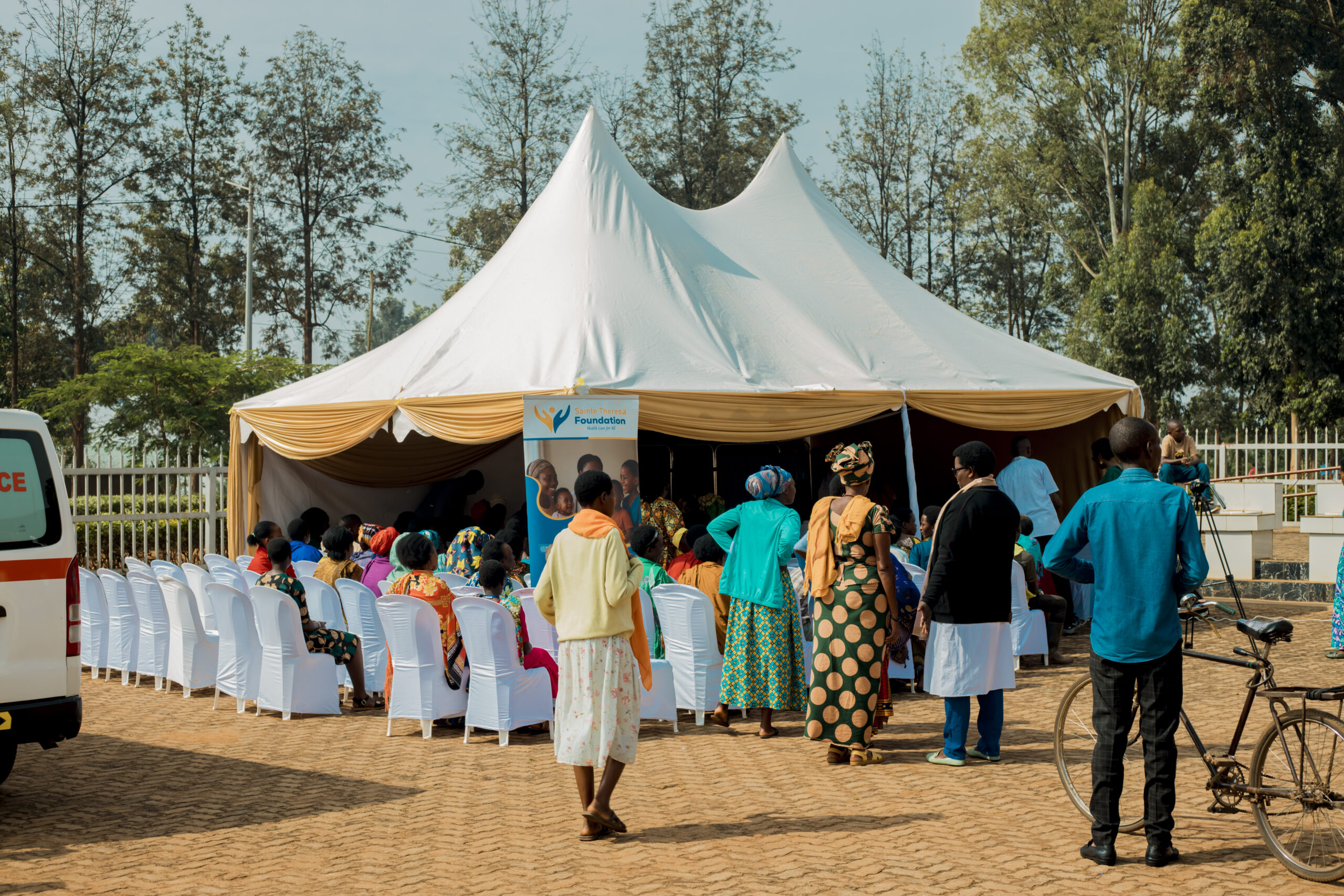
Before the sound of hymns reached her ears, she noticed a long, silent line of people stretching across the parish compound. Young and old sat patiently under white tents—not for confession, but for a free public health screening for non-communicable diseases.
Doctors in white lab coats moved gently among them. Clipboards replaced rosaries as care unfolded before worship.
Claudine hesitated. She felt healthy—no pain, no warning signs. But ushers and church leaders encouraged everyone to participate.
“Knowing your health status is an act of responsibility,” they told congregants.
After a moment of reflection, she joined the queue. Time moved slowly as one person after another stepped forward. Tests were conducted for blood pressure, HIV, diabetes, and other conditions, with counseling provided and privacy respected.
When Claudine finally sat before the medical team, she carried no fear—only trust.
The news that followed, however, changed the rhythm of her life. She tested positive for HIV.
Claudine remained inside the tent, speaking quietly with doctors. When she emerged, tears streamed down her face.
Sensing her distress, I introduced myself and requested an interview, carefully negotiating issues of privacy, including anonymity and the use of images, to which she later agreed.
The moment was heavy. Her heart sank as questions raced ahead of answers. Outside, church bells rang softly, unaware of the storm within her.
“I don’t know where I got the virus. I don’t know,” she said. “I didn’t feel any pain or symptoms. I will go for further check-ups—maybe the results will be different.”
According to the medical team, such cases are not uncommon. Many people test positive for HIV, diabetes, high blood pressure, or hepatitis despite feeling perfectly well—underscoring the importance of regular check-ups.
Claudine was not left alone.
Doctors and counselors spoke calmly, reassuring her that HIV is no longer a sentence of despair but a manageable condition. They discussed treatment, emotional support, and the possibility of living a full and meaningful life through adherence to medication and proper care.
“These are diseases that kill silently,” said Marie Anita Ahayo, Chief Executive Officer and Managing Director of St. Theresa Foundation and Clinic. “People need to check regularly. We will continue conducting free health screenings whenever resources allow. Testing saves lives.”
After a long discussion with health professionals, Claudine’s tears gave way to understanding. Fear softened into resolve. She walked away changed—but not defeated.
She was among thousands of residents who participated in the public health screening held in Rwamagana District, Eastern Province, at the Catholic Church Parish on Sunday, December 21, 2025.
The mass screening exercise was organized by the district’s local government in collaboration with St. Theresa Foundation and St. Theresa Polyclinic.
“Public health screening allows residents to know their health status early, seek timely care, and avoid complications that affect families, productivity, and community development,” said Richards Kagabo, Vice Mayor in Charge of Economic Development at Rwamagana District.
“Prevention is always more effective and affordable than treatment,” he added.
He noted that bringing free health screening closer to communities removes barriers to care and protects human capital.
“A healthy population is the foundation of sustainable economic growth and social well-being,” Kagabo said.
Government commitment to public health:
In August 2024, the government unveiled the second National Strategy for Transformation (NST2), marking a major milestone in Rwanda’s pursuit of sustainable development and improved quality of life.
The five-year strategy, structured around 14 key goals, prioritizes strengthening the healthcare system nationwide.
According to the NST2 framework, HIV/AIDS and non-communicable diseases (NCDs) remain significant public health challenges, requiring coordinated, multi-sectoral responses.
Under the strategy, the government aims to sustain progress in combating HIV/AIDS and NCDs through targeted awareness campaigns for youth—particularly adolescent girls and young women—as well as prevention interventions for men, including voluntary medical male circumcision.
“Comprehensive policies will be developed and implemented in collaboration with multiple stakeholders to address HIV/AIDS, reduce stigma and discrimination, improve the socio-economic status of affected populations, protect human rights, reduce inequalities and gender-based violence, and ensure social and legal protection for those living with or affected by HIV/AIDS,” the NST2 document states.
On NCD prevention and control, the government commits to promoting a whole-of-society, life-course, and multi-sectoral approach to ensure a sustainable response.
According to the Ministry of Health, key strategies include regular public awareness campaigns on healthy lifestyle practices, as well as capacity-building initiatives for community health workers and certified public health professionals to strengthen prevention and early detection efforts at the community level.
Visited 8 times, 8 visit(s) today