
1
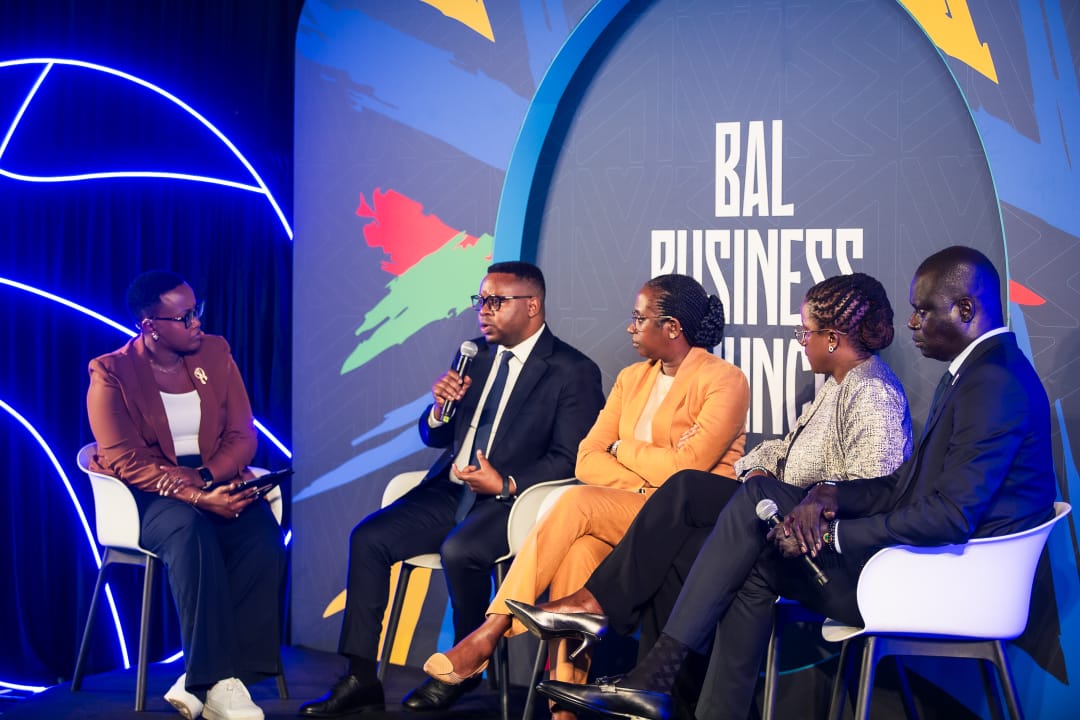
Leaders in sport, finance, government, and technology gathered in Kigali to discuss the shared appreciation of how The Basketball Africa League (BAL) should inclusively engage the youth.
KIGALI – In many parts of Africa, the economy usually begins in banks or offices. It traditionally begins on mobile phones, in small informal businesses, and in digital transactions that move money between individuals.
But as years go by, a recognizable shift into how an economy can be strengthened on already existing but informal architecture among young people, is gradually emerging.
This reality came into focus on Friday as leaders from sport, finance, government, and technology gathered to discuss a shared appreciation of how The Basketball Africa League (BAL) fits the “imaginary” shoes of one of the clearest reflections of this transition.
What was once framed purely as a sporting competition is now being positioned as part of a wider ecosystem where youth engagement, culture, and economic activity are increasingly intertwined.
Recognizing the already existing opportunities through formal systems, experts say, is a sure way of bringing young people into the economy.
Where Youth Activity Becomes Economic Reality
BAL President Amadou Gallo Fall described this shift as structural rather than symbolic.
Across the continent, young people are already building livelihoods in fragmented but active ways. They sell, trade, perform, create, and organize, often using mobile technology as the bridge between informal work and financial survival.
What is missing, participants noted, is not activity, but structure. This is where the discussion around financial systems, sport, and policy intersects. Instead of manifesting as separate sectors, these areas increasingly overlap in the daily lives of young Africans.
The Basketball Africa League has become one of those overlapping spaces. Games are no longer viewed only as entertainment events, but as gathering points for youth identity, aspiration, and opportunity.
BAL President Amadou Gallo Fall described this shift as structural rather than symbolic. “We are moving beyond sport as inspiration. We are building an industry around it. Basketball is becoming a platform that connects youth attention to real economic opportunity,” he said.
That idea was reflected in ongoing initiatives linked to BAL programming, from grassroots tournaments to community court refurbishments and youth engagement activities tied to broader economic inclusion.
The Missing Link: Turning Activity into Structure
Rwanda’s Minister of State for ICT and Innovation, Yves Iradukunda (2nd left), speaking at the meeting.
If youth activity is already visible, the list of factors that can transform it into sustainable economic participation is endless. Standard banking systems, operational financial technology platforms, and efficient government policies are all part of this infrastructure challenge.
Dr. Diane Karusisi, Chief Executive Officer of Bank of Kigali, pointed to the limitations of traditional banking systems in reaching this kind of fragmented, fast-moving economy.
“No single institution can solve Africa’s financial challenges alone. What we are seeing now is the need to connect trust, which banks provide, with accessibility and speed that new financial systems offer,” she noted.
Her point reflected a broader adaptation already underway in the banking sector, from closed systems designed for formal employment economies to integrated platforms capable of supporting informal and digital activity.
On the policy side, Rwanda’s Minister of State for ICT and Innovation, Yves Iradukunda, emphasized that regulation is now being shaped around enabling movement rather than restricting it.
“Policy must be responsive to how people actually live and work. Our goal is to build systems that allow young people to operate across borders without unnecessary friction,” he said.
In some African countries, new rules may be required but interoperability on digital identity, payment systems, and regulatory alignment that allow movement across markets, remains fundamental.
A Generation Already in Motion
Panelists pose for a group photo.
Young Africans are already participating in an economy that is digital, informal, and highly mobile. The challenge now is not creation, but connection to link what already exists with systems that allow scale, stability, and cross-border growth.
Within that reality, mobile money platforms like Wave are already operating as part of the invisible infrastructure of everyday life.
For millions of young people across markets, it is not a concept of financial inclusion, but a daily tool for movement, sending money, receiving payments, and running small businesses directly from their phones.
Wave, which now serves more than 25 million users across 10 African markets, described its role not as replacing existing systems, but simplifying access to them at scale.
“Across Africa, young people are already economically active. Our role is to make sure that the financial tools they use are simple, affordable, and available where they actually live and work,” said Couba Sène, Regional Director of Wave.
Where sport becomes a point of gathering and identity, financial systems represent a wave, where informal activity is translated into structured financial flows. Policy becomes the framework that allows both to expand beyond national boundaries.
Today, these systems are beginning to form a new kind of economic reality built around a generation that already lives. It no longer feels like a distant vision but something already in motion.
Visited 1 times, 1 visit(s) today


