
1
ADDIS ABABA, Ethiopia — The Democratic Republic of Congo (DRC) has agreed to begin identifying areas for the voluntary return of Congolese refugees currently living in Rwanda, with the process expected to start in October 2026.
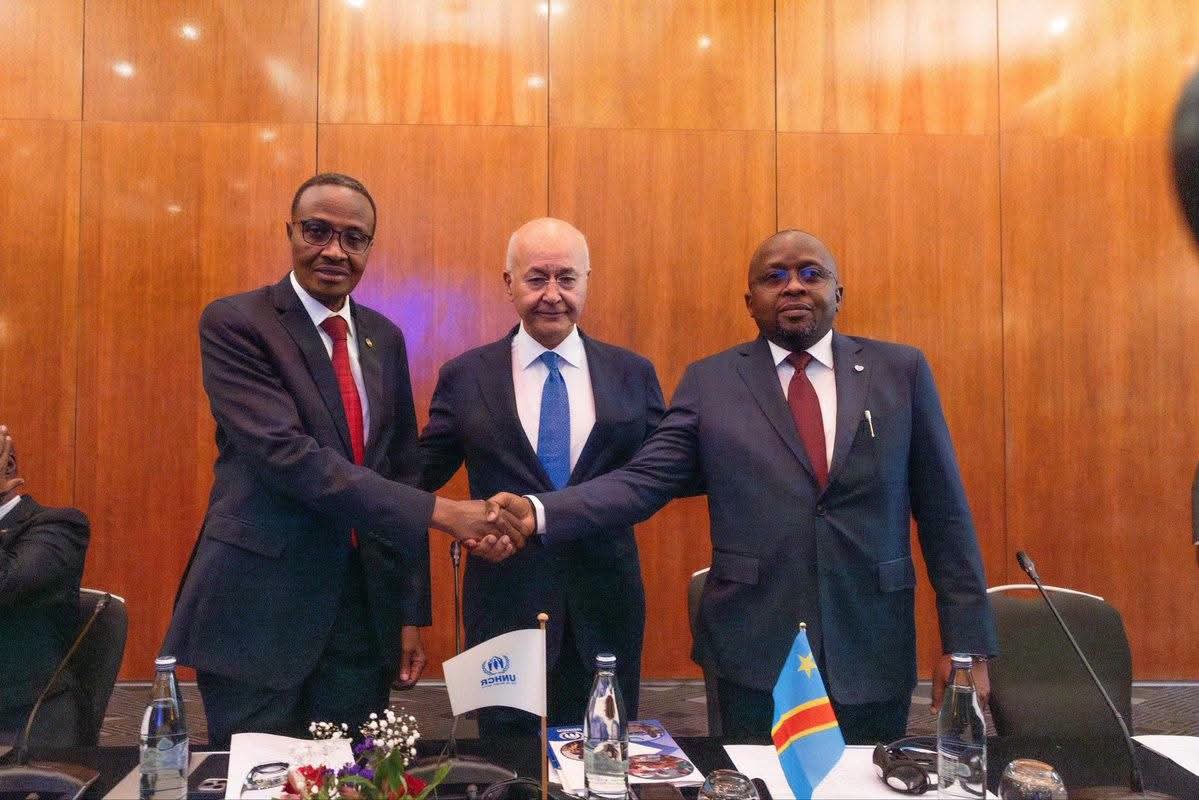
The agreement was reached during a high-level tripartite ministerial meeting involving Rwanda, the DRC and the United Nations High Commissioner for Refugees (UNHCR), held in Addis Ababa.
A joint communiqué signed at the end of the meeting was endorsed by Rwanda’s Minister in Charge of Emergency Management, Maj. Gen. (Rtd) Albert Murasira, DRC Vice Prime Minister and Minister of Interior Shabani Lukoo Bihango Jacquemain, and representatives of UNHCR.
While no large-scale repatriation of Congolese refugees from Rwanda has taken place so far, the agreement marks an important step toward creating the conditions for their return.
Beginning in October, the DRC will identify priority areas where refugees may return voluntarily. The selection of these areas will be informed by surveys conducted among Congolese refugees in Rwanda and information provided by Rwandan authorities.
The three parties reaffirmed that any return process must be voluntary, safe, dignified and based on informed choice. UNHCR will continue supporting the exercise under the framework of the 2010 Tripartite Agreement and the 2025–2026 Road Map.
According to figures presented during the meeting, Rwanda currently hosts about 84,456 Congolese refugees and asylum seekers.
Progress has been more advanced in the return of Rwandan refugees from the DRC. Since January 2025, some 8,394 Rwandan refugees have returned home, including 2,347 during the first half of 2026.
Authorities are targeting 10,000 returns by the end of this year.
The communiqué described refugee repatriation as an important component of long-term solutions for displaced populations and a contribution to broader peacebuilding efforts linked to the ongoing Rwanda-DRC peace process.
The three parties agreed that technical teams will continue monitoring implementation of the roadmap, with particular attention to reintegration support for returning refugees.
This support is expected to include housing, access to basic services and livelihood opportunities in areas of return.
The ministers also called on development partners and donors to increase support for sustainable reintegration programmes, particularly in eastern DRC, where many returnees are expected to settle.
The latest agreement forms part of ongoing efforts to resolve one of the Great Lakes region’s longest-running refugee situations.
However, actual returns will depend on conditions on the ground in the DRC and the willingness of individual refugees to return.
Visited 1 times, 1 visit(s) today


