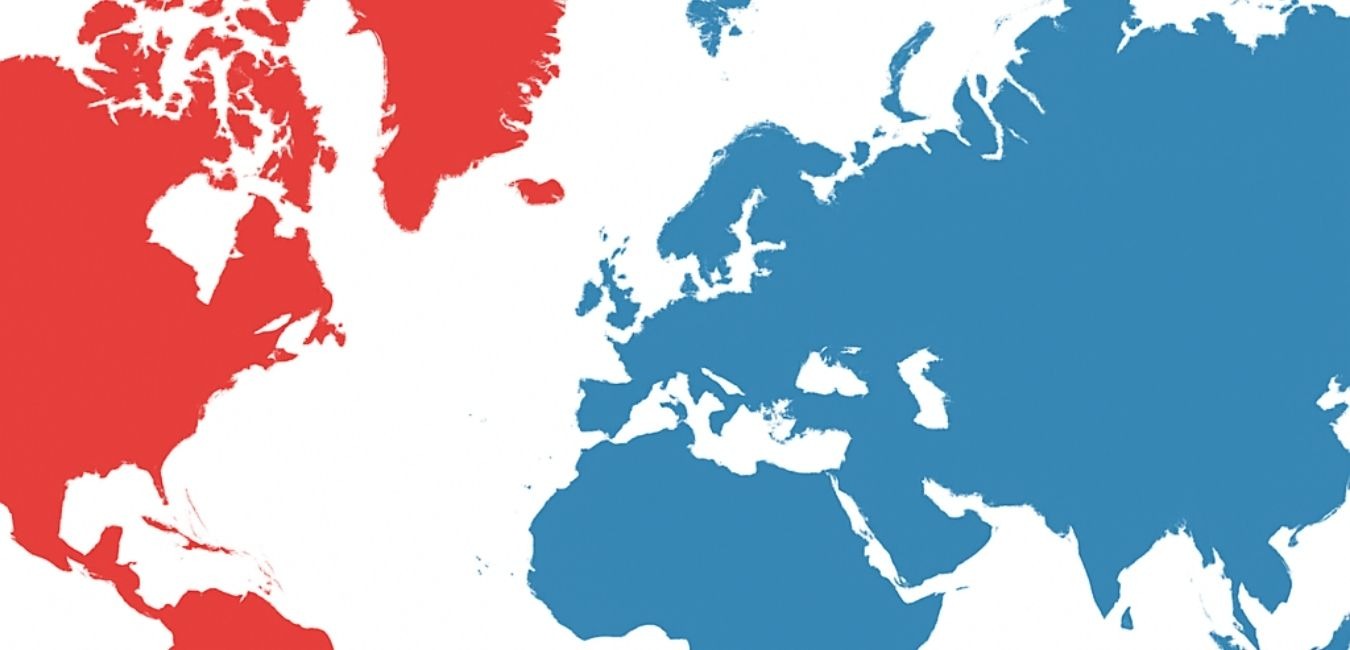
For years, the United States spoke about the Western Hemisphere in the language of partnerships, democracy, and multilateral order. This week, it spoke in the language of ownership.
When senior U.S. officials repeat “this is our hemisphere,” the message is not just rhetorical muscle. It is a throwback to an older geopolitical instinct – one that has a name, and a long history: the Monroe Doctrine.
The timing matters. Recent headlines have been dominated by an unusually blunt mix of operations and declarations: the capture of Nicolás Maduro and his appearance in a New York courtroom, public threats and pressure signals aimed at neighbouring states, renewed talk about strategic control in places like Greenland, and UN-stage messaging that frames the Western Hemisphere as a security perimeter rather than a community of sovereign equals.
Put together, these are not isolated controversies. They are symptoms of a broader shift: the return of spheres-of-influence thinking. And that shift should worry Eastern Europe.
The Monroe Doctrine, explained simply
The Monroe Doctrine dates back to 1823, when President James Monroe warned European powers against further colonisation or interference in the Americas. In its original form, it was framed as defensive: Europe should stay out of the Western Hemisphere, and the United States would stay out of Europe’s wars.
But history turned it into something more ambitious. Over time, “keep Europe out” evolved into a much stronger idea: the United States claims a special right to define security and political outcomes across the Americas. The doctrine became the intellectual cover for decades of coercion, intervention, and regime pressure across Latin America.
In modern terms, the Monroe Doctrine is the ancestor of one blunt proposition: the hemisphere is not neutral ground.
Why it’s resurfacing now: power politics is being said out loud
The most important change is not a policy detail. It is language.
When a superpower starts speaking in territorial terms – “our hemisphere,” “our backyard,” “our region” – it is signalling that diplomacy is being re-centred around dominance rather than rules. That rhetoric is reinforced when it is paired with dramatic actions that demonstrate capacity and intent.
Capturing a foreign leader and moving him into a U.S. legal process is not simply law enforcement in the public imagination. It reads like a strategic declaration: Washington is willing to impose outcomes, not merely argue for them.
And once the language of dominance becomes normal again, it does not stay politely confined to one region.
From doctrine to template: how spheres of influence return
The Monroe Doctrine matters in 2026 not because it is “American,” but because it normalises a principle every other great power can reuse.
If the United States can declare a hemisphere, then others will argue they can declare theirs:
- Russia will insist on a privileged sphere in its “near abroad.”
- China will talk more openly about regional exclusion zones in Asia.
- Middle powers will attempt smaller versions of the same logic in their neighbourhoods.
This is what “spheres of influence” mean in practice: not just influence, but permission – permission for large states to limit the choices of smaller states, and to frame sovereignty as conditional.
In such a world, international law and institutions still exist – but they increasingly serve as arenas for messaging rather than constraints on power.
Why Eastern Europe should treat this as a warning
For Romania and the broader Eastern flank, the danger is not that Washington will “trade away” allies tomorrow. The danger is that the global atmosphere is shifting toward a model where bargaining over regions becomes thinkable again.
Russia has been pursuing that model for years. It consistently treats neighbouring states as buffer zones rather than as fully sovereign actors with equal rights to choose alliances and security arrangements. If the West openly re-legitimises sphere-language, Moscow gains an argument it loves: symmetry. If America has a backyard, Russia will say it has one too.
In that framework, Russia does not need to win dramatic battlefield victories to score strategic gains. It can rely on pressure that is cheaper, deniable, and often more effective:
- destabilisation and political leverage in vulnerable states,
- influence operations and narrative warfare aimed at fracturing societies,
- engineered crises designed to test NATO’s cohesion,
- infrastructure and energy leverage are used as coercive tools.
This is why Romanian analyst Armand Goșu’s dark joke – “start learning Russian” – lands as more than irony. It points to a strategic reality: when the world returns to imperial grammar, frontline states must read it fluently.
Greenland is the tell: dominance talk is no longer confined to Latin America
One of the most revealing aspects of the current moment is that the language of territorial or quasi-territorial dominance has appeared in more than one theatre. When a close ally feels compelled to respond to annexation talk – and NATO credibility publicly is invoked in that context – it signals a broader shift in political imagination.
The point is not that Greenland will be taken. The point is that the taboo against speaking casually about coercive control has weakened. And when taboos weaken, opportunists move.
Bottom line: Monroe is back because the world is re-hardening
The Monroe Doctrine is often taught as a historical artefact. In reality, it is a worldview: geography grants entitlement, and entitlement grants enforcement.
When that worldview returns to mainstream U.S. rhetoric – paired with actions that look like enforcement – other great powers take note. For Eastern Europe, that is the core risk: a world in which the language of “hemispheres” and “backyards” becomes normal again is one where Russia’s regional ambitions are easier to justify, easier to sell, and harder to deter.
And in Eastern Europe, history has already taught what happens when big powers start dividing maps into “ours” and “theirs.”