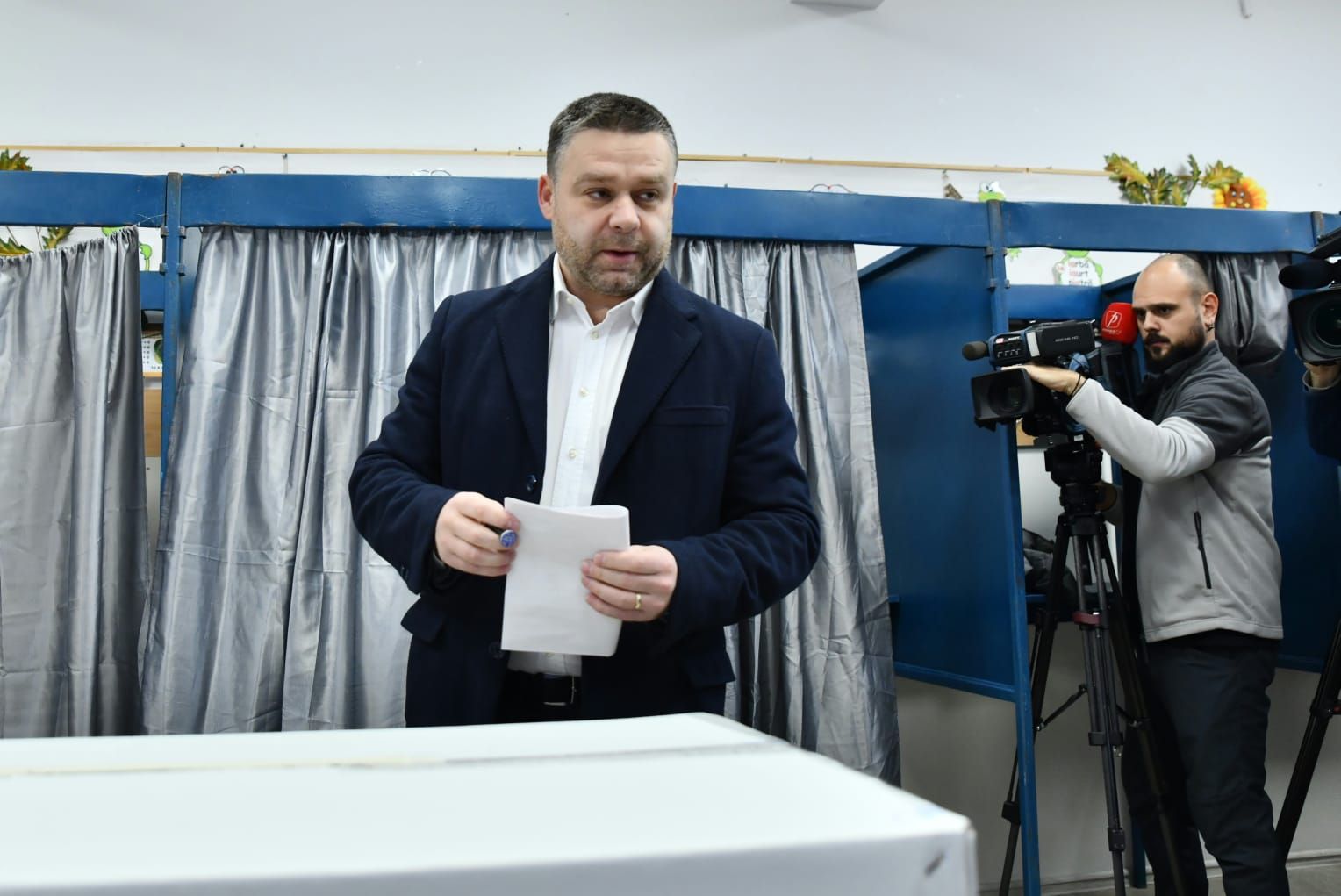
Ciprian Ciucu, the National Liberal Party (PNL) candidate, has been elected as Bucharest’s new general mayor in the partial local elections held on December 7, 2025.
Securing around 36% of the votes, Ciucu’s win replaces outgoing mayor Nicușor Dan, who vacated the position after his presidential election, and ends the interim tenure of Stelian Bujduveanu. This result underscores strong voter support for centrist, pro-European leadership amid the city’s push for modernisation.
Fierce Election Battle and Voter Turnout
The elections drew a turnout of approximately 52%, reflecting heightened public interest in Bucharest’s governance future. Ciucu triumphed over key opponents, including Anca Alexandrescu (AUR-backed independent) with 21.7%, Daniel Băluță (PSD) at 20.3%, and Cătălin Drulă (USR) with 13.7%. His 14-15% lead highlighted a clear mandate, rejecting hard-right challengers and affirming the pro-EU coalition’s influence.
The competitive race centred on infrastructure woes, public services, and economic resilience, issues amplified by the capital’s rapid growth.
Ciucu’s Distinguished Political Career
Born in 1978 in Pitești, Ciprian Ciucu entered politics in 2000 at the Presidency’s PR department. He advanced through local roles, serving as a Bucharest councillor, president of the National Agency of Civil Servants (2019-2020), and PNL Bucharest leader (2021-2023). Elected mayor of Sector 6 in 2020, he spearheaded school renovations, kindergarten construction, park expansions, and green space enhancements, earning acclaim for tangible community improvements.
At 47, Ciucu now steps up as Bucharest’s 17th post-1989 general mayor, blending administrative expertise with PNL leadership.
Core Campaign Promises and Vision
Ciucu’s platform prioritises urban regeneration, mobility upgrades, healthcare infrastructure, safety, cultural growth, social inclusion, and digital governance. He vows a “10-year project” for a cohesive Bucharest, tackling traffic, pollution, public transport, and green spaces while fostering economic opportunities. Post-victory, he called for coalition unity to drive long-term projects, positioning the city as a resilient European hub.
Bucharest grapples with ageing infrastructure, congestion, and sustainability demands amid population pressures. Ciucu’s pragmatic style promises efficient responses that balance historical preservation with innovation. Residents anticipate swift action on daily pain points, with his administration set to boost the capital’s regional stature through inclusive policies.
This electoral milestone signals renewed optimism for Bucharest, as Ciucu mobilises to deliver a smarter, more livable metropolis. Implementation in the coming year will test his pledges against the city’s complex realities.