Your support helps us to tell the story
From reproductive rights to climate change to Big Tech, The Independent is on the ground when the story is developing. Whether it’s investigating the financials of Elon Musk’s pro-Trump PAC or producing our latest documentary, ‘The A Word’, which shines a light on the American women fighting for reproductive rights, we know how important it is to parse out the facts from the messaging.
At such a critical moment in US history, we need reporters on the ground. Your donation allows us to keep sending journalists to speak to both sides of the story.
The Independent is trusted by Americans across the entire political spectrum. And unlike many other quality news outlets, we choose not to lock Americans out of our reporting and analysis with paywalls. We believe quality journalism should be available to everyone, paid for by those who can afford it.
Your support makes all the difference.Read more
The World Cup has been a bonanza for beer in the U.S. Bars in Boston reported needing emergency deliveries to keep taps from running dry on some game days. Fans downed a total of 290,000 stadium beers during the six matches in Philadelphia, FIFA organizers said.
But all that frothy foam obscures a cold reality: Beer sales have been struggling globally, and it’s unclear if soccer’s world championship tournament can reverse the trend despite having three countries and 16 cities as co-hosts this year.
In the U.S., beer consumption has fallen steadily for a decade, according to the Brewers Association, a trade group for craft brewers. Canada has seen a similar decline, according to the national statistics agency. The Brewers of Europe trade association says the story is the same in the European Union.
Consumers are buying less regular beer and more ‘wellness’ drinks
Many consumers are cutting back on alcohol for health reasons. Last year was the first time in Gallup’s polling that a majority of Americans – 53% — said drinking “one or two drinks a day” was bad for one’s health.
While sales of non-alcoholic beer have grown, they still make up only around 1% of the U.S. market, according to the Beer Institute, a trade group for brewers.
Economic worries also have taken a toll on sales. U.S. consumption of all types of alcohol – including wine and spirits – fell 5% last year, and affordability concerns were partly to blame, beverage market research company IWSR said.
Craig Purser, the president and CEO of the National Beer Wholesalers Association, said he thinks smartphones and Netflix have taken consumers away from socializing with a cold beer in hand.
“If you have this behavior where we’re cocooning and we’re not spending time with other folks, that’s going to affect beer consumption,” Purser said.
World Cup host cities saw a bump in beer sales at stadiums, bars and restaurants
Enter the World Cup and the soccer fans who traveled from around the world to support their national teams and engage in communal celebration or sorrow.
In the first four weeks of the tournament, beer sales in bars, restaurants, stadiums and other venues rose 14% in U.S. host cities compared to the same period last year, according to the Beer Institute. The bump extended beyond host cities; sales were up 4% nationally, the institute said.
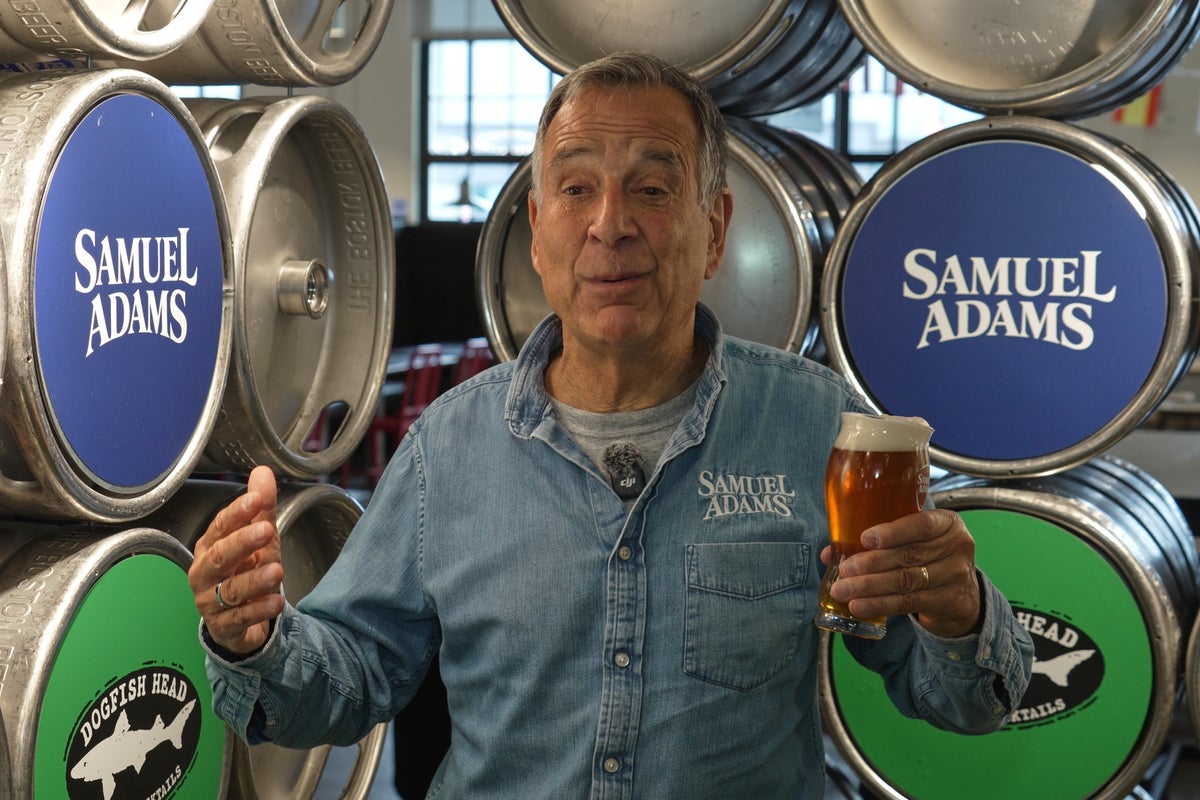
Jim Koch, the brewer, founder and CEO of the Boston Beer Co., which makes Samuel Adams and other brands, said the company had to make two emergency deliveries to its Sam Adams Boston Taproom on the first day that Scotland’s fans were in town.
“At one point, we were pouring them a Sam Adams Boston Lager every 12 seconds. What a wonderful group of people,” he said.
But that wasn’t all that warmed Koch’s heart.
“I didn’t see a single soul on their phone,” he said, “They had a beer in their hand and they were talking to each other. They were doing what beer is meant to do, which is helping people enjoy each other’s company.”
The plentiful drinking on display in stadiums stood in stark constrast to the World Cup held four years ago in Qatar, where the government banned the sale of alcoholic beer in match venues.
Brewers leaned heavily into this year’s tournament. Budweiser and Michelob Ultra maker AB InBev, the World’s Cup’s official beer sponsor, doled out marketing support to bars and hosted 200,000 watch parties in 40 countries.
Molson Coors said it would spend 60% more than last year on marketing in June and July; it also debuted a limited edition soccer ball that can hold 12 cans of Miller Lite.
A team’s loss can make supporters cry, but not in their beer
Maybell Romero, a law professor at Tulane University School of Law in New Orleans, usually prefers cocktails over beer. But she says she opts for beer during the World Cup since it has lower alcohol content than liquor or wine and watching games can be an all-day affair.
“If I drink cocktail after cocktail, I will not be functional after a few hours,” Romero said.
Romero, who has been watching this year’s matches at bars in Mexico City, said she’s enjoyed trying new beers, especially those with novel ingredients like champagne yeast. She might order an occasional beer once the World Cup ends but expects to go back to mostly drinking cocktails.
Beer consumption was expected to fall in some markets even before the World Cup ended. Shares in AB InBev and Constellation Brands — which owns the U.S. rights to Mexican beer brands like Corona and Modelo — tumbled after Mexico and Brazil were eliminated from the tournament.
Romero observed the mood shift in Mexico City after those losses.
“The city is collectively depressed,” she said. “Everything is a lot quieter, and people aren’t going out as much.”
Major sporting events on the horizon allow the beer industry to hold out hope
Purser remains hopeful the World Cup will remind people how much they like to gather and cheer on athletes, especially with the Summer Olympics heading to Los Angeles in 2028. Occasions are expanding, he said; college and professional football games are now played on more nights of the week, for example. And beer’s consumer base is widening as more brands put out low- and no-alcohol versions, he said.
In May, the NCAA reversed its long-standing ban on alcohol advertising during March Madness, allowing makers of beer, wine, spirits and hard seltzer makers to sponsor the college basketball tournaments for the first time starting next season.
The Boston Beer Co.’s Koch said he’s not fretting until then.
“People worry that the beer business has declined for a few years, and I always remind them that beer has been a part of human society, human civilization, for 10,000 years,” he said. “Beer will always be a part enhancing our enjoyment of our lives and the time we spend on this earth.”
___
AP Video Journalist Rodrique Ngowi contributed from Boston.