Want to bookmark your favourite articles and stories to read or reference later? Start your Independent Membership today.
Join today
Already a member?
Log in
Your support helps us to tell the story
From reproductive rights to climate change to Big Tech, The Independent is on the ground when the story is developing. Whether it’s investigating the financials of Elon Musk’s pro-Trump PAC or producing our latest documentary, ‘The A Word’, which shines a light on the American women fighting for reproductive rights, we know how important it is to parse out the facts from the messaging.
At such a critical moment in US history, we need reporters on the ground. Your donation allows us to keep sending journalists to speak to both sides of the story.
The Independent is trusted by Americans across the entire political spectrum. And unlike many other quality news outlets, we choose not to lock Americans out of our reporting and analysis with paywalls. We believe quality journalism should be available to everyone, paid for by those who can afford it.
Your support makes all the difference.Read more
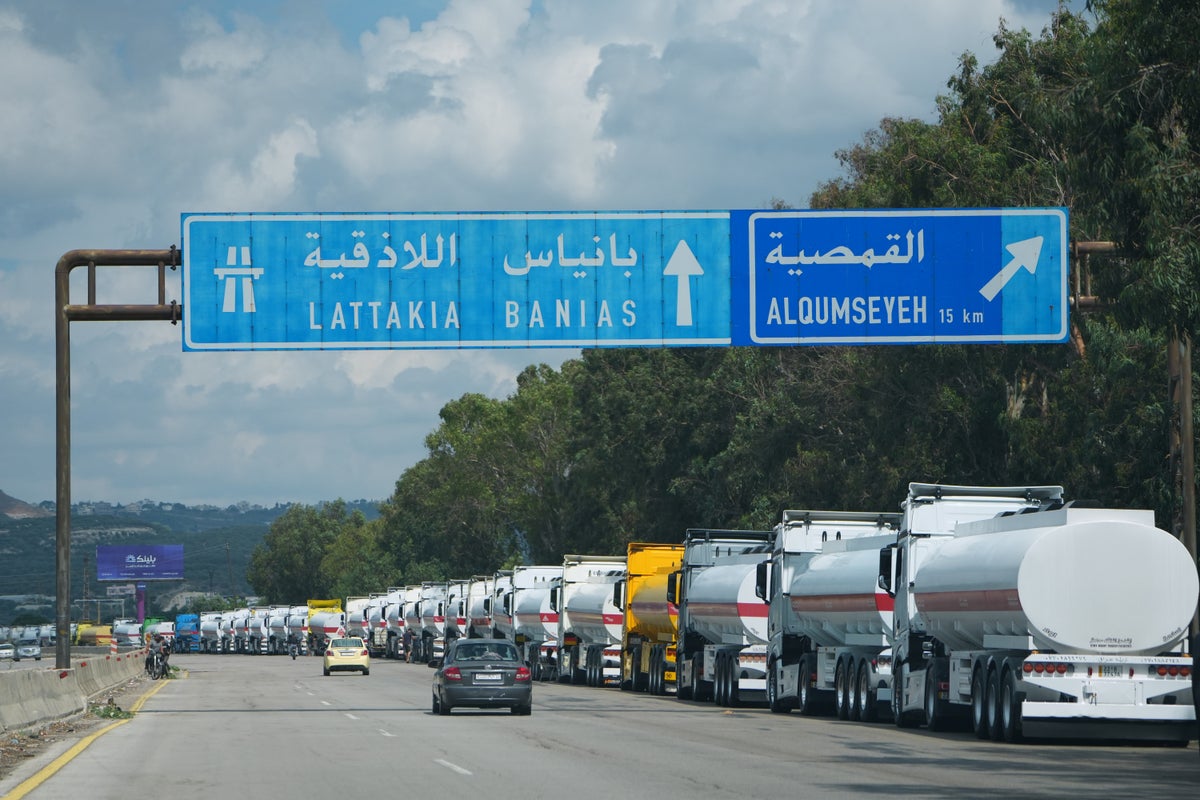
Iraqi fuel trucks loaded gasoline at a Syrian port on Tuesday in a bid to meet surging energy demand as the critical Strait of Hormuz remains closed and mediators work with Iran and the United States to end the war.
The disruption of the strait has sent shock waves through the global economy, prompting countries to scramble for alternatives and sending fuel prices soaring. A fifth of the world’s traded oil and gas transited through the narrow waterway before the war.
Syria, under interim president Ahmad al-Sharaa, who ousted longtime leader Bashar Assad in December 2024, has seized the opportunity to bolster the country’s economy by providing an alternative route through the Baniyas port. Markets including the United States and Europe have been using the port.
Iraq has been exporting oil to foreign markets for months by trucking it through Baniyas as a workaround to the closure of Hormuz. Now, through a three-month agreement between the two, Iraq has begun importing gasoline via Syria; the first shipment to Iraq arrived at the port on Thursday.
Under the deal, the Qatar-based conglomerate UCC purchases the gasoline, and Syria manages transportation and receives transit fees. The shipments are then transported by land to Iraq from the northwestern port through al-Tanf in southeastern Syria.
Ahmed Qubbaji, deputy head of the state-run Syrian Petroleum Company, said Tuesday that Syria is working to bring in 200 tankers daily to Iraq.
“We are thinking of setting up pipelines from Iraq to Syria via the sea through other countries,” he told The Associated Press. “So we are not looking at interim projects, but thinking strategically for the long term.”