The lyrics are poetic, evoking a sense of spiralling thoughts that loop endlessly, much like the turning sails of windmills. But maybe I should say the Windmills of Portugal – and funnily enough, the insides of windmills were very dusty too, created by centuries of corn and wheat that were ground for the farmers nearby. All around the country are the remnants of a now long-gone era that are now defunct, though some still remain and are working, but more of this below.
In days gone by, between the months of May and July, when the grains were harvested, the windmills scattered across the country turned out flour. Farmers transported grain to their local mill in sacks on the back of donkeys or in carts pulled by oxen, and the time while waiting for the cereal to be ground sometimes became a social time. The windmills transformed the wind’s energy into a rotary motion that powered grinding stones, converting grain into flour for local consumption, with windmills being indispensable for processing the grains that sustained the population. At the time, windmills represented a significant technological advancement, performing the work of many people and making efficient use of renewable energy, the wind. Inside, were found massive wooden gears, shafts, and grinding stones, along with a sack hoist for raising grain.
Traditional Portuguese Windmills
Most traditional Portuguese windmills, or moinhos de vento, were historically found in central and southern Portugal, particularly in the Alentejo region and Costa Vicentina. Additionally, the Azores archipelago and the northern region of Viana do Castelo also feature significant windmill sites, though the Alentejo is recognised for its numerous windmills adapted to wind and sea conditions.
In the municipality of Setúbal District, the primary windmill to see is in Santiago de Cacem, the Moinho Municipal da Quintinha, being a well-preserved 1813 windmill on a hill overlooking the town, maintained by the local council, offering insight into traditional milling. On windy days, it still grinds cereals, providing a cultural experience for visitors to the area.
The Moinho de Vento of Odemira is a historic mill in the Moinhos Juntos complex, with another windmill located nearby, though in ruins. The mill is still used to grind grain and has a small shop.
Today, there are three windmills operated in the town of Grândola. Although different in the details, these mills have a fixed truncated conical tower in masonry, two floors with hood, mast, sails, etc.
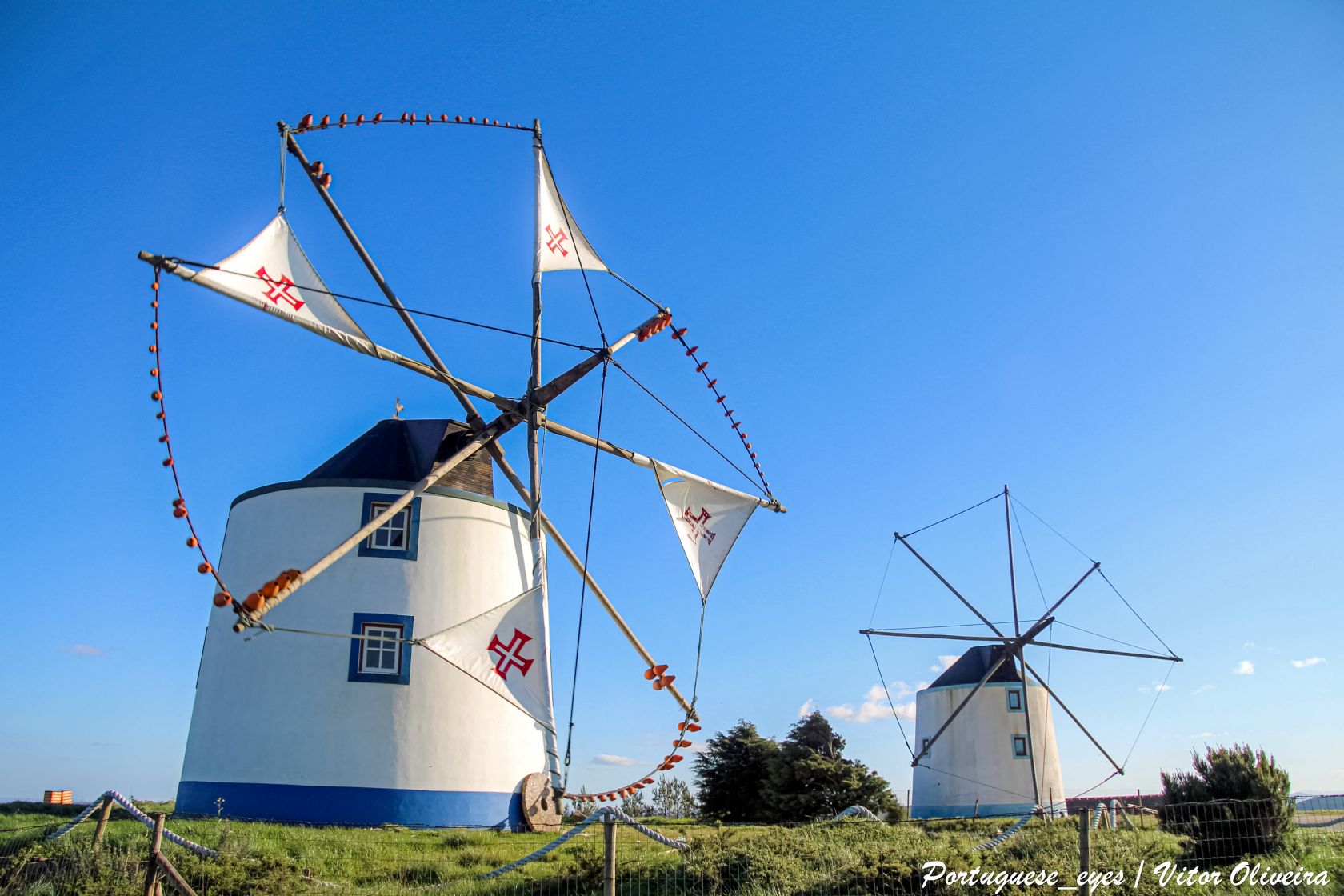
Moinho de Avis on the Serra de Montejunto is the biggest windmill in Portugal. This typical windmill with its clay pots attached to the sails is situated right behind the restaurant Curral do Burro, supplying the restaurant with flour made with the rare Barbela wheat, which is then used to bake fresh bread.
Moinho means Mill
The Portuguese word ‘moinho’ comes from the Latin molinum, which means to grind or crush cereals. Water mills first appeared in the 2nd century with the Romans, who later spread them across Portugal. The idea caught on, and by the 1960s there were more than 10,000 mills in operation in Portugal, 7,000 of which were water mills and 3,000 windmills. Vital to every village, the windmills in Portugal ground corn and wheat to make flour for bread and feed.
Today, many have been restored, and others are for rent as vacation houses, where the mills have been lovingly restored and modernised into luxurious -and unusual – holiday rentals, in some you can admire the magnificent wooden beams of the cone-shaped roof from the comfort of your own bed.
Watermills shouldn’t be forgotten either, as these can be found across Portugal, many of which have now been historically preserved, functioning as tourist attractions, or are available for sale and refurbishment. Some, such as the one in Monchique, have been converted into museums, while others, like the Sao Jorge Watermill of Santana, Madeira, offer a unique glimpse into their traditional operation.
Nowadays, there are over 100 modern milling businesses in Portugal, with the grain milling industry projected to be €704.8 million in 2025. Not to be sneezed at, Dusty or not!