
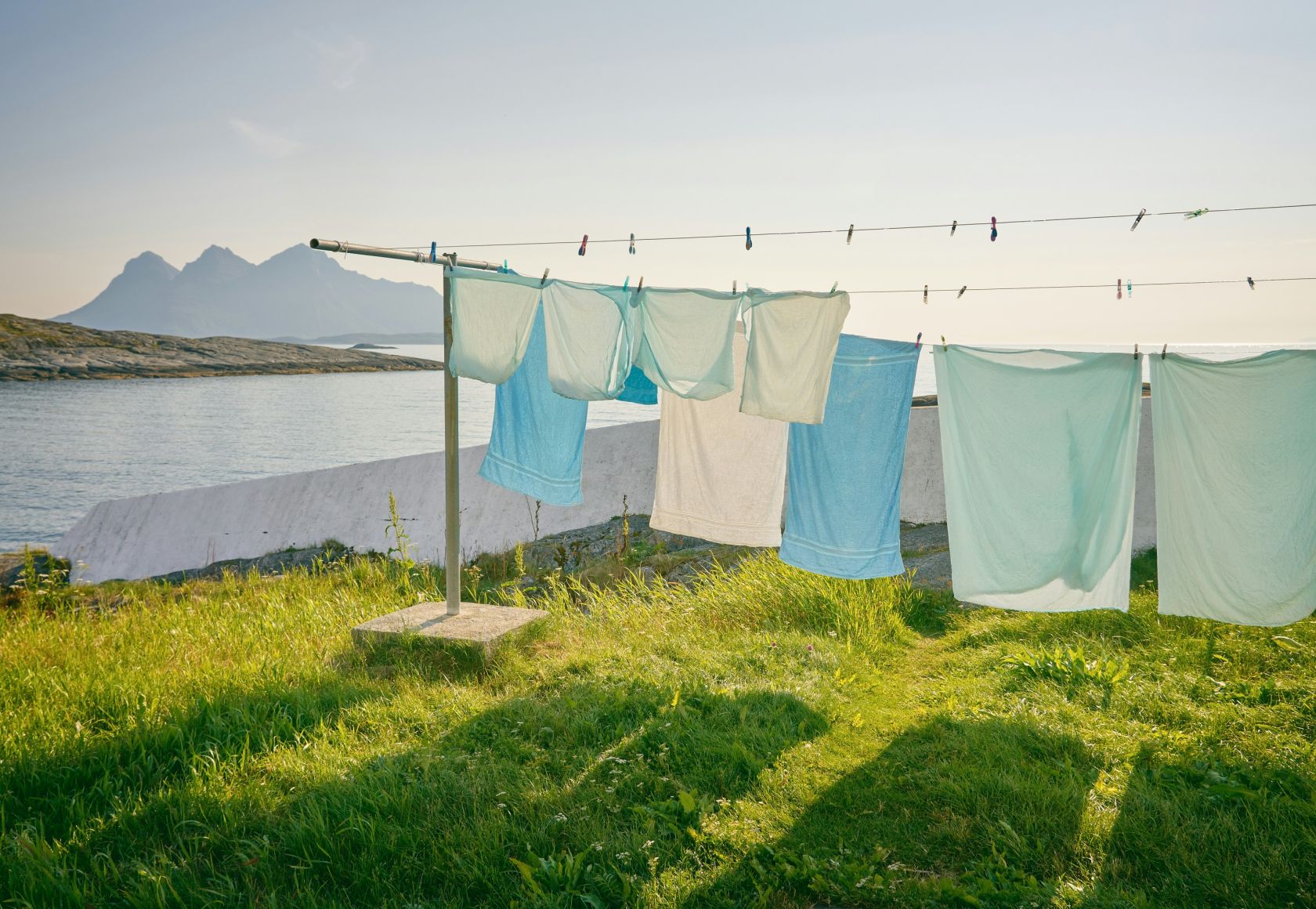
The ultimate way to dry clothes will always be outside or hanging from a window here in Portugal, where sunshine is free and plentiful, but in the winter, it can take over half a day or more to fully dry laundry, and you always have to be prepared to drag it all in if the rain catches you out.
If you aren’t lucky enough to have a dryer, one way to speed up the drying process is by using your normal pedestal or desk fan – yes, the very one you used during the heat of the summer to keep you cool, and by placing the fan near your drying rack, you can help moisture evaporate faster and prevent dampness or mould. Spread your laundry evenly on the rack to avoid overcrowding, and occasionally turn them or rearrange them to get maximum exposure. By positioning the fan so it blows air towards or around your damp laundry, you can accelerate evaporation and drive moist air from your clothes. Open the windows if possible, too.
Avoid small, enclosed rooms without airflow: tight spaces like closets or windowless rooms trap humidity and make it nearly impossible for laundry to dry properly. Instead, choose a room with open-air access or portable airflow.
Here’s how evaporation works – the technical stuff
The evaporation rate depends on temperature, relative humidity, and air movement. Moving air lowers the boundary-layer humidity immediately next to the fabric and renews it with drier air, so water vapour leaves the fabric faster. The fan doesn’t add heat, so it won’t raise equilibrium moisture content; it increases the rate of approach to that equilibrium by convective mass transfer.
Dehumidifiers
This is another way to dry clothes indoors when it is either too cold or damp outside. Dehumidifiers remove excess moisture from the air – and therefore your laundry – while preventing condensation and dampness indoors. Hang clothes on a clothes airer in the same room as your dehumidifier. Most will turn off automatically when the humidity of a room reaches a certain percentage and will switch on again when the humidity rises. A full load is likely to dry in 3 hours, and they are quite loud if you’re in the same room, but they are very cheap to run and suck moisture out of the air pretty quickly.
Credits: Unsplash; Author: bob-van-aubel;
You could also try the ‘burrito’ method of rolling items in a towel, using a hairdryer, or ironing with a towel to speed up drying for smaller items!
The Amish people shun electricity
The Amish people of North America are said not to use electricity because it connects them too closely to the outside world, but they do use alternative sources like solar power, generators, and batteries for specific purposes, particularly in businesses. Their rules are not a blanket rejection of electricity but a way to limit technology’s influence to preserve their culture, values, and community bonds.
The Amish handle drying their laundry during the cold winter months by staying faithful to their simple, eco-friendly lifestyle—hanging their clothes outside, no matter the season. Even in freezing weather, lines of laundry will be seen swaying in the crisp winter air across Amish farms.
The secret is that clothes will still dry in the cold, through a process called ‘sublimation’, where water evaporates directly from frozen clothes into the air, even when temperatures are below freezing. Under the right conditions (cold temperatures, low humidity, and a light breeze), the ice then sublimates, meaning it goes directly from a solid to a gas (water vapour). This process removes the moisture from the clothes, leaving them dry, and an added bonus is the wonderful fresh smell left behind.
As a child in England, I remember the sight of laundry frozen into comical, self-standing pieces – trousers looking like they might walk away on their own, perhaps – but this is something rarely seen in Portugal! Clothes could freeze outside here in certain areas – especially at night – if temperatures drop low enough, and although freezing is not a common occurrence, snow fell in the Algarve as recently as 2006.


